Get Full Government Meeting Transcripts, Videos, & Alerts Forever!
Get email alerts on the Municipal Finance topic
No spam. Unsubscribe anytime.
Milford town clerk proposes absorbing tax-collector duties; HR and finance urge caution
Summary
Town Clerk Joan Dodge suggested consolidating the elected tax collector duties into the town clerk—s office to create a one-stop customer service model; HR and the finance department cautioned that statutory duties, workload and checks-and-balances mean the change needs study and budgetary assessment.
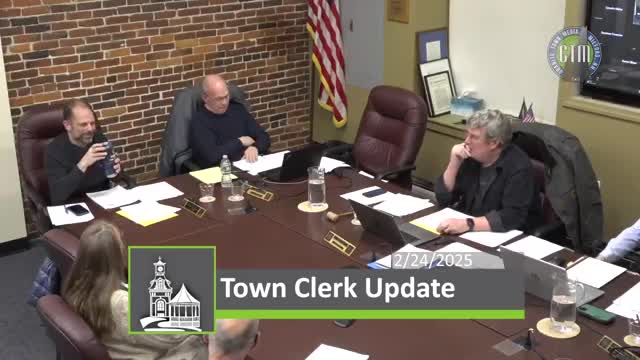
Town Clerk Joan Dodge told the Select Board Feb. 24 she has investigated consolidating tax-collector functions into the Town Clerk—s office and suggested the current vacancy could provide an opportunity to move toward a one-stop counter for payments and permitting.
Dodge said many similarly sized towns operate with a combined town clerk/tax-collector department and that some duties overlap; she argued consolidating payments and customer service under one roof could improve convenience for residents and allow more flexible staffing.
HR Director Karen Blow and the finance director pushed back, cautioning the board that the tax collector—s statutory and accounting responsibilities are substantial and that the current hiring process for a vacant tax-collector post is well underway. Blow said HR conducted a competitive hiring process with multiple candidates and recommended proceeding; she warned that shifting duties without careful planning could create capacity gaps in finance and would likely require hiring additional staff and reworking job descriptions.
The finance director (staff) described the tax collector—s work as accounting intensive: generating tax warrants, managing lockbox deposits, balancing with Munis, processing overpayments, lien filings and preparing MS-61 reports. That speaker said the town relies on accurate tax-collection accounting for cash-flow, debt service and payroll.
Town Administrator Lincoln Daley told the board that RSA 40:133 requires the Select Board to appoint a new tax collector when needed and recommended the board observe the current hiring process for a trial year before making structural organizational changes. Several board members said they supported exploring the one-stop concept in principle but asked for a formal study of duties, costs and statute implications before altering elected-office arrangements.
Why it matters: The tax-collector role handles nearly all property-tax receipts (major town revenue) and includes time-sensitive statutory duties. Any structural change could affect audit trails, checks and balances, staffing and town budgets.
Next steps: Board members asked staff to prepare an analysis of statutory responsibilities, the likely staffing and budget impacts of consolidation, and examples from comparable towns so the board can consider a formal proposal at a future meeting. HR and Finance recommended completing the pending recruitment and assessing the incoming employee—s capacity before implementing organizational changes.