Get Full Government Meeting Transcripts, Videos, & Alerts Forever!
Get email alerts on the Animal Control topic
No spam. Unsubscribe anytime.
Milford board holds first hearing on tighter rules for dogs in parks, fields and cemeteries
Summary
The Milford Select Board opened a first reading and public hearing on amendments to the town—s animal-control ordinance that would bar dogs from athletic fields and clarify cemetery and Musco (MCAA) field rules; public commenters pressed for clearer enforcement language and consistent signage.
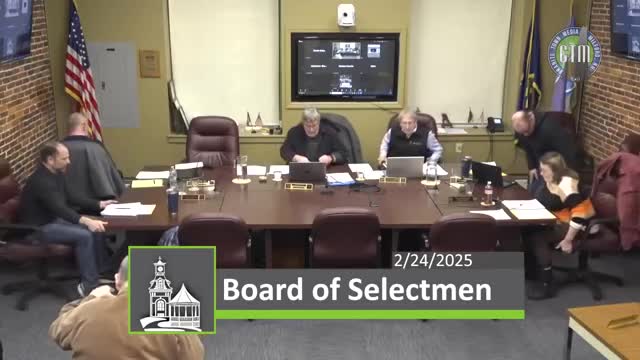
The Milford Board of Selectmen opened a public hearing Feb. 24 on proposed amendments to Title 4, section 4.04070, "Control of Dogs in Public Parks and Other Places," including a new prohibition on dogs in defined athletic fields and an addition of a parcel at 127 Elm to the list of "leash only" parks.
The proposed revision would add a new Section B prohibiting dogs, restrained or unrestrained, from athletic fields, courts and building facilities at Adams Field, Kaley Park, Keys Park, Shepherd Park and related mapped parcels, whether or not an athletic event is occurring. The draft also removes older, narrower wording that identified only guide dogs and replaces that language with an exception for service animals as provided under New Hampshire RSA 167-D. A separate amended subsection would prohibit dogs at the Musco (MCAA) fields on North River Road except for service animals.
Why it matters: The change is a substantive expansion of existing limits, shifting certain park areas from "leash only" to entirely dog-free; it affects users of Milford—s athletic fields, park visitors and dog owners and raises enforcement and signage questions that could affect implementation.
During public comment residents focused on enforcement and clarity. Gary Daniels of Whitten Road asked who may issue citations and urged clearer wording so that park rangers, DPW or recreation staff are not portrayed as having direct citation authority if the town—s ordinance structure reserves enforcement to law enforcement. Finance and administrative staff and Select Board members clarified the town—s process: town employees typically report incidents to the office, and citations are pursued under the town—s violation schedule (Section 404.110), which specifies a $25 first offense and up to $100 for a second offense.
Other concerns raised by residents included inconsistent signage at fields and courts, the need to post penalty amounts (not just the prohibition), and whether the ordinance should use broader language to ban "animals" rather than "dogs." Select Board members and staff flagged that Title 4 is currently framed as a dog-control section, and that placing a general animal ban there could open more complex questions; staff said they will research whether separate sections already exist that address other species.
Town staff said the MCA/Musco fields are already addressed in the proposed amendment and that references to guide dogs and hearing dogs were intentionally replaced by the general service-animal reference tied to RSA 167-D. The board acknowledged numbering and reference errors in the draft and said staff will return corrected text at the next hearing.
The board closed the hearing and scheduled a second public hearing and further consideration for the next published meeting (the board set a follow-up date two weeks out). Staff was asked to: clarify enforcement language and citation authority, confirm fine language matches section 404.110, consider standardized signage indicating the prohibition and penalty at athletic field entrances, and check whether other animal categories appear elsewhere in town ordinances.