Get Full Government Meeting Transcripts, Videos, & Alerts Forever!
Get email alerts on the Gifted Education topic
No spam. Unsubscribe anytime.
DC Everest teachers outline Challenge program nominations, testing, timeline and busing at Riverside parent meeting
Summary
Riverside teachers explained the Challenge (gifted) program structure for grades 2–5, the nomination and anonymous screening process, testing components and timeline, busing rules and classroom logistics at a parent information meeting hosted by the D C Everest Area School District.
Riverside Elementary teachers for the D C Everest Area School District explained how the district’s Challenge (gifted) program works, how parents nominate students and how the district screens and notifies families.
Presenters described the program as a magnetized, self-contained Challenge program housed at Riverside for students in second through fifth grades. Teachers said second grade sometimes combines with third-grade instruction, while third through fifth are self-contained classrooms. The program accepts nominations from within the district and via open enrollment from families who live outside the district.
Placement criteria and process
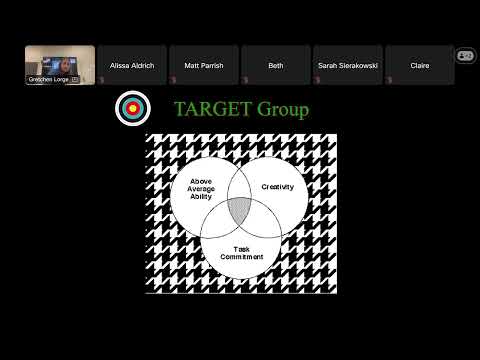
Teachers said the district uses multiple sources of information rather than a single test to determine placement. Nomination packets include a parent inventory and a teacher inventory that rate behaviors such as task commitment, creativity and academic ability. After inventories are returned, students undergo on-site screening and additional testing administered by a trained district proctor. The district told parents it uses achievement testing and an IQ measure as part of the review; the meeting also noted the district previously used Woodcock-Johnson products and has moved to the Wechsler Individual Achievement Test (WIAT) for achievement measures. A reading screener that the district has begun using was identified in the meeting as Aimsweb; I-Ready benchmark data are also considered where available.
Presenters described the district’s benchmark ranges in broad terms: I-Ready scores in the 90th percentile or higher are a common indicator that families might consider nominating a child, though staff emphasized they look at the whole child and will accept nominations even when a single score is below that benchmark.
Timeline and parental access
The district explained that the nomination period is open now and that the technical nomination deadline mentioned at the meeting is Jan. 31 (parents who submit late were told to contact staff). Staff said testing typically occurs in February and March with the goal of completing screening before spring break so families can be notified around April 4. A follow-up parent meeting to discuss curriculum and logistics was scheduled for April 14, with the district asking families to give a placement decision by April 21 to allow staffing and enrollment planning.
Anonymity and consent
Presenters said nomination materials and test scores are anonymized for the placement meeting: a district secretary assigns each child a numerical code and compiles scores for review. Staff emphasized that parent consent is required for testing even when a teacher completes a nomination.
Transportation, siblings and classroom logistics
Teachers said district busing is provided for students living within the D C Everest Area School District for as long as the family has at least one child in the Challenge program; when a family no longer has any children enrolled in the program, busing for that family stops. Presenters said siblings may attend the same Riverside site on request and that students in the Challenge program do not have separate encores, lunches or recesses; those are with grade-level peers. Teachers described regular opportunities to mix students across classrooms through triads, shared specials and combined field trips.
Class size and program pacing
Teachers gave examples of current class sizes (22, 23, 14 and 19 in different classrooms) and said class size varies yearly; they reported past years reaching about 30 students in a single class before a second teacher was assigned. Instruction was described as typically one year ahead in ELA and math (for example, second graders receiving third-grade math content), and staff said Riverside uses the Houghton Mifflin Harcourt (HMH) curriculum rather than longer nine-week units used elsewhere because Challenge students often progress at a faster pace.
Homework and expectations
Presenters said the district’s homework guideline is about 10 minutes per grade level per night for all students (for example, roughly 50 minutes for fifth grade) and separately encouraged daily reading as important to advanced readers. Staff told parents that some students complete class work and have little or no nightly homework while others may need additional practice at home depending on how they use class time.
Parent questions and next steps
Teachers answered parent questions about how to prepare a child (they recommended not framing testing as high-stakes), whether students must be retested annually (they said accepted students remain in the program without yearly retesting unless a family declines placement and later wants to reapply), and how partial qualifiers are handled (math-only advanced students can sometimes attend for a single math block if schedules allow, though full-day placement is easier to accommodate at Riverside). Staff reiterated contact points — the Riverside staff page and the district secretary — for follow-up and sign-up details.
The meeting closed with an invitation to a student career fair and a reminder that nomination forms are available through school pages and should be emailed or delivered to the Riverside office for processing.