Get Full Government Meeting Transcripts, Videos, & Alerts Forever!
Get email alerts on the Visa Enforcement topic
No spam. Unsubscribe anytime.
Rubio says U.S. revoking visas for students involved in campus disruptions, cites deportations of gang members
Summary
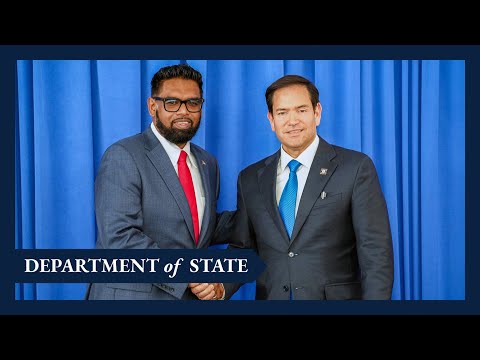
At a press event in Guyana, U.S. Secretary of State Marco Rubio said the United States has revoked visas for people he described as participating in campus disruptions and confirmed recent deportations of gang members; he declined to provide detailed counts beyond saying the number could exceed 300.
At a media session following the Guyana–U.S. memorandum of understanding signing, U.S. Secretary of State Marco Rubio said the United States has revoked student visas for people he described as participating in campus disruptions and confirmed deportations of gang members.
When asked about the case of a Turkish student detained in Boston, Rubio said, “We revoked her Visa. It's an F1 Visa, I believe.” He described the policy in broader terms: if someone uses a student visa to “participate in movements that are involved in doing things like vandalizing universities, harassing students, taking over buildings, creating a ruckus, we're not gonna give you a visa.”
A Reuters reporter asked whether the State Department’s partners were involved; Rubio said the list of visa revocations had been vetted by Homeland Security and that the U.S. government had confidence in it. When pressed about the number of visas revoked, Rubio acknowledged the count could be “maybe more” than 300 and said the administration “do[es] it every day.”
Rubio also addressed deportations of individuals he described as gang members, saying the United States is removing people it identifies as dangerous and that some deported individuals were welcomed on arrival in their home countries by figures the secretary described as linked to criminal networks.
His remarks described a policy of revoking visas and removing individuals when officials determine they have used U.S. visas to engage in disruptive or criminal activity. Rubio repeatedly framed the policy as standard sovereign practice: “Every country in the world has a right to decide who comes in as a visitor and who doesn't.”
Reporters requested follow-up details on individual cases and counts; officials at the event did not provide a list of names or an exact total number of visa revocations during the session.