Lifetime Citizen Portal Access — AI Briefings, Alerts & Unlimited Follows
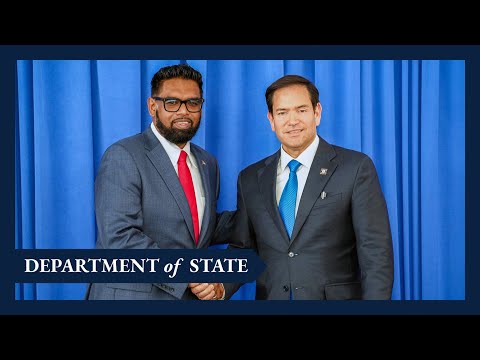
Guyana and U.S. sign security cooperation MOU; U.S. pledges support against territorial threats
Loading...
Summary
Guyana and the United States signed a memorandum of understanding to deepen security cooperation, emphasizing information sharing, synthetic drug detection, transnational-crime investigations and military-to-military cooperation; U.S. Secretary of State Marco Rubio reiterated U.S. support against illegitimate territorial claims.
Guyana and the United States signed a memorandum of understanding to deepen security cooperation, focusing on information sharing, synthetic drug detection, transnational organized-crime investigations and prosecutions, and military-to-military cooperation, officials said at a signing ceremony.
Peggy McClennan, a Ministry of Foreign Affairs representative, said the MOU will “strengthen information sharing, synthetic drug detection, transnational organized crime investigations, and prosecutions, and military to military cooperation.”
The agreement aims to bolster regional stability and guard Guyana’s sovereignty amid what leaders described as external pressures. President (name not specified), speaking at the same event, said the visit and the MOU “consolidate our bilateral agenda” across security, trade, energy, investment and infrastructure and “reassured our partner that we'll continue to ensure all international and local labor laws are adhered to in the hiring of regional and international labor.”
Secretary of State Marco Rubio said the United States will support Guyana’s transformation and help deter regional threats. “There will be consequences for aggressive actions,” Rubio said, adding later, “There will be consequences for adventurism.” He framed the security elements of the MOU as intended to prevent transnational organised crime and narcotics trafficking from gaining a foothold in Guyana.
Officials and the secretary described the MOU as a framework for practical cooperation rather than a detailed operational plan; the ceremony did not include published implementing timelines or budget figures. McClennan and Rubio both cited information sharing and joint efforts on synthetic-drug detection and prosecutions as priority areas under the agreement.
Speakers also linked long-term development goals to security cooperation. Rubio highlighted potential economic opportunities including energy development, agriculture for regional markets, and digital infrastructure such as data centers, saying reliable, affordable energy will be fundamental for technology and industrial investments.
The event included public remarks and a short question-and-answer period with visiting and local media. No formal vote or legislative approval was recorded at the ceremony; officials described the signing as a bilateral executive agreement between the two governments.
Officials said they will pursue longer-term arrangements and further collaboration on the topics raised but did not give dates or funding commitments for specific programs. The MOU was presented by the two governments as a first step toward expanded cooperation in security and complementary economic sectors.