Get Full Government Meeting Transcripts, Videos, & Alerts Forever!
Get email alerts on the Parenting Emotional Regulation topic
No spam. Unsubscribe anytime.
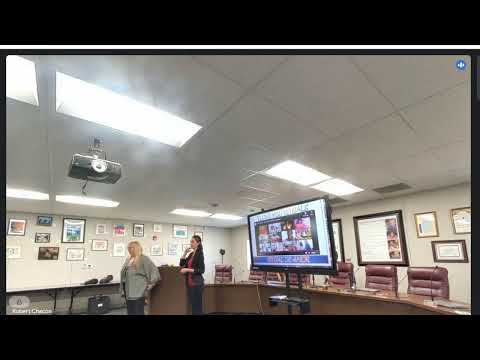
Parents attend Snowline Joint Unified–area workshop on calming and behavior strategies for children
Summary
A Spanish-language parent workshop offered practical tools — breathing exercises, visual supports, routines and connection techniques — for helping children regulate emotions and behavior. Facilitators described the "executive, emotional and survival" brain states and provided free materials and follow-up classes for families with young children.
A Spanish-language parent workshop in the Snowline Joint Unified area focused on practical strategies for helping children manage behavior and emotions, with facilitators demonstrating breathing exercises, visual supports and routines for home and school.
The facilitator explained that children and adults use three broad brain states — an "executive" state for learning, an "emotional" state for upset, and a "survival" state for crisis — and said parents should aim to remain in an executive state to teach self-regulation. The facilitator said, "tenemos que siempre estar en el estado ejecutivo" ("we must always be in the executive state") and led examples of calming tools parents can practice with children when they are calm so the techniques will work when children become upset.
Why it matters: Participants were given take-home materials and simple, low-cost strategies intended to reduce daily conflict at home and improve children's readiness to learn. Facilitators emphasized that many behaviors stem from unmet needs — sleep, food, hydration — and that routines and small visual cues can prevent meltdowns.
Most important details
- Breathing exercises and naming feelings. Facilitators demonstrated a "balloon" breathing exercise and a 4-4-4 pattern (inhale 4 seconds, hold 4, exhale 4) and encouraged parents to teach these when children are calm so the techniques are available during an episode of upset.
- Visual supports and routines. The class provided cuttable visual cards to create step-by-step routines (for example: brush teeth, snack, do homework). A facilitator said these help children anticipate transitions and lower anxiety.
- Grounding and pressure strategies. Presenters suggested using a lightly weighted backpack with one or two books to help very young, restless children feel grounded, and described movement options such as walking or physical play to release tension.
- "Historia en la mano" (story in the hand). For anxious children, facilitators recommended a finger-based routine (e.g., "four things I like, two things I'm good at, one thing I worry about") to reframe attention toward positive facts and coping skills.
- Academic routines and modeling. Parents were encouraged to model focused behavior during homework time, create an assigned place for schoolwork and use short breaks if a child becomes frustrated.
Resources and logistics
The workshop materials include a packet of visuals and a list of follow-up activities. The facilitator said the program offers additional free parent workshops for ages 3–5 and other family classes at IHT and at a local Vallarta site; participants were given directions to the meeting location ("entrar a la bahía, a la mano izquierda, en la esquina"), and told classes are free and open to all families.
Participant remarks
Jane, a workshop participant, said, "Mi superpoder es ser mamá" ("My superpower is being a mom"), describing the multiple roles parents fill. Agustín Morajón, a participant, confirmed he has four children when asked about family size. Karinbury, another participant, identified herself and said she also has four children.
Discussion vs. decisions
This session was educational and discussion-based; no formal actions, votes or policy decisions were recorded. Presenters offered strategies and details for parents to try at home, and the session included Q&A and participant examples.
What to watch next
Facilitators said they will continue to hold workshops and distribute the visual materials; parents who attended were encouraged to practice the tools at home and to attend further sessions for hands-on activities.