Get Full Government Meeting Transcripts, Videos, & Alerts Forever!
Get email alerts on the Social Emotional Learning topic
No spam. Unsubscribe anytime.
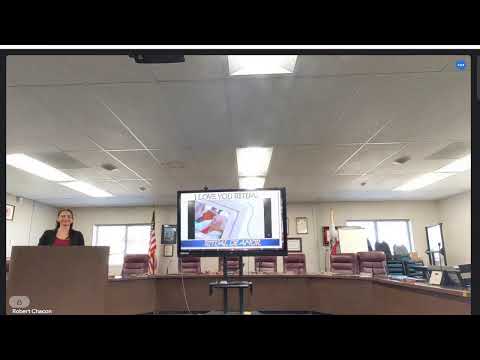
Snowline outreach team presents connection and self‑regulation strategies for parents and students
Summary
An outreach member assigned to the Snowline Joint Unified district outlined four elements of connection, naming emotions, breathing and fidget strategies, visual supports and homework routines, and listed free local resources including IHG workshops and an online Boys & Girls Club.
An outreach team member assigned to the Snowline Joint Unified district presented strategies for helping children move from emotional or survival states into a calm, “executive” state so they can learn and self‑regulate.
The presenter said the “four elements of connection” are eye contact, presence, touch (with permission) and playfulness, and described steps parents and caregivers can use to name emotions, teach breathing techniques and create routines that support concentration at school and at home.
The outreach team member said many children enter the school day in an emotional or survival state and will not readily use self‑regulation tools unless caregivers model calm behavior. “In order to get them over to the executive state, we, as parents, have to model that for them and be in the executive state because we can't calm somebody down if we're a mess in our emotional state or in our survival state,” the presenter said.
The presentation covered specific tactics: naming feelings with a simple faces chart so children learn to identify sadness, worry or hunger; sensory tools such as glitter bottles to visualize calming; and several breathing exercises including a “balloon” breath (three deep inhales then release) and box breathing (inhale four seconds, hold four, exhale four). The presenter recommended practicing these strategies when children are calm so they can use them later during upset moments.
For toddlers and young children the outreach member suggested games and gentle physical touch (with permission) such as story time and high fives; for older children and teens the recommendation included box breathing, fidgets, heavy activity (walking, bouncing a ball) and “story hand”/“brain hand” exercises that pair one worry with multiple positive items as a quick cognitive reframing tool.
The presenter also emphasized basic physiological needs and visual supports: ensuring children arrive at school fed and hydrated, providing routine charts and transition cues, and creating a dedicated homework space stocked with necessary materials. On homework, the outreach member suggested building routines that include short breaks and giving children choices about sequencing (for example, snack then homework) so they have buy‑in.
Attendees were given handouts and small sensory items (stars, springs) and the presenter noted several local programs and upcoming events: free IHG center workshops (described as running from about 3 to 5 p.m.), an online Boys & Girls Club offering for local families through the IHG center, a community advisory committee session in April focusing on social‑emotional well‑being, and a district podcast planned to launch in April on Spotify, Apple Podcasts and other platforms. The presenter said brochures in attendees’ folders include contact information and a sign‑up form for follow‑up from the outreach team.
No formal board actions or votes were taken during the presentation; the session was informational and focused on parent/caregiver strategies and community resources.