Get Full Government Meeting Transcripts, Videos, & Alerts Forever!
Get email alerts on the Public Safety Technology topic
No spam. Unsubscribe anytime.
Council delays vote on Flock license-plate readers after resident concerns; moves item to second reading
Summary
Painesville police outlined a proposed three‑year Flock license-plate reader contract funded by the police levy; after questions from council and requests that residents be given time to review, council moved the resolution to second reading and did not finalize the contract.
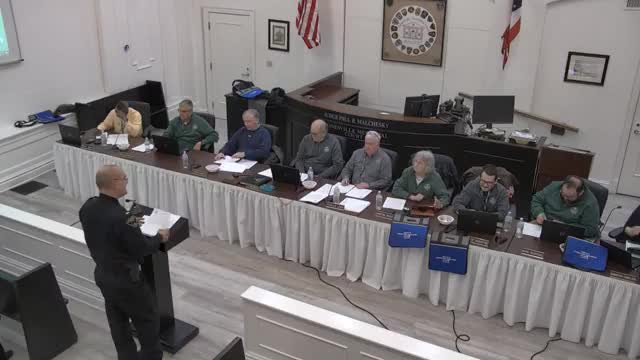
Painesville police presented a proposal on Feb. 17 to lease Flock license-plate reader cameras under a 36‑month proprietary contract funded from the police levy, but council declined to adopt the resolution that night and moved it to second reading to allow public review.
Toby, a police department representative, described the system as a networked, proprietary license-plate reader service that runs plates against NCIC and other law-enforcement databases and issues alerts — for example, for stolen vehicles, amber alerts, or vehicles associated with warrants. Toby said the cameras are not configured to enforce red-light or speeding violations. He told council the proposed deployment would include roughly 10 camera sites and the proposal had $92,000 allocated from police levy funds for a 36‑month term.
Council members asked about mounting, whether the cameras integrate with the city’s intersection camera system, who would see live data, and which jurisdictions already use the system. Police staff said Flock is a leased/proprietary service separate from the city’s Avigilon/Motorola intersection camera system; the vendor maintains and repairs equipment under contract and the system can return matches from cameras nationwide.
Why it matters: The system raises privacy and public-notice questions because it continuously reads passing license plates and shares alerts across participating jurisdictions. Several council members and staff recommended public outreach before final action.
Council direction: Rather than adopt the resolution on an emergency vote, council moved the Flock resolution to second reading and asked staff to give residents an opportunity to review and comment. The motion preserves the council’s ability to act at a later meeting but delays contract execution so staff can provide additional notice and response to resident concerns.
Ending: Police staff said other local jurisdictions and the Lake County Sheriff’s Office use Flock cameras. Council asked staff to return with additional information and to advertise the measure for public comment before final adoption.