Get Full Government Meeting Transcripts, Videos, & Alerts Forever!
Get email alerts on the Disaster Recovery topic
No spam. Unsubscribe anytime.
Malibu officials report rebuild‑center opening, urge FEMA/state coordination as recovery accelerates
Summary
City staff reported that the Malibu Rebuild Center opened with more than 20 first‑day appointments and announced an open house for March 19. Council and staff discussed debris removal, beach cleanup, utility undergrounding, PCH access passes, senior services and data the council asked staff to track to monitor rebuild progress.
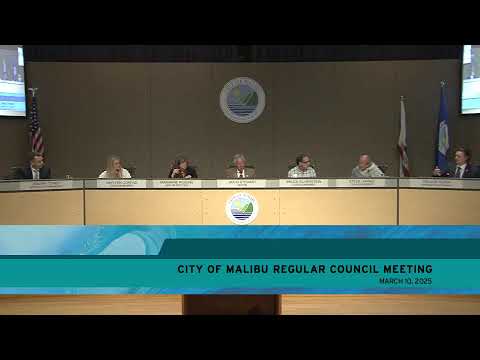
City officials reported progress on multiple wildfire recovery fronts at the March 10 Malibu City Council meeting and urged continued coordination with state and federal agencies as residents begin rebuilding.
Acting City Manager Joe Toney told the council the Malibu Rebuild Center opened earlier that day and saw more than 20 appointments. The center is intended to give applicants a single place to meet city staff about permits and the rebuild process; staff also outlined a rebuild‑center open house scheduled for Wednesday, March 19 from 5 to 7 p.m.
“The rebuild center opened today to much fanfare. We actually had 20 plus appointments today on the first day,” Toney said. Deputy City Manager Alexis Brown and other staff said the center will collect application data and provide a coordination point for building plan checks, planning questions and other permit steps.
Council members asked staff for regular updates from the center. “I’d like to know on a weekly basis when we get these meetings, how many people came in … what neighborhoods did they come in from? How many people came in for permits above a like‑for‑like and what neighborhoods they came in from,” Council member Ewing said, pressing staff to provide more granular data so the council can monitor rebuild pace and identify potential policy changes.
Staff said they will track applicants and provide council updates at future meetings, though some data (for example, a homeowner’s exact rebuild choices) may take time to aggregate because applicants may first come in for general information rather than formal plan submittals.
Local and county actions: City staff highlighted that Los Angeles County adopted a temporary eviction moratorium and a $10 million rent‑relief directive to help workers and small businesses affected by the fires; the county’s program includes six months of tenant protection through July 31, 2025, and requests philanthropic support to augment relief funds. City staff later said that, on review of the county ordinance text, the eviction protections apply to residential tenants only and that separate protections for small businesses would require further council action.
Debris, beach cleanup and Army Corps involvement: The council discussed stalled debris cleanups on beachfront lots and the need for federal support. City staff and residents urged a path to bring the U.S. Army Corps of Engineers into phase‑2 cleanup work for septic and hazardous debris on beachfront properties; staff said the mayor’s office had sent a letter to the governor seeking state assistance and that the city was pushing state and county offices to advance the Army Corps review. Several speakers urged the city to use emergency authority or seek a gubernatorial directive to allow cleanup where property owners have not returned right‑of‑entry forms.
Utility undergrounding and telecom conflicts: The council heard repeated public concern about Southern California Edison’s (SCE) undergrounding work and telecom providers (Frontier and Spectrum) not coordinating simultaneous undergrounding. Residents asked the city to press the California Public Utilities Commission and the utilities to ensure all above‑ground lines are removed when trenches are open and to avoid leaving creosote poles that remain fire hazards.
Public safety, passes and National Guard: The Los Angeles County Sheriff’s office reported 42 reported Part 1 crimes year‑to‑date for February and said the department had entered a suspect into the system after DNA processing of evidence in a burglary case. Staff also described an updated universal PCH access pass (now shared with the city of Los Angeles and the county) for residents in affected burn zones and for essential workers. Council members and the public debated pass scope, eligibility and traffic checkpoint placement; staff said passes are evaluated case by case and that residents’ previous passes remain valid.
Vulnerable populations and senior services: Several speakers urged better outreach to seniors and residents with mobility or medical needs. City staff said sandbags and debris‑flow preparation are ongoing, that sand and sandbags are available at the library and distribution sites, and that public works crews will run extended shifts during the forecast storm period.
FEMA, like‑for‑like and rebuild policy: A recurring subject was the governor’s like‑for‑like guidance and how it will apply. Council discussion clarified that, for the Palisades fire area, staff is interpreting the governor’s order to preserve like‑for‑like rebuilds (including the governor’s plus‑or‑minus 10% allowance) without Coastal Commission review; for other fires or for projects that do not meet like‑for‑like parameters, standard coastal and CDP reviews may apply. Council members asked staff to prepare a clear policy definition so residents can plan rebuilds with certainty.
Requests and next steps: Council members asked staff to provide weekly rebuild‑center metrics, explore ways to consolidate technical reports (for example wave run‑up and geotechnical studies) across affected neighborhoods where feasible, and to report back on utility undergrounding coordination. The council set a special work session to begin focused discussion on rebuild policy items (including like‑for‑like definitions and self‑certification for rebuild applicants) to help set consistent expectations and speed approvals.
Residents and community groups at the meeting asked for a visible dashboard of rebuild progress, quicker debris cleanup, more aggressive utility coordination, continued sandbag and storm‑prep support, and better outreach to seniors and other vulnerable residents.