Get Full Government Meeting Transcripts, Videos, & Alerts Forever!
Get email alerts on the Rebuild Policy topic
No spam. Unsubscribe anytime.
Malibu council debates scope of “like‑for‑like” rebuilds under governor’s order
Summary
Council members, staff and residents spent hours discussing how to interpret the governor’s ‘like‑for‑like plus 10%’ rule for fire‑damaged homes, debating who decides what counts as the same location and which safety upgrades should be exempt from size limits.
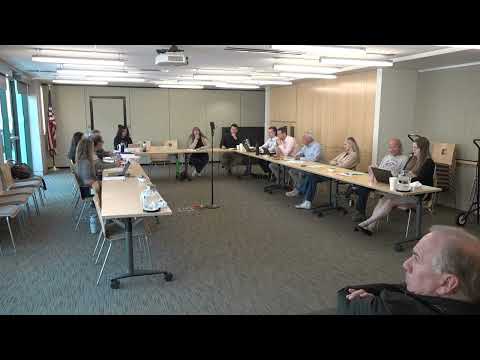
Malibu City Council members and staff spent much of a special March 19 meeting hashing out how to interpret the governor’s disaster rebuild policy that lets homeowners replace damaged homes “in substantially the same location” with an allowance of up to 10% additional size.
The council and planning staff discussed how to define “substantially the same location,” whether changes in orientation or roof type count as a new build and how to treat nonconforming or previously unpermitted structures. Council members emphasized speeding reconstruction for homeowners who want to restore what they had before the Palisades and other fires, while also preserving neighborhood scale and safety.
The debate centered on three practical questions: how to measure the 10% allowance (height, footprint or aggregate), who interprets the standard in unclear cases, and which changes should be treated as necessary safety upgrades rather than discretionary design changes. Planning Director Joe and City Manager David described current practice and staff plans: the city has typically compared an applicant’s previous three‑dimensional “box” (footprint and height) with proposed plans, and where code or view protections apply, staff routes the application to the appropriate discretionary review. “Like for like historically as it’s been applied, is you get your house back in the same location, same approximate location, plus 10%,” Planning staff explained during the discussion.
Council members proposed a mix of policy clarifications. Some members pressed for a narrow, rules‑based definition — for example limiting allowed changes to those that do not increase nonconformity or block neighbors’ protected views — so that quick, straightforward rebuilds are not delayed. Others urged more flexibility to allow both modern safety upgrades and modest design changes that make homes more fire resilient, arguing that many homeowners will not rebuild if the process is too rigid or slow.
City Manager David told the meeting that staff are preparing a policy document and a checklist staff will use to evaluate rebuild applications. Staff also said they will bring a draft policy back to council for direction and noted the city’s existing Coastal Commission and municipal code constraints that shape any interpretation. David also said the city is working to identify specific timelines residents can expect: first plan review target of about 10 business days and a second review target of 5–7 days, though staff warned those targets may change when reviews are done concurrently during the rebuild process.
Public commenters, including homeowner advocates and technical professionals, urged both clarity and speed. Structural and coastal engineer Reg Brown told council he supports additional technical review for unique Malibu conditions and expressed caution about broad self‑certification models. Resident Salo Waha described the emotional and economic pressure on fire survivors and urged council to prioritize displaced homeowners in the rebuild queue.
Council members directed staff to draft a policy that: (1) defines what “substantially the same location” means in measurable terms; (2) clarifies whether changes in orientation or roofline constitute a new location; (3) lists the evidence types the city will accept to reconstruct prior conditions (assessor records, aerial photos, past permits, photographs); and (4) recommends which safety or infrastructure improvements (for example, external fire‑hardening measures) are exempt from the 10% calculation. Staff said they will return with proposed language for council consideration and with examples from prior events (Woolsey) and other jurisdictions.
The council did not adopt a final rule at the meeting. The discussion produced initial consensus points — notably, that proposals which would increase an existing nonconformity should not be fast‑tracked as a simple like‑for‑like rebuild — but left many details for staff to return with as a draft policy.
Ending: Council members stressed the need for clear, written rules so residents know what they can rebuild quickly and what will require discretionary review. Staff said they will present a draft policy and recommended procedures in a future meeting and continue refining the rebuild center’s checklists so applicants and reviewers share the same expectations.