Get Full Government Meeting Transcripts, Videos, & Alerts Forever!
Get email alerts on the Municipal Cannabis topic
No spam. Unsubscribe anytime.
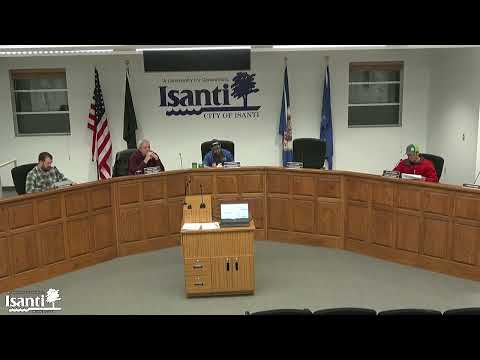
Isanti council directs staff to research municipal cannabis dispensary; motion passes 3-1
Summary
After extended discussion about revenue potential, security and regulation, the council voted 3-1 to direct staff to research a possible municipal cannabis dispensary and report back; Councilmember Heaman opposed.
The Isanti City Council voted to direct staff to study a potential municipal cannabis retail operation and return with financial and operational recommendations.
The motion to authorize staff research passed 3-1. Mayor (name not specified) made the motion and Council Member Petersen seconded it; Council Member Heaman cast the lone opposed vote. The mayor announced: "Motion carries three-one. With Councilmember Heaman opposed."
Why it matters: Council members debated whether a municipal dispensary could generate revenue for the city, offer local control over operations, and prevent out-of-state entities from capturing local receipts. Supporters said municipal ownership could protect residents and preserve local tax stability; opponents raised concerns about cash handling, federal rules, and whether municipalities should run retail enterprises.
Discussion and details: Keith, the city liquor-store manager, told the council he had prepared an information handout and said municipal operations could produce revenue without raising property taxes. He outlined some state-mandated fees and timelines: "The application window is February 18 is when it opens up. Applications have to be in by the fifteenth. There is a $2,500 application fee when you submit the application. And then if you're approved when you get the license, there's a $2,500 fee. And then every year, there's a $5,000 renewal fee." (Direct quote as stated in the meeting.)
Council members and staff also discussed operational issues: security, "seed-to-sale" tracking, banking availability for cash proceeds, and appropriate hours of operation. Mike (title not specified) said internal controls and audits could be designed and that he would not recommend a dispensary unless he was confident it would be financially viable. Todd Christiansen, identified as an Isanti County commissioner for District 4, told the council the county had passed a cannabis ordinance and urged the city to be proactive so local rules (hours, limits) would be in place before outside applicants submitted licenses.
Some council members favored a phased approach: a short-term lease for a small standalone building (Keith suggested about 1,200 square feet) and a review after roughly three years to determine viability; others urged caution because of federal classification and bank acceptance of proceeds. The council discussed restricting the number of licenses and the competitive effects of municipal ownership versus private operators.
Action and next steps: The motion directs city staff (Keith, Mike and other staff as appropriate) to research business plans, banking options, examples from other cities, and return with recommendations. The council did not adopt any ordinance changes at this meeting; staff research was authorized only.
Ending: Staff will collect comparative business plans and regulatory information and present findings at a future meeting. No license or construction decisions were made tonight.