Long Road Energy presents 7 Bridges Solar plan to Mecklenburg planners; supporters cite jobs, conservation and local spending
Loading...
Summary
Long Road Energy presented a special-exception permit application for the 7 Bridges (also referenced as Everett/7 Bridges) solar project, describing a roughly 1,200–1,295-acre site with a 435-acre panel footprint, conservation commitments and local economic benefits; several local officials and residents spoke in favor during the hearing.
Long Road Energy presented its special-exception permit application for the 7 Bridges Solar project at a Mecklenburg County Planning Commission public hearing. Company representatives described the project footprint, conservation commitments, revegetation and economic benefits, and several local officials and residents spoke in support.
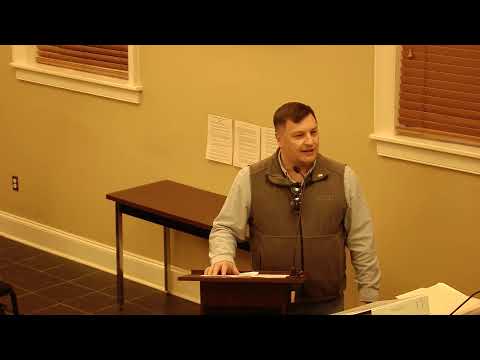
Cliff Sher, development director with Long Road Energy, said the company, founded in 2016, is a developer, owner and operator of large-scale renewable projects and has developed and moved into construction more than 5,000 megawatts of projects nationwide. Sher described the 7 Bridges site as approximately 1,295 acres of timberland with an anticipated development footprint around 435 acres, and said the project would include a permanent conservation area of about 250 acres adjacent to the South Mahurin River.
Sher said the project would set panel arrays back substantially from Scott’s Crossroads and the South Mahurin River and would leave large areas of the property in timber. He said the company is proposing to post financial assurance for decommissioning and that the decommissioning cost would be reevaluated every five years. Sher also said the company is pursuing revegetation plans and pollinator-friendly seed mixes and is considering sheep grazing within fenced areas to reduce mechanical mowing.
Darren Lawrence, vice president for environmental at Long Road Energy, described past Long Road projects where the company worked with regulators and researchers on stormwater management, revegetation and habitat solutions. Sher and Lawrence cited examples—including conservation easements and pollinator programs—intended to address concerns about revegetation and stormwater performance on previous solar projects elsewhere.
Company materials presented to the commission estimate over $30 million in economic output during construction (about $17 million direct spending and $14 million in indirect/induced spending), $10 million in county revenue over the life of the project (via revenue-share programs and property taxes) and commitments including a $500,000 contribution to the town of Chase City at the time of construction and a $150,000 donation to the Clarksville Ruritan energy-bill assistance program.
Public commenters who spoke in support included Alden Fanger, mayor of Chase City, who said Long Road Energy had worked to build local trust; Bev Wood and other local residents said prior experiences with solar in the county had been mixed but praised Long Road’s outreach and mitigation plans. Ryan Romack (agrivoltaics operator from Halifax County) said Long Road “takes care to beneficially impact the community” and encouraged the commission to study how sheep grazing (approximately 800 sheep referenced in testimony) would affect the county.
The applicant asked the commission to approve the SEP application; the transcript excerpt ends before any roll-call vote on this specific SEP is recorded in the provided excerpt. Commissioners and staff asked multiple questions about setbacks, stormwater controls, revegetation and decommissioning assurance; the applicant said a long-road employee would serve as a public liaison during construction.