Get Full Government Meeting Transcripts, Videos, & Alerts Forever!
Get email alerts on the Municipal Cannabis topic
No spam. Unsubscribe anytime.
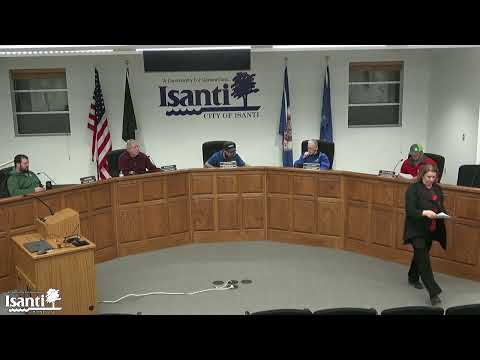
Isanti council discusses municipal cannabis dispensary; no application approved tonight
Summary
Council heard a presentation on a potential city-run cannabis dispensary, including legal constraints, revenue estimates and operational options. A motion to apply for a municipal retail license was made but received no second. Council agreed by consensus to revisit the issue at the first meeting in March and seek more community feedback.
Liquor store manager Lusk outlined a proposal for an Isanti municipal cannabis dispensary and said the city could use a municipal operation to “enhance public safety, contribute significantly to our local economy, and uphold our community values.”
The presentation described operational options, legal limits and conservative revenue estimates. Lusk said staff had sketched a preliminary business model that used conservative sales of $2.6 million a year and staffing plans with a lean schedule to limit startup risk. He also shared an attorney memo from Kennedy & Graven that raised legal concerns about partnering arrangements with private groups such as Red Pine Equity Group and summarized Minnesota statutory limits discussed during the meeting.
Nut graf: The council’s wider interest in exploring a municipal dispensary centers on potential local revenue and tighter local control over operations and safety; council members also raised legal, fiscal and community-culture questions. After extended discussion and competing views about leasing versus building and about community input, a motion to apply for a municipal retail permit was made but failed for lack of a second. Council did not approve any licensing or funding action at the meeting and set the item for further consideration at the first March meeting.
What was presented and debated Liquor store manager Lusk and Finance Director Becker answered questions about how a municipal operation would work. Lusk described state licensing limits the council would have to follow: a retail license allows up to five retail locations per cannabis retailer, but ownership limits restrict a single person or entity from owning multiple retail businesses in one city beyond statutory caps. Lusk read from a memo that cautioned cities about partnerships that could conflict with Minnesota Statutes, and he cited Minnesota Statutes section 465.717 when discussing whether a city could form a separate corporation or LLC to operate with a private partner.
Lusk said his preliminary, internal estimate used conservative sales figures and staffing assumptions; during discussion he noted banks require armored pickup and Federal Reserve processing for large cash deposits for dispensaries. He also cautioned that national dispensary profitability varies, citing a nationwide 2023 survey line that Lusk quoted as showing roughly 29% of dispensaries reported profits that year.
Council concerns and competing proposals Several council members urged broader community input before the city committed public resources or endorsed a municipal operator. One councilmember asked staff to solicit public feedback via the city website and social media. Others pressed for a cautious, staged approach: several council members said they preferred starting with a short-term lease (examples discussed included a two-year minimum with optional extension years) to test the market before any city-funded building project. Some members expressed moral or cultural concerns about city endorsement of cannabis retail.
Formal motion and next steps Mayor (title used in the meeting) made a motion to approve applying for the municipal retail permit; the motion received no second and therefore failed. No other application or funding motion passed. Council members agreed by consensus to place the item on the agenda for the first meeting in March so members can review additional information and gather community feedback before any application or expenditure decision.
Ending: The council requested additional legal review, community outreach and more detailed leasing/build vs. lease financial modeling before taking any action. Staff was asked to return with more specific cost estimates, any updated legal guidance about municipal operation or partnership structures, and a plan to solicit resident input in advance of the March meeting.