Get Full Government Meeting Transcripts, Videos, & Alerts Forever!
Get email alerts on the Police Recruitment topic
No spam. Unsubscribe anytime.
Council weighs take‑home vehicles, signing bonuses to address police staffing and overtime costs
Summary
Council members discussed multiple recruitment and retention measures — take‑home squad cars, signing bonuses staggered over time, a 15‑mile mileage limit and residency incentives — after staff reported overtime costs of roughly $40,000–$48,500 a year. Staff was directed to draft policies and return with comparative numbers at a future meeting.
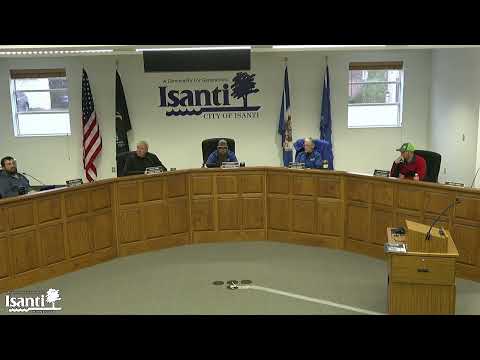
Isanti City Council members and staff spent an extended portion of the meeting discussing options to recruit and retain police officers, including take‑home vehicles, signing bonuses and residency or mileage limits.
Council members and staff said the department has been spending roughly $40,000 to $48,480 annually on overtime since the staffing shortfall began, and discussed tradeoffs between vehicle incentives and direct signing bonuses. Council members suggested a $4,000–$5,000 signing bonus for new hires, with some members proposing graduated payments tied to field training and the first year of service; one council member argued $10,000 was too high.
Why it matters: Council members tied the staffing discussion directly to recurring overtime costs and officer burnout. Several members said take‑home squad cars could reduce mileage reimbursements and help retain officers already on staff while signing bonuses would primarily affect new hires.
During discussion council members estimated mileage reimbursement cost for a take‑home vehicle at roughly $3,000 per vehicle per year versus a larger one‑time signing bonus. GPS systems are installed in patrol vehicles, and staff said two different GPS systems are in use. The council explored a 15‑mile radius as a possible eligibility limit for take‑home vehicles; members also discussed monitoring and swapping vehicles based on accumulated miles to manage fleet longevity.
Council members and staff debated the best structure for signing bonuses. Several speakers recommended splitting payments (for example, one third after field training, one third after six months and the remainder after one year) to encourage retention. Examples from other jurisdictions were cited: Prairie Island was reported to offer a $5,000 hiring bonus split into $2,000 after field training and $3,000 at the end of the first year; lateral hires were described as sometimes receiving higher bonuses.
Sheryl Davidson, a resident who identified herself at the meeting, described experience from the health care field and recommended distributing a hiring bonus in installments rather than paying it all up front: "I think what I've found through my experiences with sign on bonuses is distributing them. The best one I found was distributing it in a quarterly. Like, you got your first chunk at 3 months, 6 months, 9 months, the rest at a year." (Sheryl Davidson, resident)
Council members discussed legal limits on residency requirements. One council member noted past attempts to require municipal employees to live within city limits were challenged and found legally problematic; council members agreed staff should research whether offering a financial incentive to move into the city would be lawful and how it could be structured.
Several members suggested implementing a formal policy for take‑home vehicles before wide rollout and recommended a pilot or review period. Council agreed to direct staff to draft a take‑home vehicle policy and a separate draft policy for a signing bonus, gather comparative numbers from surrounding agencies, and return the materials at an upcoming council meeting so the council could consider action.
The council did not adopt any financial incentive or policy during the meeting; members characterized the item as a discussion and requested staff follow‑up. Staff said recruitment incentives discussed would likely be split between the current and next year’s budgets depending on timing.
Ending: Staff was asked to return with proposed policy language, cost estimates and comparator data from neighboring agencies at a future meeting for further council consideration.