Get Full Government Meeting Transcripts, Videos, & Alerts Forever!
Get email alerts on the Property Assessment Revaluation topic
No spam. Unsubscribe anytime.
Fond du Lac officials brief council on citywide property revaluation, letters to go out April 23
Summary
City staff told the Fond du Lac City Council that a revaluation will reset assessed values after assessments lagged market values; staff estimated an average increase and outlined outreach, appeals and next steps.
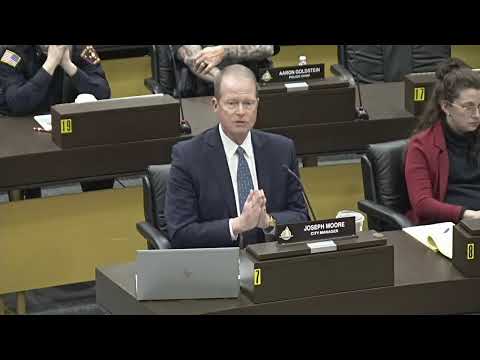
City Manager Joe Moore and administration staff told the Fond du Lac City Council on March 26 that the city is conducting a revaluation of property assessments after assessed values fell well below the state’s equalized value estimate.
Moore said the disparity has triggered a revaluation because the city’s assessment ratio is roughly 0.6 (assessed value divided by the Department of Revenue’s equalized value), well outside the Department of Revenue’s 0.9–1.1 guidance. He told council members the city will mail roughly 16,000 letters with new assessments on April 23 and plans a council presentation that same day to explain the results and expected public questions.
The revaluation will be based on parcel-level assessments done by the city assessor and contractor staff; the state’s Department of Revenue issues an equalized value estimate for municipal markets. Moore illustrated that assessed values are the denominator in the tax-rate formula and emphasized that reassessment alone does not change the city’s tax levy. “Assessors, they have nothing to do with setting property taxes, and I mean nothing,” Moore said, adding that the governing body sets the levy.
Staff gave several numeric points to illustrate the scope: the city’s combined assessed value as of Jan. 1, 2024, was presented as about $3.0 billion, while the Department of Revenue’s equalized value was shown as about $4.5 billion; roughly 95% of the city’s tax base is residential and commercial and about 5% is manufacturing (manufacturing values are handled annually by the DOR). Staff said the current forecast for the average increase in assessed value citywide is about 60 percent, but that final numbers will be available before the April 23 mailing. Moore said the last citywide revaluation occurred in 2019.
Senior accountant Tessa Schmidt walked the council through simple examples to show why some owners will see tax bills fall while others rise: whether an individual property’s tax bill increases depends on how that parcel’s change compares with the citywide average. Schmidt used a four-house hypothetical to show that when every property changes by the same percentage, individual shares remain the same; when increases vary, an owner whose property increased less than the average can pay a smaller share of the levy.
Council members asked about cost, appeals and timeline. Moore said the revaluation contract work and staff augmentation cost is roughly $275,000 and that municipalities across the state have conducted revaluations in recent years because of strong market increases. He noted statutory “open book” meetings with the assessor and the formal board of review process will follow the letter mailing; staff said they will present exact appeal deadlines and procedures at the April meeting and that open book and board-of-review steps are required by state law.
Moore and Schmidt also described planned public outreach: a press release and social media campaign timed to move from general information to property-specific mailings, and an on-demand video of the March 26 presentation that council members can point residents to for details. Moore asked council members for questions they expect from constituents so staff can refine messaging and prepare for likely high volumes of phone calls and in-person inquiries after the mailing.
Moore reiterated that the tax levy approved by the council in November will remain the determining factor for city revenue and that reassessment alone changes the tax rate (levy divided by assessed value) rather than automatically increasing city tax collections. He said staff expects a busy period during late April and May as residents contact the assessor or participate in open-book sessions before any formal appeals are filed.
The presentation closed with staff promising to return April 23 with final assessment averages, appeal timing and additional public-facing materials.