Get Full Government Meeting Transcripts, Videos, & Alerts Forever!
Get email alerts on the Resource Center topic
No spam. Unsubscribe anytime.
Grand Junction council sets special meeting after providers push to extend resource center while planning alternatives
Summary
Service providers urged the Grand Junction City Council to extend operations at the downtown Resource Center to allow an orderly transition of health, behavioral-health and case-management services; council directed staff to schedule a special meeting for formal consideration and asked providers for written transition plans.
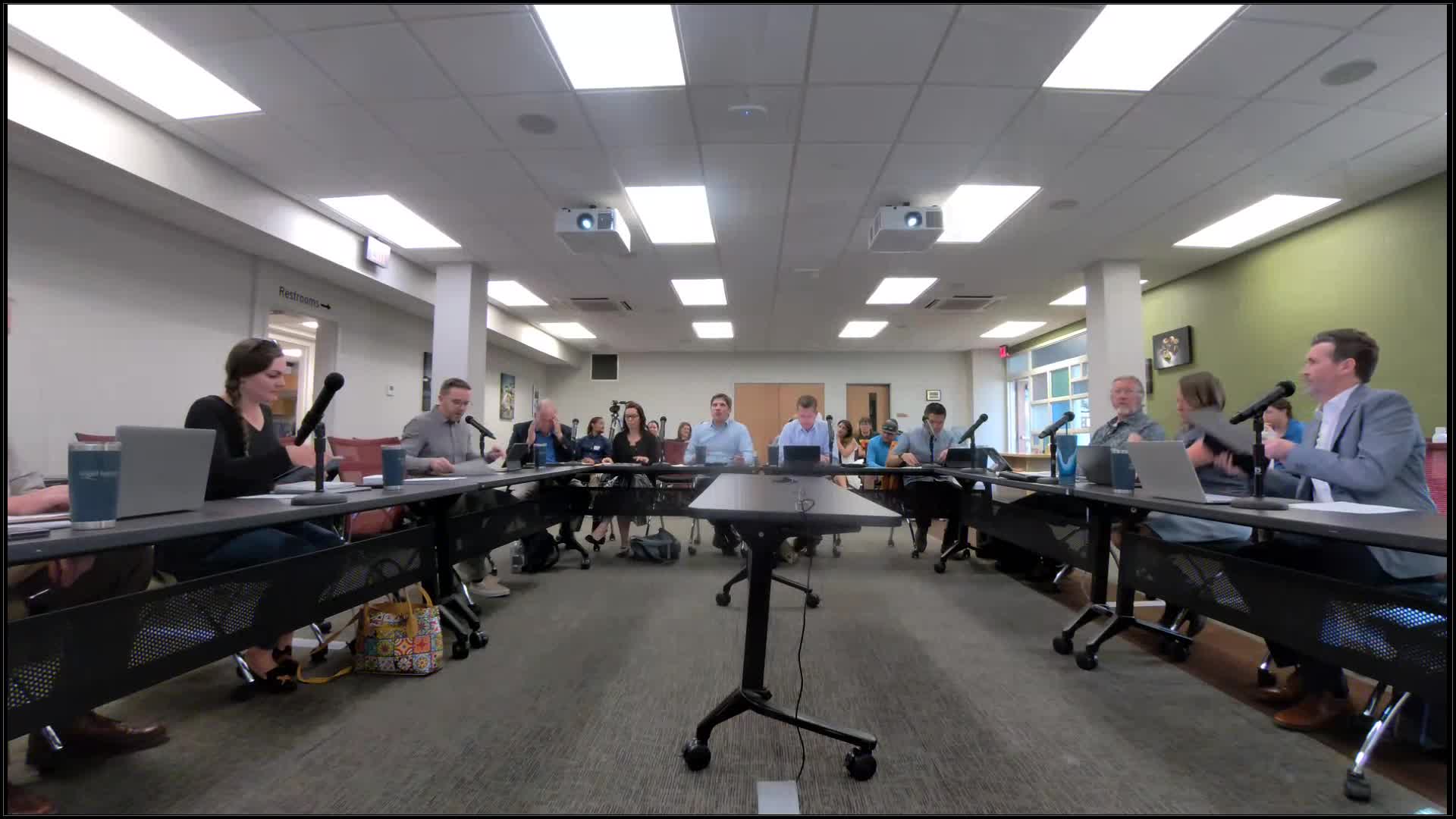
Grand Junction City Council members on March 26 agreed to schedule a special council meeting to consider whether to extend the lease and operations of the downtown Resource Center, after service providers told the council that an abrupt closure would disrupt health and behavioral-health care and burden hospital emergency departments.
A coalition of providers, led in the meeting by provider representatives from Homeward Bound and United Way, said they unanimously recommended an extension to give partners time to implement a “plan B,” tighten operations at the site and train the Resource Center population for a different operating model. Mike (provider representative) said, “The resource center as conceived initially was basically a good idea, but it didn't work. ... We would lock the gate at the front” and require check-in for services.
The providers presented three options for the council: (1) extend operations through June 30 with a locked front gate, a single staff member checking people in at the Third Street gate, daily service hours generally from 10 a.m. to 4 p.m. (Tuesdays starting about 9–9:30 a.m. to allow set up), and a date-certain plan to dismantle the pavilion by the extension end date; (2) a hybrid option with the Resource Center open only three days a week (Tuesday, Thursday and Saturday) and core case management and medical services moved to an alternate site on North Avenue; or (3) immediate closure (April 16 in the options discussed) and immediate teardown.
Providers said some services — notably nursing, case management, behavioral health and a refrigerated food-distribution operation operated by Homeward Bound partners — are difficult to relocate quickly. A provider representative said agencies reported preventative care at the Resource Center reduced avoidable emergency-department visits, and closing suddenly would likely increase strain on Intermountain Health and other clinics.
City staff told council they had been searching actively for an alternate single-location site for roughly four months and had surveyed about 20 properties with a commercial broker; staff reported promising leads that ultimately fell through. John (city staff) told council that finding a single new site that can co-locate all services proved difficult and that any new permanent site would carry operating costs.
Council members expressed divided concerns: some favored a short extension that includes strict operational requirements and a firm teardown date; others warned that tightening rules so people cannot rest or linger at the facility would simply move the cohort onto nearby streets, parks and vehicles without solving transportation and access challenges. Councilmember Rice asked whether an extension could be written so noncompliance with operational terms would allow early lease termination; Sean (city attorney) said a performance-based modification could be structured with cure periods and shorter notice requirements.
Council directed staff to place the item on a special regular meeting agenda soon (staff offered March 31 as a possible quick option or the next available meeting), and asked providers to submit written transition plans in advance. Providers agreed to deliver written materials; staff asked for submissions by Friday so council packet materials could be circulated. Council also asked that three anchor providers be prepared to present (case management, nursing and the organization running the large refrigerated distribution) and suggested a cohesive presentation supplemented by individual anchor-provider remarks.
Council and providers both emphasized transportation as a key unresolved issue if services are dispersed around the city. Providers said limited vehicle capacity and client mobility (carts, pets, belongings) make moving multiple services to separate locations a hardship for clients. Staff and several council members said that while the city is committed to continuing services, the Resource Center’s current co-location model had significant neighborhood impacts and was intended as a pilot.
The discussion produced no formal vote or binding extension during the workshop. The council’s next step is a special meeting to consider specific term-sheet options (city staff suggested option A, option B, option C format) and to receive provider transition plans and operational details (security, hours, teardown timeline, transportation plans) before making a decision.
The Resource Center’s current scheduled closure date discussed in the meeting was April 15; providers recommended an extension to avoid an abrupt service interruption. Providers and city staff proposed a date-certain teardown schedule to be provided to council after providers identify an end date and logistics no later than April 15 if an extension is approved.