Get Full Government Meeting Transcripts, Videos, & Alerts Forever!
Get email alerts on the Emergency Management topic
No spam. Unsubscribe anytime.
Columbia County EMA outlines year-round preparedness work and $50 million-plus FEMA reimbursement process
Summary
Sean Granato, director of the Columbia County Emergency Management Agency, described the agency’s outreach, training and emergency‑operations practices and said the county has submitted more than $50,000,000 in FEMA reimbursement claims tied to Hurricane Helene.
Sean Granato, director of the Columbia County Emergency Management Agency, said the agency runs year‑round outreach, education and planning programs and has submitted over $50,000,000 in reimbursement claims to the Federal Emergency Management Agency for Hurricane Helene.
Granato said that outreach and education are “our big pillars” and that the agency works to teach residents how to prepare household kits and three‑ to seven‑day plans so they are not added to emergency needs during a disaster. “We have normal operations during emergency situations,” Granato said. “We don't wanna change how they operate from normal business because as soon as you do that, you throw those extra unknowns and the uncertainty.”
The agency runs public events—open houses, a public safety and preparedness day, storm spotter training and a Community Awareness and Preparedness program, or CAP—intended to show “one team, one effort,” Granato said. He described the preparedness day as an opportunity for residents to see fire, rescue and other public‑safety partners and for children to explore vehicles and equipment. He said agencies that join the emergency operations center during responses have included Georgia Power and Jefferson Electric, and that staff coordinate with the National Weather Service.
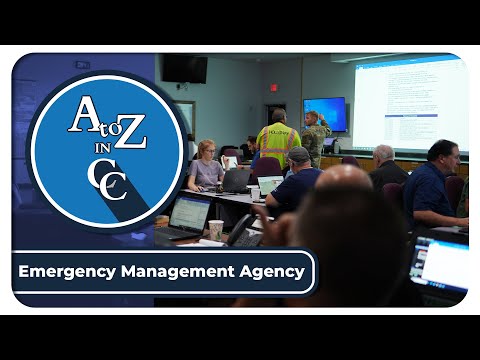
Granato described how the county’s emergency operations center functions during a major weather event: staff from many departments work side‑by‑side to maintain communication and document actions. “It’s all about communication, and you can't communicate any better than in person,” he said. He explained that every work order, hour of personnel time, piece of equipment and receipt must be documented for FEMA’s audit so the county can be reimbursed. “Columbia County EMA is going to be doing this paperwork for probably another year,” Granato said.
Granato said the county’s EMA team is small—“three of you”—and credited two staff members by first name: Bill Botham, who handles outreach events, and Susie, who manages receipts and invoicing to ensure costs are tracked to the correct line codes before submission to FEMA. He noted CAP classes that had been planned for October and March were put on standby because of ongoing recovery work, and that the county is resuming some public events such as the county fair in May.
Granato also highlighted hazards that typically give some lead time—hurricanes and winter storms—but noted shorter‑warning events like severe thunderstorms and the possibility of unexpected events such as earthquakes require exercises and planning. He said the EMA offers storm‑spotter training and “pack a bag” classes and encourages residents to contact the agency for information about outreach and open houses.
For contact, Granato provided the agency’s email address; the transcript rendered it in a single string. The corrected contact is emergencymanagement@columbiacountyga.gov and messages also route through the county 311 system, he said.
The interview closed with a reminder that emergency preparedness is a multi‑agency effort and that EMA’s paperwork and coordination following Hurricane Helene remain a sustained workload for the office.