Get Full Government Meeting Transcripts, Videos, & Alerts Forever!
Get email alerts on the Stormwater Infrastructure topic
No spam. Unsubscribe anytime.
Commissioners highlight stormwater risks after multi-hour workshop; city describes repair methods and funding needs
Summary
After a 3.5-hour workshop on stormwater earlier in the week, Planning Commission members said the city is pursuing engineering fixes and outside funding to address corroded pipe and canal problems.
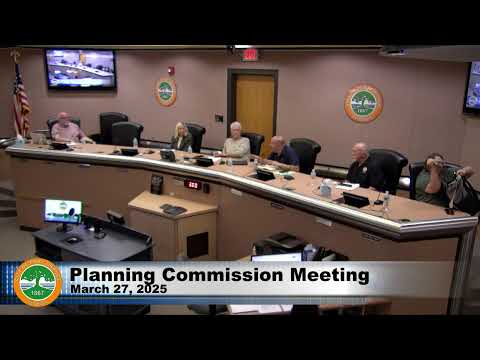
Commissioners used the March 27 Planning Commission meeting to underscore recent city work and public concern about stormwater, canals and drainage after a lengthy, 3.5-hour workshop the city held earlier in the week.
Commissioner Daniel Malagull said the workshop featured a detailed presentation by the city engineer and that “the city did a great job,” noting it raised public awareness about ongoing stormwater issues. Commissioner Stan Schmidt emphasized the city already has engineering studies prepared and is pursuing outside funding: “We were one of only 3 or 4 cities that actually had engineering studies in hand,” he said.
Commissioners and staff described common repair needs: much of the storm infrastructure was installed decades ago and corrugated metal pipe (CMP) in some locations has corroded. At the workshop, engineers discussed a trenchless rehabilitation method in which a fiberglass tube is inverted into the existing pipe and cured in place to form a new lining. Commissioners referenced that method and said it reduces excavation but comes at a high cost — about $1 million per mile, and roughly $15 million to address an estimated 15 miles of degraded CMP in the city’s inventory.
Tim (Community Development staff) said his department continues to enforce the land development code and review projects normally, and that engineering reviews remain part of the permitting process. He said the stormwater modeling and studies will inform future code development and project reviews, although some canal maintenance and large repairs involve other agencies and jurisdictions.
Commissioners described steps the city is taking: engineering studies, modest matching funds set aside by the city, and outreach to state and federal officials seeking grant or assistance. Commissioners also encouraged residents to review the city’s workshop video; one commissioner said Port Orange staff were prepared to present the studies to state decision-makers to seek relief funding.
Commissioners and staff noted the work will be expensive and take time, and they urged cooperation with upstream jurisdictions because much of the stormwater flow originates outside the city through older mosquito-control canals that now serve stormwater functions.
No formal action or vote on stormwater policy was taken at this meeting; the discussion was informational and framed the permitting, repair and funding steps the city is pursuing.