Get Full Government Meeting Transcripts, Videos, & Alerts Forever!
Get email alerts on the Compensation Payroll topic
No spam. Unsubscribe anytime.
Citizens' Compensation Advisory Committee urges 4% salary budget increase, flags classifications below market
Summary
Salt Lake City's Citizens' Compensation Advisory Committee recommended a minimum 4% overall salary budget increase and at least a 2.5% increase to salary range structures for FY2025 after benchmarking hundreds of job groups and identifying several classifications that lag market pay.
The Citizens' Compensation Advisory Committee recommended that Salt Lake City adopt a minimum 4% overall salary budget increase and raise salary range structures by no less than 2.5% for the next budget cycle, citing market benchmarks and sectorwide pay trends.
The committee said it reviewed 89 job groups covering about 1,068 employees and used WorldatWork salary surveys and additional market data to reach its conclusions. "Because of these factors, the CCAC is recommending an overall salary budget increase of no less than 4%," the committee report said. The group also recommended updating the city's salary range structures "of no less than 2.5%." The committee noted those recommendations are down from its prior-year suggestions of a 5% budget increase and 3% range adjustment.
The nut graf: the report is intended to guide the mayor and council as they craft the city's budget. It highlights positions and employee groups that the CCAC found lagging compared with similarly sized Utah local governments and private-sector market benchmarks, and it frames recommended adjustments as a way to keep Salt Lake City competitive for talent.
Most immediately, the CCAC reported that its benchmarking exercise covered roughly 43.5% of the city's regular full-time workforce, up from 38% in the prior report. The committee segmented pay comparisons into four ranges (significantly lagging, slightly lagging, competitive and significantly leading) and identified specific job classifications in each category. Among the non-represented group, five classifications were labeled "significantly lagging": golf professional 2, licensed architect, purchasing agent 2, cybersecurity engineer 2 and principal planner. Ten other non-represented positions were "slightly lagging," including paralegal and financial analyst 3.
The committee also reported on AFSCME-represented roles and said the union group showed improvement: it identified zero classifications as significantly lagging this year but listed some that remain slightly lagging such as maintenance electrician 4 and water meter technician 2. In the public safety group the report flagged entry-level firefighter engineer as significantly lagging and listed police officer and entry-level firefighter-paramedic among slightly lagging classifications at entry rates.
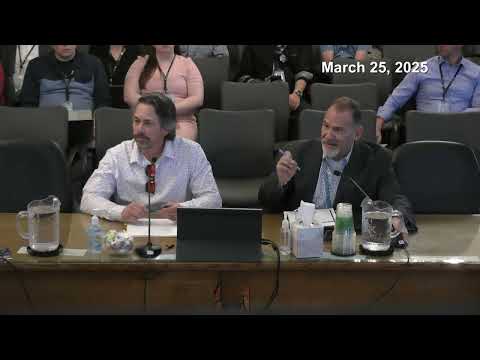
Brandon Du, CCAC chair, told the council the committee had aged market pay rates to July 2025 to better capture current market movement and that the committee benchmarks are intended to inform the mayor and council about where appropriations may be needed. "It is our recommendation that the mayor and the city council appropriate financial resources necessary to grant market salary adjustments for employees and benchmark jobs identified in this report as lagging significantly and lagging slightly behind the market," Du said.
Council members asked for clarifications about whether the review covers incumbents versus allocated positions, and whether vacancy and recruitment data is captured; panelists said the CCAC reviews benchmark job levels rather than every incumbent slot and suggested vacancy analysis is available from departmental staffing audits and budget presentations. Committee members and councilors discussed keeping benchmarked positions at roughly 98% to 100% of market to remain competitive; the committee indicated a working goal of landing positions within 2% of market as "competitive."
The committee also noted that collective bargaining processes appear to have helped represented employees keep pace with market changes, and it urged the city to fund adjustments for lagging classifications.
The CCAC report was delivered as informational to the council; the committee asked the mayor and council to consider its recommendations during upcoming budget deliberations.
The committee's full report appears in the council packet and includes appendices listing benchmark jobs and the peer-city comparisons used in the analysis.
Ending: The council did not vote on the report during the work session; members asked follow-up questions and requested vacancy-level data and related analyses to inform budget decisions this spring.