Get Full Government Meeting Transcripts, Videos, & Alerts Forever!
Get email alerts on the Wastewater Surveillance H5n1 topic
No spam. Unsubscribe anytime.
Committee holds $25,000 proposal for H5N1 wastewater testing for further review
Summary
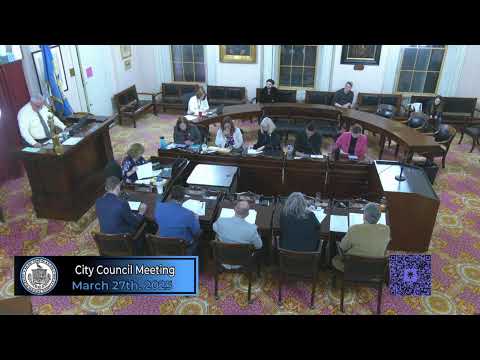
Salem’s Administration & Finance Committee voted unanimously to keep a $25,000 appropriation request for one year of wastewater surveillance for highly pathogenic avian influenza (H5N1) in committee pending additional data and Board of Health input.
The Salem Administration & Finance Committee voted unanimously to leave in committee a request to appropriate $25,000 for one year of wastewater surveillance for highly pathogenic avian influenza (H5N1).
The measure would have funded laboratory analysis by Biobot Analytics of the city’s wastewater to look for evidence of H5N1 in human sewage. "We are requesting the $25,000 appropriation to conduct wastewater surveillance for avian influenza," Salem health agent Dave Greenbaum told the committee, saying the testing would provide “an early indication and early detection” if human infections appear.
Committee members and public commenters said they supported proactive monitoring but raised budgetary and data questions. Councilor Stott told the panel he was "not feeling super confident in voting and supporting $25,000 at this time" and urged a broader review with the Board of Health during the current budget season. Health agent Dave Greenbaum said Massachusetts Department of Public Health currently covers Biobot’s COVID wastewater testing and that the proposed avian-flu tests would be a city expense. He also said he knew of no local communities doing H5N1 wastewater surveillance and reported there have been no confirmed human cases in Essex County in the last 18 months; he cited one recent fatal human case nationally in Louisiana.
Public commenters included Andy Varela, a Salem poultry farmer who said, "At this time, we have not seen any die off or indication of bird flu," and offered that poultry owners would cooperate with registration or testing if required. Several councilors suggested reintroducing an animal-registration requirement so the city would know where domestic fowl are kept.
Rather than approve the appropriation, the committee voted to keep the matter in committee so staff can present additional information and the Board of Health can consider the topic at its April 8 meeting. The vote to leave the appropriation in committee was moved by Councilor Stott and seconded by Councilor Watsonfeld; committee members voting yes were Chair Councilor Merkel, Councilor Stott, Councilor Watsonfeld, Councilor Harvey and Councilor Davis.
The discussion distinguished possible uses of surveillance data (to indicate rising human activity and prompt follow-up) from formal testing of sick birds, which Greenbaum said would be handled by state or federal labs. Committee members also flagged recent federal public-health funding cuts as a reason to weigh city-funded testing carefully before committing municipal dollars.
Next steps: the health agent said he would brief the Board of Health (meeting April 8) and the committee will revisit the appropriation after the board’s input and any additional local or county data are available.