Get Full Government Meeting Transcripts, Videos, & Alerts Forever!
Get email alerts on the District Budget topic
No spam. Unsubscribe anytime.
Locust Valley school officials outline 2025–26 budget, tax-cap limits and capital reserve plan
Summary
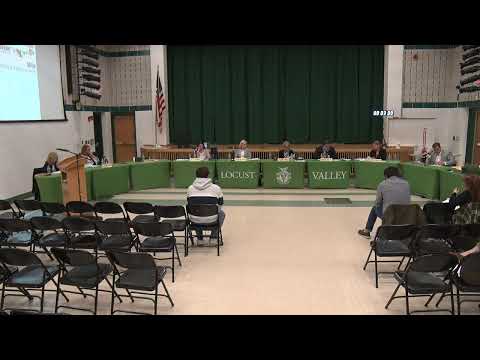
Karen, district finance staff member, presented the Locust Valley Central School District—s draft 2025–26 budget to the Board of Education, telling trustees the preliminary fiscal plan shows a roughly 1.92% budget-to-budget increase and that the district currently projects it will be within the state—s tax-cap limit.
Karen, district finance staff member, presented the Locust Valley Central School District—s draft 2025–26 budget to the Board of Education, telling trustees the preliminary fiscal plan shows a roughly 1.92% budget-to-budget increase and that the district currently projects it will be within the state—s tax-cap limit. "The maximum tax levy increase is 2.7%, equaling $2,338,000," Karen said while reviewing the tax-cap calculation the board will use to set a final levy.
The presentation laid out how the district—s current general-fund budget of about $96.4 million is funded (roughly 91% from local property taxes in 2024) and highlighted that 75% of expenditures are salaries. Karen also reviewed the district—s fund-balance composition and reserves, noting an ending cash balance of about $25.6 million as of June 2024 and a capital reserve balance of $10.7 million.
Why it matters: trustees must balance program funding with state-imposed tax limits and cash-flow realities. Karen said anticipated reductions in state expense-based aid and shifts in enrollment are key drivers for budget planning; board members and administrators discussed options to protect programs while keeping the tax levy within limits.
Major budget details and next steps - State aid and revenues: Karen walked the board through projected changes in non–expense-based and expense-based state aid under the governor—s budget proposal. She highlighted a projected decline in expense-based aid of roughly $382,000 in the district—s working estimate, caused in part by a change in aid ratios such as transportation reimbursement. - Pre-K and federal funds: Karen reiterated the district receives $5,400 per New York State–funded pre-K student and that planned pre-K expansion (from 36 to 54 seats) is funded in part by that state aid. - Transfers and capital: the draft includes a proposed transfer of $2.5 million from the general fund into the capital fund, a step the district has taken in prior years to fund capital projects without affecting the tax levy. Karen said those funds are already in the district—s savings and would not increase taxes if voters approve necessary propositions for state approvals when required.
Facilities and capital-reserve projects Board members and facilities staff described a revised timeline for planned facilities work: the high school library modernization and the middle/high-school cafeteria project are now likely to be done in the same summer to capture scale economies and avoid staging problems. Facilities committee members said lead times for materials and higher-than-expected bids prompted the schedule change. The trustees said the district will still proceed with this summer—s bus loop and parking work and other projects funded from current reserves.
Trustee George (board member) and others emphasized public outreach and clarity that a proposition to withdraw from the capital reserve is a request to use previously saved funds, not a tax increase. "This money has already been saved in the bank," one trustee said during discussion, urging the district to share that distinction widely with the community.
Board direction and timing Board members asked administration to continue refining the numbers and return with updated estimates during the budget timeline. Karen told the board the revenue and expense figures remain a work in progress and that the district will incorporate any changes from the final state budget into the 2025–26 plan. The board did not vote on a final budget at the meeting; the presentation provided the basis for future budget hearings and the public vote timeline.
Ending Administrators said additional public materials (including renderings for the proposed library/cafeteria work) will be distributed to the community. The board scheduled further budget discussion at upcoming meetings as required by the district—s budget calendar and state law.