Get Full Government Meeting Transcripts, Videos, & Alerts Forever!
Get email alerts on the Roads topic
No spam. Unsubscribe anytime.
Meriwether public works director pitches in‑house paving, cites leased equipment and inmate labor to cut costs
Summary
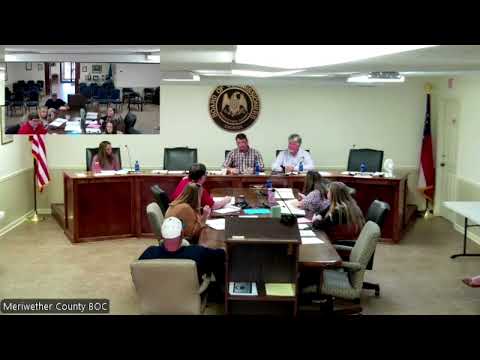
Meriwether County’s public works director, Brian Griffin, told commissioners on March 25 that the county could reduce paving costs by moving some work in‑house, using leased equipment and a small, experienced crew.
Meriwether County’s public works director, Brian Griffin, told commissioners on March 25 that the county could reduce paving costs by moving some work in‑house, using leased equipment and a small crew of experienced operators.
Griffin said the county could lease a full set of paving equipment under a five‑year arrangement that would cost about $208,000 per year, with a nominal buyout at the end of the lease. “It came out like $208,000 a year for 5 years. You get a 1 off buyout at the end of the 5 year lease to keep it. It's a dollar or you can trade it in on and release, you know, going forward,” Griffin said.
He told the board that in‑house work could be a fraction of contractor bids. “Grove Haven is super expensive… contract comes in for a million dollars for 2 and a half miles of road. We did work in‑house. We got it in a third,” Griffin said, adding that an in‑house setup could achieve roughly 10 miles per year for about $1 million, depending on material and market prices.
Griffin described available labor models: hiring a small group of experienced operators who would train other staff, and, as a supplement, coordinating with local correctional officials to use inmate labor where lawful and feasible. He said some staff he would recruit had followed him from previous counties and that certified correctional officers and inmate crews were used in other counties to extend capacity.
Commissioners asked for a fuller cost and operations presentation before committing funds. A commissioner noted the county has about 200 miles of paved road and typically completes 1–3 miles per year; commissioners said improving that pace is a top priority. The board directed staff to return with a formal presentation that includes: the lease cost and payment schedule, estimated staffing needs and salary ranges, a bidding/contracting comparison (cost per mile in‑house versus contractor), anticipated annual miles covered, and the funding sources proposed (including whether SPLOST or restricted investment earnings could be used).
Griffin said staff would prepare the requested materials and indicated the county could budget a pilot or partial start in FY2026. “We would just need a presentation of what you want to do. Correct. The how much, you know, road we could cover versus the, you know, that cost versus the… bidding process,” a commissioner said.
The board raised operational questions about management time and training: commissioners wanted assurance that directing an in‑house paving program would not leave routine public‑works responsibilities unattended. Griffin said initial oversight would be hands‑on but that hired leads would run day‑to‑day operations once trained.
The discussion also covered potential funding sources. Griffin and another staff member said the county earns investment income that could be applied to recurring in‑house patching and that SPLOST (Special Purpose Local Option Sales Tax) or restricted funds might help cover equipment lease payments or asphalt and trucking costs, subject to auditor guidance. Commissioners asked the county auditor and finance director to confirm permissibility of proposed funding uses.
Given the board’s direction, staff will schedule a follow‑up presentation that lays out costs, staffing, a pilot timeline, funding options and the procurement process. The commissioners did not take a formal vote on the paving proposal at the meeting.
Ending: The board treated in‑house paving as a high priority for 2025 planning; staff committed to return with a detailed proposal, cost comparisons and recommended funding sources before FY2026 budgeting decisions.