Get Full Government Meeting Transcripts, Videos, & Alerts Forever!
Get email alerts on the Battery Energy Storage Bylaw topic
No spam. Unsubscribe anytime.
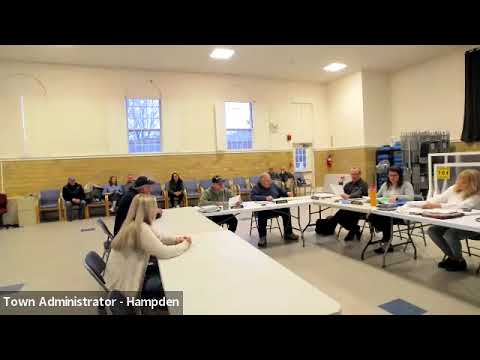
Hampden planning board debates limits on large battery storage, asks staff to seek legal guidance
Summary
Members discussed whether limiting tier 3–4 battery energy storage systems (BESS) to limited‑industrial zones would pass Attorney General review, raised public‑safety and siting concerns, and asked staff to supply zoning maps and legal input.
The Town of Hampden Planning Board spent part of its meeting reviewing language in a proposed bylaw that would regulate battery energy storage systems (BESS), focusing on whether restricting larger systems (tier 3 and tier 4) to limited‑industrial zones would satisfy state review and protect residents.
Board members said town staff will send the board’s zoning map and the draft bylaw to the Attorney General’s office to determine whether a restriction that confines larger BESS to limited‑industrial land would pass constitutional and statutory review. Planning Board members reported that staff (Rose) is collecting acreage figures and the zoning map to share with state reviewers.
Board members raised safety and local‑capacity concerns in the discussion. Members noted recent local fires and water‑supply constraints during dry periods as part of why the town should be cautious about permitting large battery installations in or near residential areas. Members also discussed distinguishing tiers by size and connection: tier 3 and tier 4 installations that would connect to utility substations were described as higher‑voltage systems and therefore more appropriate for nonresidential locations. The board discussed setbacks and noise and said the draft bylaw already includes noise and setback provisions that would limit where systems could actually be sited, even if commercial zones were added as allowable locations later.
Several members said the town’s limited industrial acreage is small and that the Attorney General’s office has in past reviews required towns to show a reasonable basis for geographic restrictions; staff is gathering the zoning acreage so the AG office can advise. Members also discussed whether the town should retain a zoning attorney to assist if state guidance is unclear. No formal action or vote on the bylaw text was recorded in the transcript.
The board agreed to pause revising the bylaw until staff returns with the zoning map and the Attorney General’s guidance; members signaled they would press the town council and town counsel for clarification if the AG’s answer is that the restriction would not pass.