Get Full Government Meeting Transcripts, Videos, & Alerts Forever!
Get email alerts on the Transportation Programming topic
No spam. Unsubscribe anytime.
UDOT proposes higher program funding for pavement, bridges and signals as STIP timeline moves to May vote
Summary
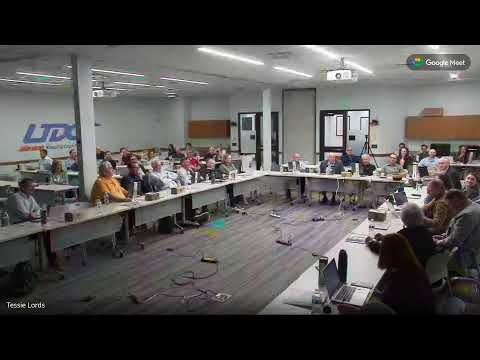
UDOT staff presented program‑level funding recommendations at a commission programming workshop, asking commissioners to set program levels in May and approve project lists in June to form the draft State Transportation Improvement Program.
UDOT staff presented program-level funding recommendations and asset-condition analysis at a commission programming workshop, asking commissioners to approve funding levels in May and project lists in June before a 30‑day public comment period and federal submission this summer.
The workshop framed the request as program-level decisions — ‘‘program levels’’ such as pavement, bridges, signals and ITS — that will later be translated into project authorizations. Tiffany Palgotch, speaking for program development, said, "Per Utah code, it is the commission's responsibility to determine priorities and funding for our for the development of the STIP," and walked commissioners through the timeline: May approval of program levels, June approval of project lists, a 30‑day public comment window, then federal partner review.
Why it matters: the staff recommendations drive which projects are advanced into the State Transportation Improvement Program (STIP), the document that UDOT must hand to federal agencies for approval. Staff said the work today and in May represent the foundation for multi‑year programming and for meeting statutory performance targets.
What staff proposed and why - Pavement: Project development staff proposed adding roughly $5 million to the high‑volume pavement program and about $3 million to the low‑volume pavement program to hold current condition targets. Project Development Director Carmen Swanwick told the commission those increases are intended to offset higher material and labor costs in recent years and to maintain a target share of pavement in ‘‘good’’ condition. - Bridges / structures: Staff recommended increases to the structures program (roughly a $19 million increase in the package) and said some of the reconstruction money would be directed to very large bridge replacements in the 2027–2028 time frame. Swanwick noted UDOT inspects state bridges every two years and that the share in “good” condition has declined; the added funds are intended to stabilize the condition curve under the program assumptions. - Pavement reconstruction: UDOT described a standing reconstruction program for large, high‑value pavement projects (often $35M+ or projects that require multi‑year funding) and said structure replacements of comparable scale had been added to that program. - Traffic signals and operations: Staff showed a small but notable increase in the budget request for traffic signals (new and rebuild) and associated detection and operations work, reflecting higher equipment and contractor costs and the age profile of signal controllers and electronics. A separate operations/ITS request covered increased device counts (CCTV, dynamic message signs, roadside units) and replacement needs because many roadside devices have roughly a 10–15 year service life. - Street lighting: Staff said the 2024 legislative changes clarified UDOT’s authority to maintain certain highway lighting (interstate lights and signal‑attached intersection lighting that performs a functional safety role, not decorative fixtures). UDOT staff told commissioners that about 40% of lights surveyed were inoperable in a prior statewide sample and that the department asked the commission to fund highway lighting repairs and to hire a small statewide crew; the legislature also authorized UDOT to use available funds to maintain those systems and to hire staff to do the work.
Federal funding uncertainty and IIJA programs Staff noted a critical caveat: many federal programs used in the multi‑year plan originate under the Infrastructure Investment and Jobs Act (IIJA). IIJA apportionments expire in federal FY2026, and UDOT staff marked several programs in their draft spreadsheets with asterisks to indicate the amounts beyond 2026 are not yet guaranteed. The department said it would program only amounts that are reasonably expected to be apportioned and would return with updated recommendations if Congress changes the federal framework.
Next steps UDOT asked the commission to approve program levels in May; staff will bring lists of projects meant to fit those program levels in June, then open the draft STIP for a 30‑day public comment period before federal submission. Staff emphasized that commissioners may reallocate money across program lines before the May vote and that regions and program leads are available to discuss tradeoffs ahead of the vote.
Speaker attributions Direct quotes and on‑the‑record attributions in this article come from the following meeting speakers: Tiffany Palgotch (program development), Carmen Swanwick (project development director), Ben Hewitt (Deputy Director, Planning & Investment), and Sharra (finance director). If a statement in the body cannot be traced to one of those named speakers in the transcript it is presented unattributed.
Ending: The commission has scheduled a May vote on program levels, with staff returning in June to seek approval of project lists that will form the draft STIP sent later this year to federal partners for review and approval.