Get Full Government Meeting Transcripts, Videos, & Alerts Forever!
Get email alerts on the Clemency Expedited Review topic
No spam. Unsubscribe anytime.
Committee hears bill to expedite clemency review for people facing deportation
Summary
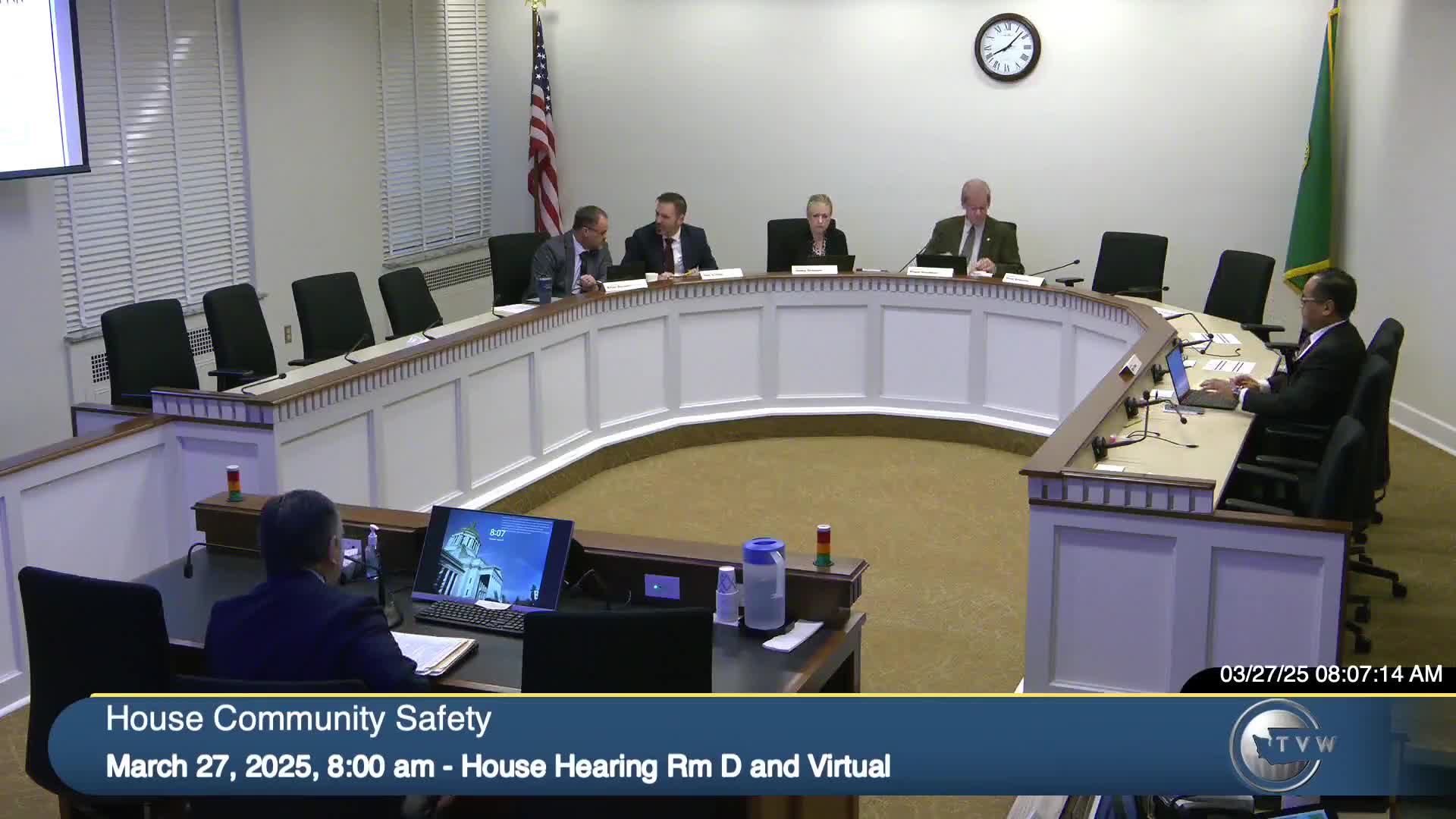
The House Community Safety Committee held a public hearing Thursday, March 27, 2025, on Senate Bill 5103, which would require the Clemency and Pardons Board to consider expedited review of petitions for pardons or commutations when petitioners indicate an urgent need, including pending deportation proceedings.
The House Community Safety Committee held a public hearing Thursday, March 27, 2025, on Senate Bill 5103, which would require the Clemency and Pardons Board to consider expedited review of petitions for pardons or commutations when petitioners indicate an urgent need, including pending deportation proceedings.
The bill’s sponsor, Senator Bob Hasegawa, said the measure would create a faster pathway for long-term Washington residents who face immediate removal from the United States. “What this bill does is open up a pathway that the Clemency and Pardons Board needs to consider, whether to have a hearing. It doesn't say that they have to have a hearing,” Hasegawa said, arguing the change would allow the board to respond when deportation timelines outpace ordinary review.
Lina Langer, staff to the committee, summarized existing clemency practice and eligibility rules: the governor has constitutional and statutory authority to grant pardons and commutations, the Clemency and Pardons Board makes recommendations to the governor, and the board typically will not consider petitions until at least 10 years after conviction and will not hear a new petition from the same person for three years unless exceptional circumstances exist. Langer also noted: “A person is eligible for a pardon, commutation, or restoration of civil rights without regard to the person's immigration status.”
Two students from Lake Washington High School, who testified in support, appealed to the committee’s fairness concerns. “Clemency exists to give people a second chance, and that opportunity shouldn't be lost just because the process wasn't fast enough,” said Aliana Pineda. Kira Fernando described an uncle she said was deported after a decades-old misdemeanor conviction and said the removal fractured her family.
Committee members asked how the bill would be applied and whether it could result in expedited consideration for violent offenders. Ranking Member Graham pressed the sponsor on those risks, describing community concerns about violent recidivists: “The people in my district don't want rapists and murderers that are not U.S. citizens getting right back out into our community.” Hasegawa responded that the bill does not guarantee relief and that he expected the board to screen out cases involving serious violent offenses. Staff confirmed the bill’s operative requirement that “the board shall consider expedited review, if there's an urgent need.”
Members also discussed the Clemency and Pardons Board’s limited capacity. Hasegawa said he is pursuing separate legislation to increase the board’s size; he and other members noted the board presently handles a small number of cases and that capacity constraints could affect implementation.
The committee took no final vote on Senate Bill 5103 during the hearing. The public hearing concluded and the committee moved into executive session to consider other bills. The committee did not set a date for further action on SB 5103 during the hearing.
The hearing record includes staff background on board procedures, sponsor remarks underscoring community impact, and public testimony from two students urging passage.