Get Full Government Meeting Transcripts, Videos, & Alerts Forever!
Get email alerts on the Licensing Fees Audit topic
No spam. Unsubscribe anytime.
Committee approves 50% fee increase, performance audit for Senate Bill 2,051
Summary
A committee approved amendments to Senate Bill 2,051 that increase board fees by roughly 50%, require a performance audit and shift fee-setting authority to the legislature; the bill passed the committee and was referred to appropriations.
Representative Moshenbacher moved and the committee approved amendments that raise fees and require a performance audit, and the committee later voted the bill out as amended.
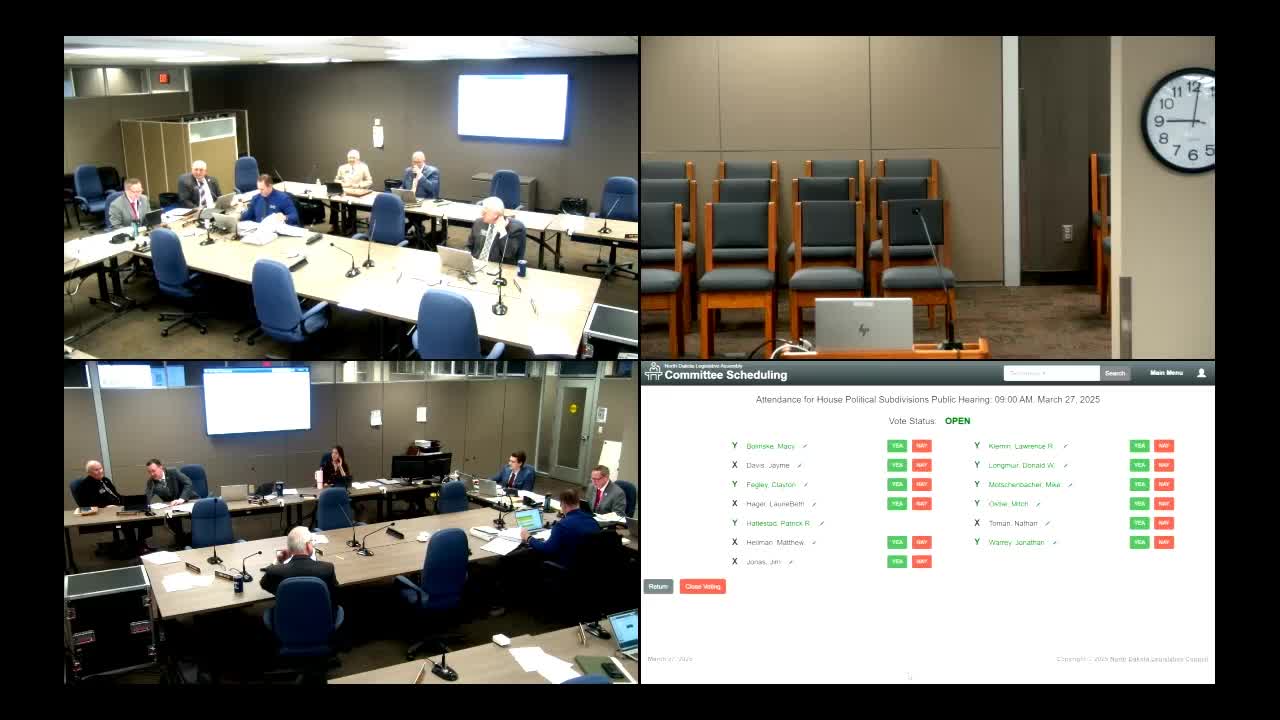
A standing committee voted to adopt amendments to Senate Bill 2,051 that increase fees charged by the board named in the bill by about 50% and add a performance audit. The amendment also removes the board’s ability to set fees by administrative rule and instead directs the legislature to set fee levels. The committee later gave the bill a “do pass as amended” recommendation and re-referred it to the Appropriations Committee. The roll call on passage of the bill as amended was 9 yeas, 0 nays, 4 absent/not voting.
Why it matters: The changes are intended to shore up the board’s near-term finances and avoid the cost of an administrative rule‑making process, according to supporters, while giving the legislature periodic control over fee levels.
Representative Moshenbacher, who introduced the amendments, said the board had warned it would be insolvent by year’s end without an increase. “This should give them the ability to hire a part‑time employee if they needed to to help get caught up,” Moshenbacher said. Moshenbacher moved the amendment and Representative Clamine seconded it. The amendment was identified in the record as Amendment 02/2003 and passed on a 9–0–4 vote.
Committee discussion and fiscal context: During debate Moshenbacher and other members reviewed the fee schedule in the amendment and noted one fee was adjusted from an exact 50% raise to a rounded figure for clarity (an item that moved from $25 to $40 in the text). Members examined the board’s current fee receipts and the expected revenue increase. Using figures distributed to the committee, Moshenbacher estimated the sections of the bill tied to fees collect just under $80,000 currently and that the amendment would yield roughly a $40,000 annual increase if enacted as written.
Representative Laurie moved a do‑pass as amended and asked that the bill be sent to appropriations; Representative Haddlestead seconded that motion. A point of clarification during discussion: a fiscal note in the bill packet indicated an overall budgetary effect of about $217,000, which prompted members to support referral to appropriations for review.
What the amendment does not do: Committee members said the amendment leaves the performance audit in the bill and that the state auditor would not charge the board for the audit, based on committee remarks. The amendment removes the board’s rule‑making power to increase fees and instead sets fees in statute, to be revisited by the legislature at subsequent sessions.
Next steps: The committee recorded the bill as passing out of committee 9–0–4 and referred it to appropriations. Representative Moshenbacher volunteered to carry the bill forward in the chamber.
Ending: The committee recorded no further amendments at the time of the vote, and the bill moved to appropriations for fiscal review and further consideration.