Get Full Government Meeting Transcripts, Videos, & Alerts Forever!
Get email alerts on the Transportation topic
No spam. Unsubscribe anytime.
Committee backs option for civil $150 penalty as alternative to arrest for driving on suspended license
Summary
Senate committee recommended a due pass for House Bill 1422, which would allow officers to issue a civil $150 penalty for driving without a valid license as an optional alternative to arrest for driving under suspension, a change supporters say could reduce court and indigent defense costs.
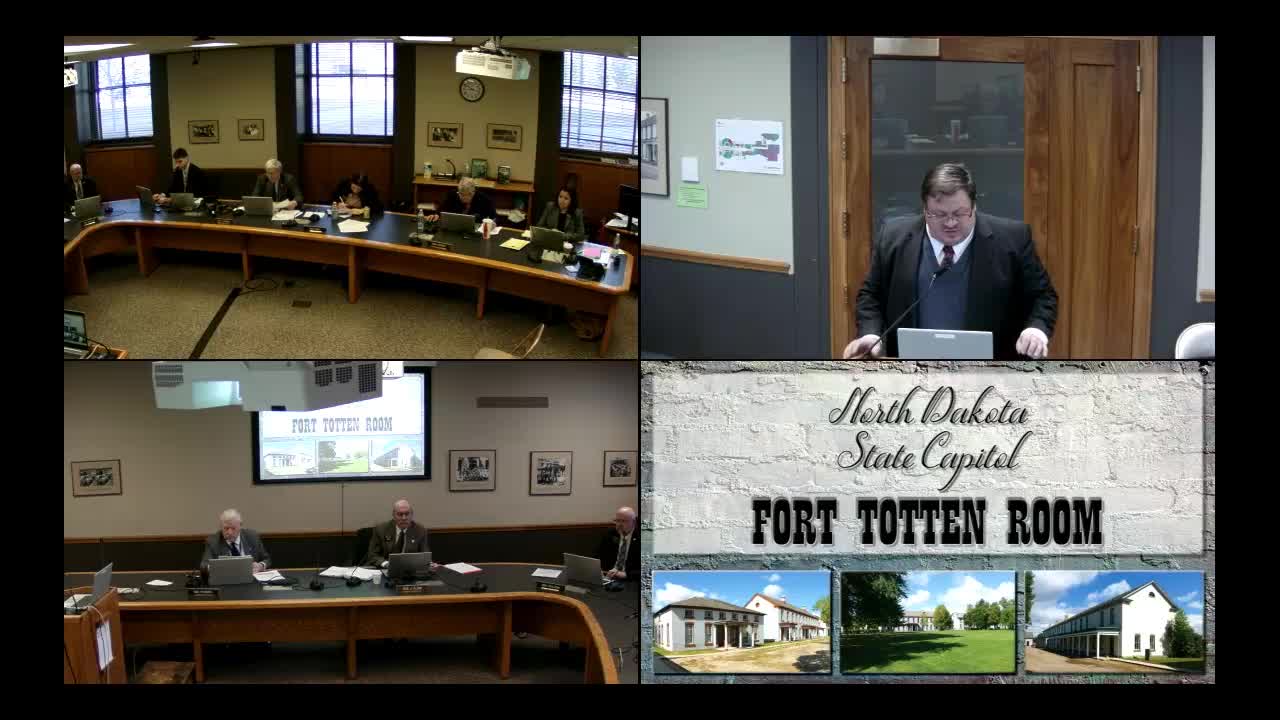
The Senate Transportation Committee voted to give House Bill 1422 a “do pass” recommendation after hearing from the Commission on Legal Counsel for Indigents and law-enforcement supporters.
Travis Fink, executive director of the commission that oversees public defense delivery in North Dakota, described the bill as an optional civil pathway for officers who stop a driver with a suspended license. Under current law, a driving-under-suspension arrest is a criminal matter that can expose a defendant to jail time and requires the appointment of counsel for indigent defendants. HB 1422 would give an officer discretion to issue a civil penalty — the draft discussed in committee set the civil fine at $150 and zero points — instead of making an arrest in some cases.
Fink said the commission does not take a position on the bill but supported the amended language drafted with law enforcement to address earlier logistical problems. “What this civil penalty does is basically say … you can assess them for driving without a valid license,” Fink told the committee, adding the intent is to reduce appointment-of-counsel caseloads when appropriate and to create deterrence through a meaningful civil penalty.
Stephanie Ingebretsen, representing the Chiefs of Police Association of North Dakota, testified that agency leadership supports the bill and the discretionary tool for officers. Committee members discussed the bill’s interaction with other vehicle- and points-related proposals and sought assurances that training and interagency guidance would accompany any change. Witnesses said training is typically provided at the agency level and in summer statewide trainings.
After brief discussion the committee voted in favor of a due pass recommendation for HB 1422.
Why it matters: Sponsors and public defenders framed HB 1422 as a practical tool to reduce criminal-court and indigent-defense burdens for cases that can be resolved by administrative fines once licensing status is corrected. Supporters emphasized the bill preserves officer discretion; critics (noting the effect on defendants) were not prominent in committee testimony.
Next steps: HB 1422 moves forward from the Senate Transportation Committee with a do-pass recommendation; the sponsor was recorded as carrying the bill forward.