Get Full Government Meeting Transcripts, Videos, & Alerts Forever!
Get email alerts on the Administrative Rules topic
No spam. Unsubscribe anytime.
Legislators consider adding ‘necessity’ and ‘reasonableness’ tests to void administrative rules
Summary
Representative Ben Koppelman introduced House Bill 1368 to the State and Local Government Committee and described it as an effort to “protect the administrative rules process by ensuring that rules follow legislative intent as well as hold rule making to a standard of reasonable and necessary.”
Representative Ben Koppelman introduced House Bill 1368 to the State and Local Government Committee and described it as an effort to “protect the administrative rules process by ensuring that rules follow legislative intent as well as hold rule making to a standard of reasonable and necessary.”
Koppelman said the bill would add two explicit standards—an absence of necessity and an absence of reasonableness—to the current statutory list of reasons the Administrative Rules Committee can void or avoid a rule. “So really the sum total of this bill that's new is do we believe that the administrative rules committee should be allowed to use, terms like necessary and reasonable as tests,” he told the committee.
The representative and other proponents framed the proposal as a clarification and safeguard: because adopted administrative rules carry the “weight of law,” legislative oversight—through the Administrative Rules Committee—is necessary to ensure agencies do not exceed the policy the Legislature intended. Koppelman walked committee members through the existing statutory process under North Dakota Century Code section 28-32-18 (as cited in testimony), including the committee’s ability to hold a rule over for a subsequent meeting and an agency’s 14‑day petition right for review by Legislative Management.
Jackie Hall, executive director of the North Dakota Association for Justice, testified in favor and described instances where litigants had to take rules to the state Supreme Court because, she said, a rule’s application had been “too burdensome” relative to statutory language. Hall said the change would provide an alternate, administrative route to address rules that appear to expand a statute beyond legislative intent.
The bill drew opposition from Lisonbee Hicks, assistant attorney general in the Office of the Attorney General’s General Counsel Division. Hicks recommended a “do not pass,” arguing the draft language risks constitutional problems under the North Dakota Supreme Court’s decision in Legislative Assembly v. Burgum. She said the bill’s combination of expansive standards (reasonableness and necessity) together with changes to the committee’s rule‑amendment ability could create a “mini legislature” in the Administrative Rules Committee and improperly delegate legislative power to a legislative subset.
Liz Bridal of Legislative Council provided a technical explanation of the draft and a companion amendment, saying much of the bill’s non‑substantive language had merely been moved or cleaned up; she confirmed the only substantive change was the addition of “absence of necessity” and “absence of reasonableness.”
Committee members pressed proponents on how courts and agencies define “reasonableness” and “necessity.” Koppelman acknowledged those tests can be subjective but argued that reviewing legislative intent and whether a rule is the “least restrictive” means of implementing policy would help the committee apply them.
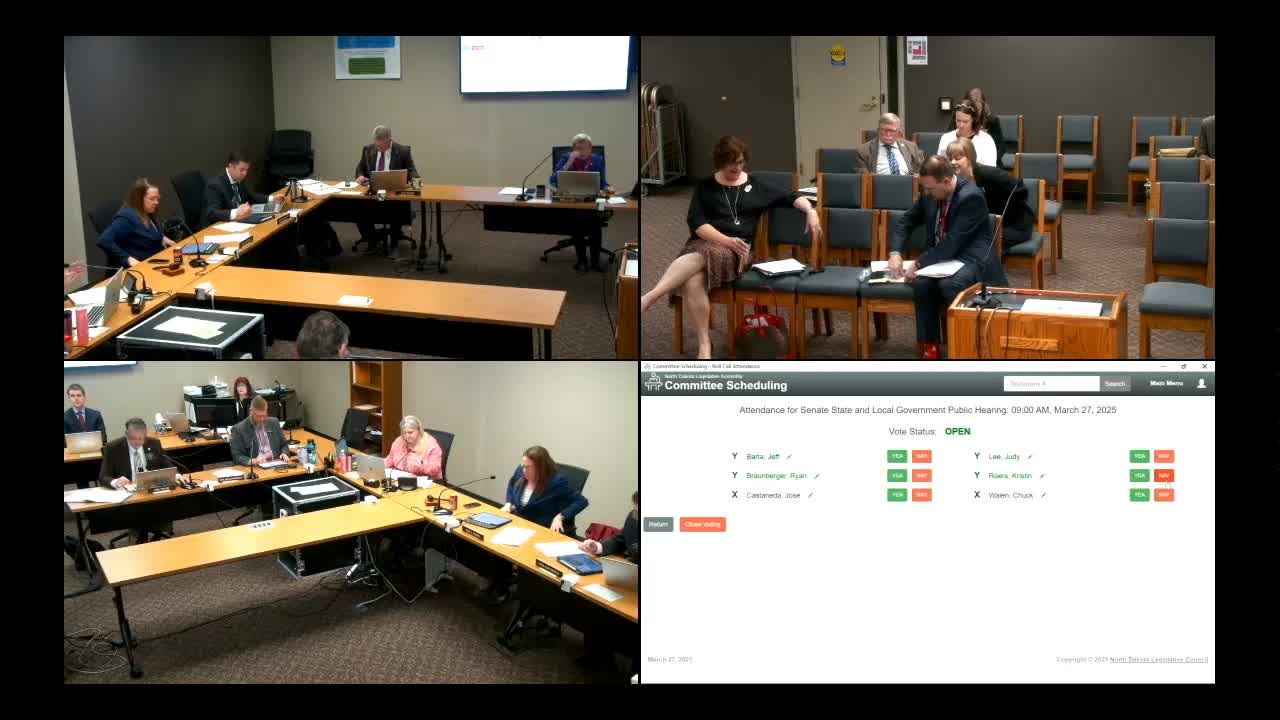
Discussion versus formal action: the committee heard multiple pro and con witnesses and technical explanation from Legislative Council and the Attorney General’s Office. No committee motion or vote on the bill was recorded in the transcript; the hearing was closed after testimony and questions.
Ending note: Supporters said the change would reduce litigation by giving a clearer administrative check on excessive rules; opponents warned it could create constitutional separation‑of‑powers issues and urged caution or rejection.