Get Full Government Meeting Transcripts, Videos, & Alerts Forever!
Get email alerts on the Long Term Care Backup Power topic
No spam. Unsubscribe anytime.
Sponsor lays out substitute to require backup power and safe‑temperature plans for long‑term care facilities
Summary
Sen. Alvarado presented a committee substitute to SB 481 proposing on‑site backup power, defined safe temperature ranges, mandatory HHSC review of emergency plans, and a waiver process; stakeholders including AARP Texas and the State Long‑Term Care Ombudsman supported the substitute but noted implementation questions and funding pathways.
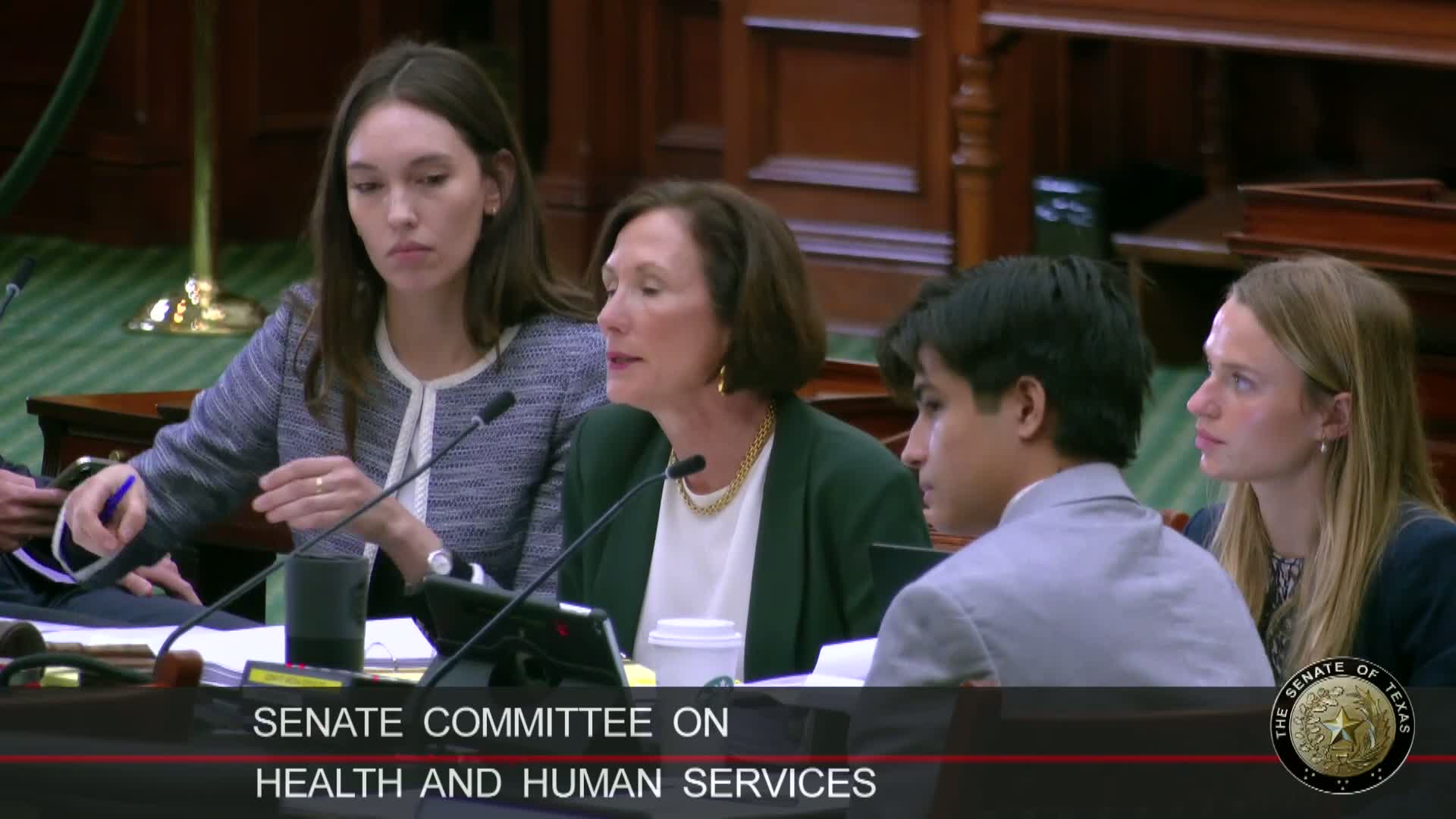
Sen. Carol Alvarado, sponsor of Senate Bill 481, explained a committee substitute that would revise emergency preparedness for nursing facilities and assisted living centers after last summer's Hurricane Beryl left many residents without power and air conditioning.
Key provisions in the committee substitute described to the committee include: on‑site backup generation with an implementation timeline (target date cited as Sept. 1, 2027, with potential extensions for supply‑chain issues), required safe indoor temperature ranges during an outage (the substitute specifies 71–81°F for nursing facilities and 68–72°F for assisted living in certain contexts), mandated HHSC review and approval of each facility’s emergency plan and annual updates, a required communication process to notify family members and representatives, and a waiver process for facilities that cannot meet requirements because of local ordinances or deed restrictions. The substitute also allows multiple licensed facilities on the same property to centralize square‑footage calculations for compliance.
Supporters who provided invited testimony included Andrea Earl (AARP Texas) and Patty Duccallier (State Long‑Term Care Ombudsman). Andrea Earl said SB 481 “will significantly enhance the safety and well‑being of Texas’ most vulnerable populations residing at nursing homes and assisted‑living facilities,” and emphasized that people with chronic illnesses and mobility limitations depend on consistent power for medical equipment and medication refrigeration. Duccallier noted HHSC had previously reported high generator coverage among nursing homes (HHSC 2022 report: 99% of nursing homes had a generator) and said the committee substitute reflected compromises reached with providers and advocates.
DFPS and HHSC staff were not the primary presenters on this bill, but the sponsor and witnesses referenced the Texas Energy Fund and a $1.8 billion grant program (referred to in testimony) that may be tapped to assist facilities with generator procurement and installation.
Ending: The committee chair said the substitute would be left pending so the committee could take public testimony later; members acknowledged implementation questions including cost, runway for compliance, waiver mechanics, and whether state funding or grant programs could be targeted to assist facilities with required upgrades.