Get Full Government Meeting Transcripts, Videos, & Alerts Forever!
Get email alerts on the Foster Care Health Access topic
No spam. Unsubscribe anytime.
Bills seeks to let foster caregivers pay out‑of‑network for timely care when Medicaid networks lack providers
Summary
Senate Bill 8 55 would allow foster caregivers to pay for out‑of‑network medical and behavioral health services for foster children when timely in‑network care is unavailable, while preserving Medicaid benefits and requiring notification to caseworkers.
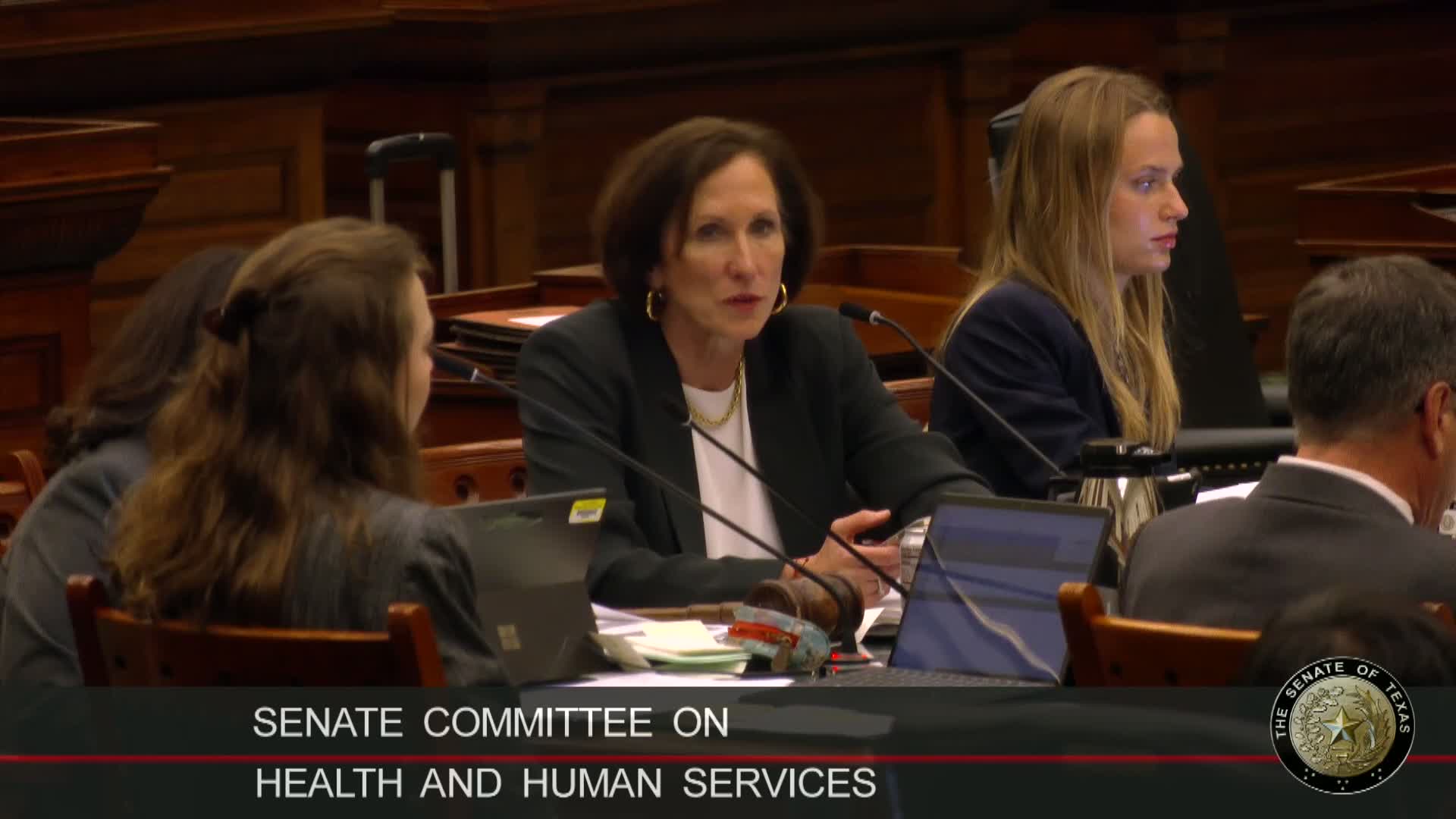
Senator Dawnna Sparks told the Senate committee that Senate Bill 8 55 would help foster children obtain timely specialized care by permitting medical consenters (usually foster caregivers) to assume financial responsibility for out‑of‑network services when in‑network providers are unavailable. The bill would preserve Medicaid benefits and in‑network care, require timely notification to the child’s caseworker when out‑of‑network care is used, and would not shift financial responsibility to the state unless ordered by a court.
Caregivers and providers from West Texas described long waits and near‑nonexistent in‑network options for pediatric and behavioral health services. Kelsey Jones, executive director of HighSky Children’s Ranch in Midland, said an in‑network pediatric or dental provider can be hundreds of miles away and gave an example of a caregiver who needed endodontic care for a teen and faced a 500‑mile trip to the nearest in‑network specialist. Vim Head, a foster parent, said allowing caregivers to access out‑of‑network providers would be “a huge benefit.”
Supporters told the committee the bill imposes no new state cost and gives caregivers a tool similar to options available to non‑foster families. However, child advocates and CASA representatives urged safeguards: Sarah Crockett of Texas CASA asked for parameters to prevent inappropriate elective procedures from being pursued without prior department or court authorization and requested an explicit exception preserving court‑ordered payments.
The committee did not vote on the bill; public testimony was closed and the measure was left pending.