Get Full Government Meeting Transcripts, Videos, & Alerts Forever!
Get email alerts on the Long Term Care Emergency Preparedness topic
No spam. Unsubscribe anytime.
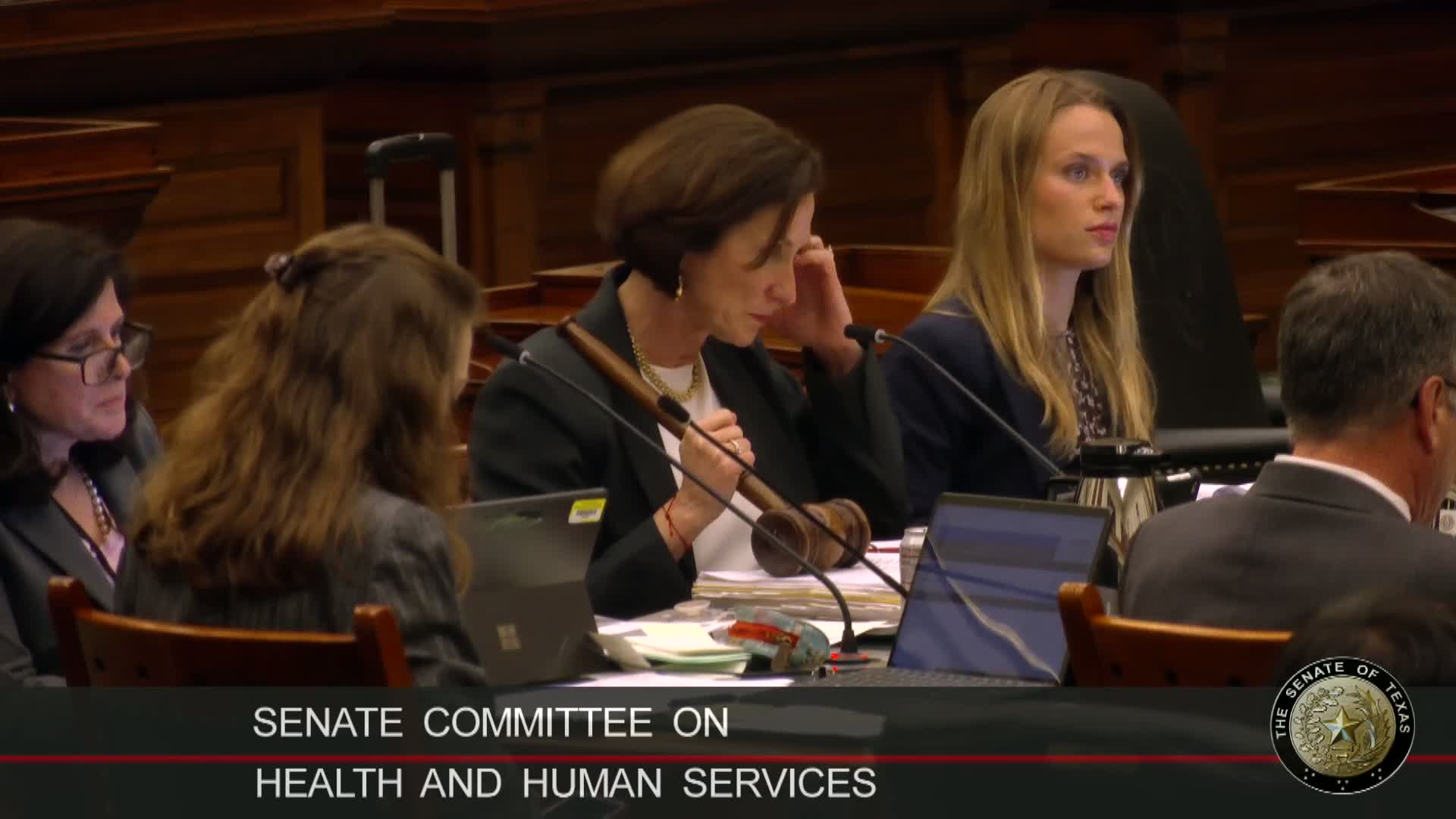
Senate hears competing approaches for backup power and emergency plans for nursing and assisted living facilities
Summary
Senate Bill 13 68 would require nursing homes and assisted living facilities to maintain contingency plans and certain emergency capabilities to protect bedbound and mobility‑limited residents during power outages; witnesses split between a flexible performance‑based standard and a prescriptive equipment mandate.
Senator Royce Miles told the committee that Senate Bill 13 68 responds to failures during recent severe outages—most recently Hurricane Beryl and earlier incidents—when residents in nursing homes and assisted living facilities faced heat, lack of elevators and trapped residents.
SB 13 68 would require facilities to prepare written contingency plans for power outages, to be able to maintain appropriate temperatures for residents during extended outages, and to report outages lasting more than 12 hours to HHSC for oversight. The sponsor said the statute is intended to create “preparation and consistency” and protect vulnerable, mobile and bedbound residents.
Testimony showed a sharp divide on how to achieve those goals. The Texas Assisted Living Association’s Carmen Tilton argued in favor of a performance‑based approach that holds providers accountable for outcomes (keeping medications safe, maintaining controlled temperatures) but gives facilities flexibility on equipment and methods. Harris County Fire Marshal Lori Christiansen said a code‑aligned inspection checklist helps standardize expectations and supported the bill’s goals. The State Long‑Term Care Ombudsman, Patty Duquier, supported stronger protections but urged the committee to require on‑site backup power rather than reliance on brought‑in generators because of road closures and fuel logistics during disasters.
Large nursing facility operators warned of high costs. 7 Acres CEO Marcia Caton said installing on‑site megawatt generators could cost “approximately a million dollars” per community and raised maintenance and staffing challenges for running large generators. Bronze Peterson, speaking for a coalition of roughly 600 nursing facilities, said the bill as written would impose significant costs and recommended limiting the stricter requirements to newly constructed facilities or state‑funded mandates.
Committee members and witnesses discussed a compromise path: require clear, enforceable performance standards and communications, create a waiver or funding pathway for facilities that cannot immediately retrofit equipment, and use administrative rulemaking to develop technical standards. Public testimony closed and the bill was left pending for additional drafting work.