Get Full Government Meeting Transcripts, Videos, & Alerts Forever!
Get email alerts on the Thriving Texas Families topic
No spam. Unsubscribe anytime.
Committee adopts substitute to clarify eligibility, protections for Thriving Texas Families program
Summary
A committee substitute for Senate Bill 13 88 clarifies that the Thriving Texas Families program (formerly Alternatives to Abortion) remains life‑affirming, limits eligible grantees to organizations unaffiliated with abortion providers, and drew extensive testimony from pregnancy resource centers and faith groups about access and funding models.
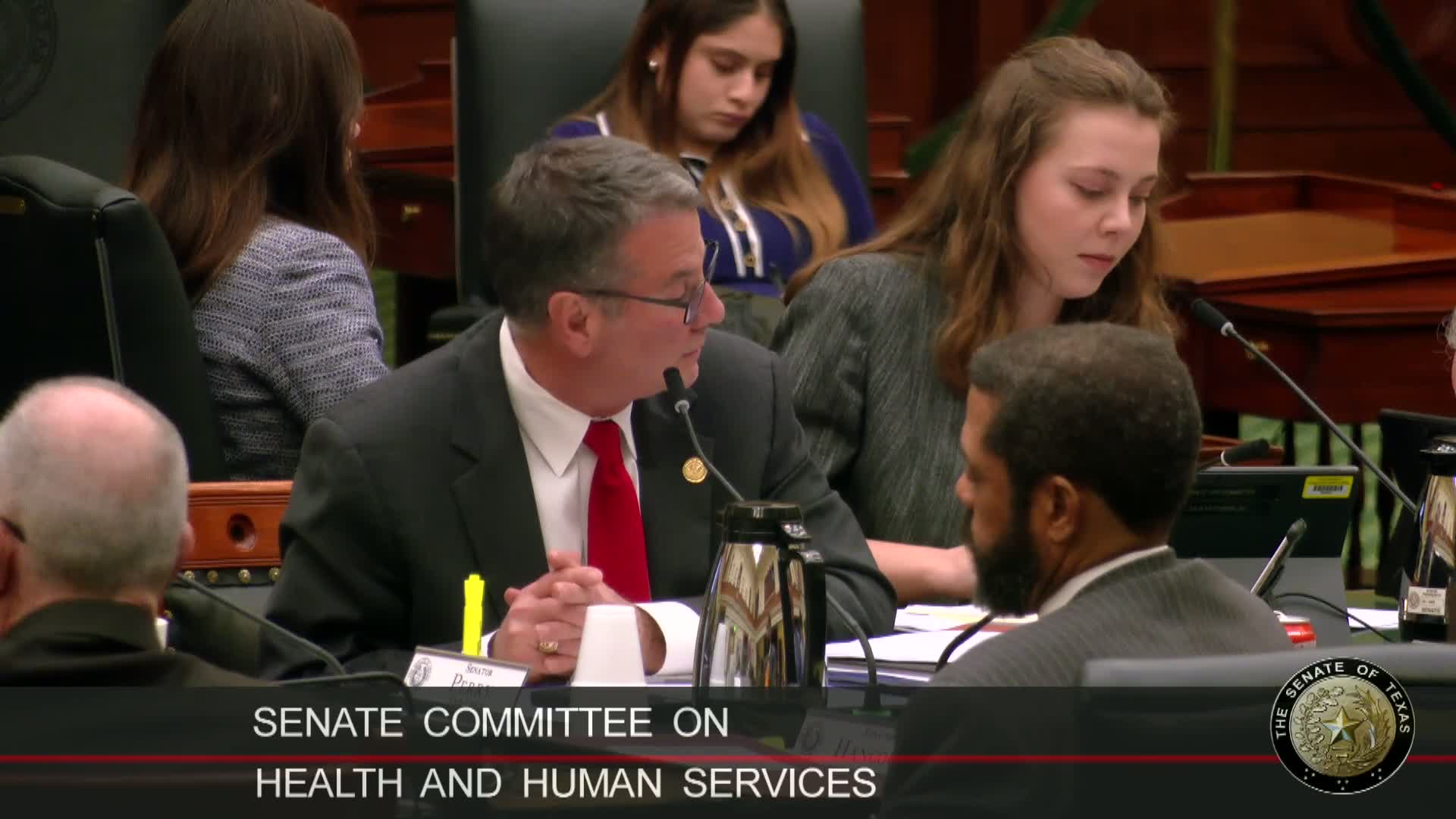
Senate Bill 13 88, a follow‑up to last session’s codification of the Thriving Texas Families program, received a committee substitute and broad witness testimony in the Senate Health and Human Services Committee.
Sponsor Senator Lois Kolkhorst told the committee that SB 13 88 aligns program eligibility and funding with the original intent of the Alternatives to Abortion program: supporting pregnancy resource centers, maternity homes, adoption agencies and similar life‑affirming organizations. “The committee substitute…makes clear that the program continues to provide support to crisis pregnancy centers, maternity homes, and similar organizations,” Kolkhorst said.
The committee adopted the substitute by unanimous voice: a member moved adoption and the chair announced “Hearing none. Motion is adopted.” The chair then called a long panel of invited and public witnesses who largely supported the bill and urged preservation of the program’s fee‑for‑service model and continued prioritization of pregnancy resource centers. Proponents said the program helps families with material assistance, case management and connections to Medicaid and other services; speakers described individual client stories showing practical support from the program.
Witnesses pressed two recurring implementation concerns: (1) eligibility and doctrinal alignment—several speakers wanted to ensure organizations with abortion affiliations are excluded—and (2) funding methodology—many small pregnancy resource centers urged retaining or clarifying a fee‑for‑service model rather than moving to strict direct cost reimbursement that they said disadvantages smaller providers. Ashley Leonard, legislative director for Texas Right to Life, asked the committee “to please consider addressing this funding type issue in Senate Bill 13 88.” Several speakers, including executives from Catholic service providers, pregnancy clinics, and the Texas Pregnancy Care Network, described how the program supports wraparound services through local centers.
Public testimony closed after dozens of providers and advocates spoke. The chair left the committee substitute pending for further consideration; the committee’s earlier voice adoption of the substitute was the only recorded committee action.