Get Full Government Meeting Transcripts, Videos, & Alerts Forever!
Get email alerts on the Manufactured Homes Transfer On Death topic
No spam. Unsubscribe anytime.
Senate committee considers bill to allow transfer‑on‑death designation for manufactured homes
Summary
Senate Bill 1940 would let owners name beneficiaries for manufactured homes, producing a nonprobate transfer at death similar to motor‑vehicle transfer‑on‑death mechanisms. Supporters said the change would simplify estate transfers for homeowners who lack other assets; the bill was left pending.
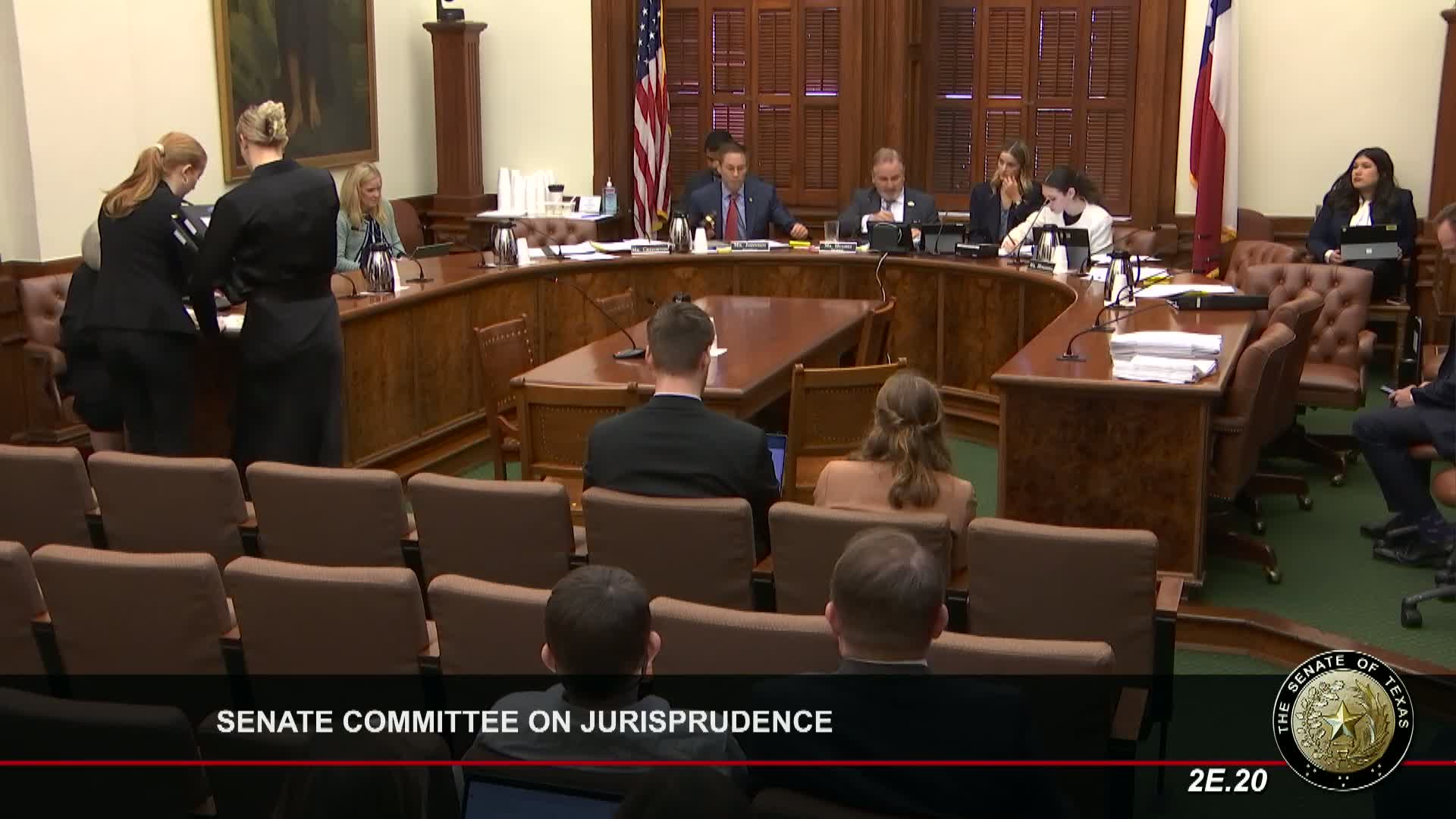
Senate Bill 1940, introduced by Sen. Hughes, would allow owners of manufactured homes that are classified as personal property to designate a beneficiary to receive the manufactured home at death, similar to existing nonprobate transfer mechanisms for vehicles and real property. The Senate Committee on Jurisprudence heard testimony from estate-planning attorneys and left the bill pending.
Sen. Hughes said manufactured homes occupy a gray area—often treated like real property in practice but titled as personal property—and that many rural Texans rely on manufactured homes as their primary asset. The bill would permit a beneficiary designation to take effect at death, bypass probate for that asset, require agreement of joint owners with right of survivorship, and include a survivorship contingency (the beneficiary must survive the owner by 120 hours) to reduce double‑probate concerns.
Ben King, an estate-planning attorney who practices in Northeast Texas, testified as an expert witness and said the designation would reduce probate costs and simplify title transfer for manufactured homes that might otherwise require probate to clear title. King and Sen. Hughes noted some technical, non-substantive drafting changes were expected in a forthcoming committee substitute; witnesses and the sponsor said they were working on the substitute language.
The committee took no final vote and left the bill pending.