Get Full Government Meeting Transcripts, Videos, & Alerts Forever!
Get email alerts on the Child Welfare Contracts topic
No spam. Unsubscribe anytime.
Bill would let DFPS assume case management for specific contracts; agency backs the proposal
Summary
Senate Bill 15 89 would allow DFPS to assume case‑management responsibilities incrementally for specific cases or groups of cases under SSCCs, instead of requiring full contract termination, the department told the Senate HHS Committee.
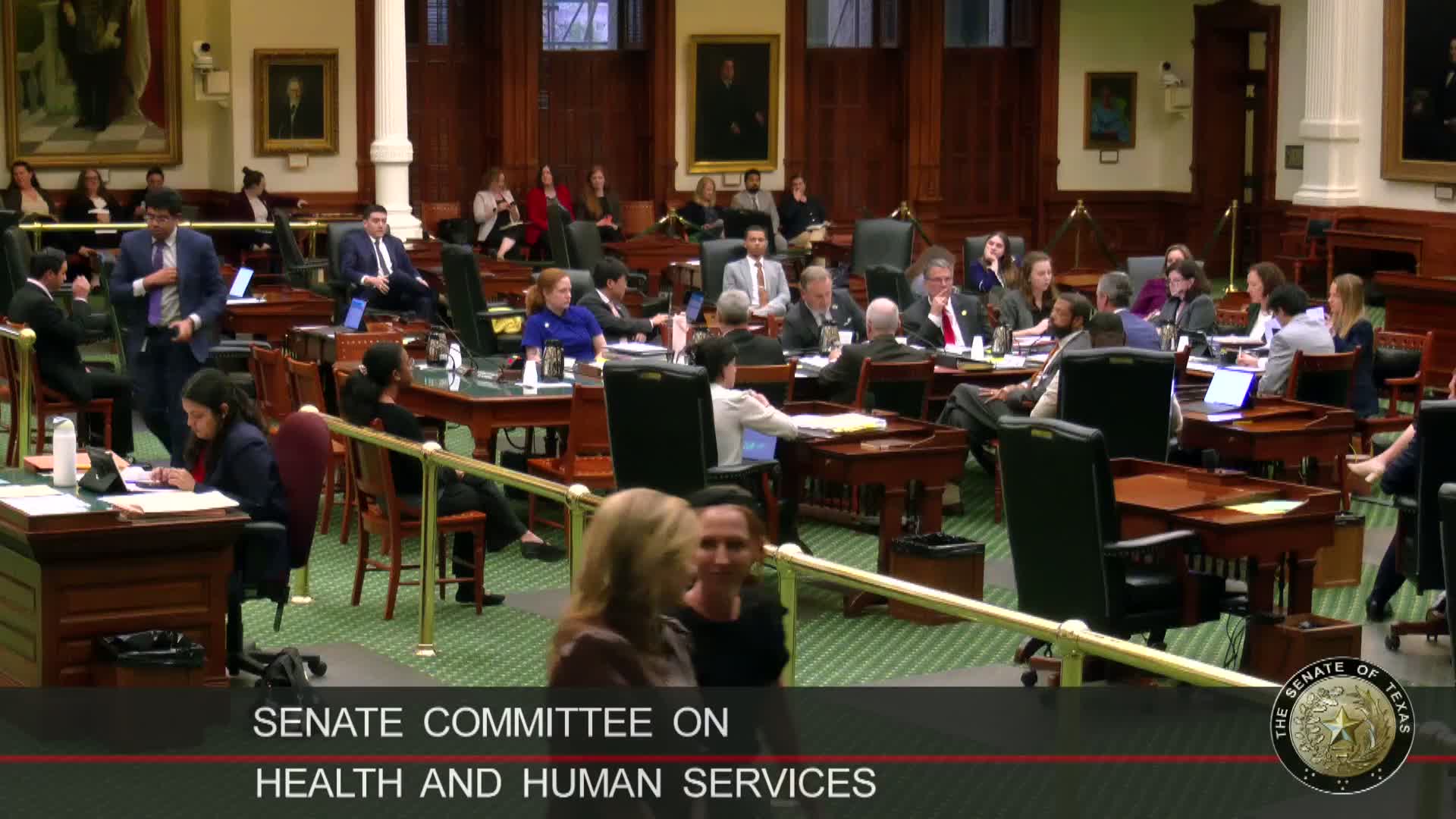
Senator Nathan Hancock told the Senate Health and Human Services Committee that Senate Bill 15 89 responds to recurring problems with single‑source continuum contractors (SSCCs) managing foster care casework. Under current statute, the Department of Family and Protective Services can place an entire contract under corrective action or terminate a contract, but it lacks authority to step in on a case‑by‑case or incremental basis.
The bill would add a statutory tool allowing DFPS to assume responsibility for particular cases or groups of cases without initiating full contract turnover or termination, sponsors said. That change is meant to let the agency respond quickly to acute performance issues while preserving effective contracts elsewhere in a provider’s portfolio.
Stephanie Muth, commissioner of DFPS, testified in support and said the department already relies on corrective action plans but that “there’s a very wide gulf between that and then contract termination.” When committee members asked whether the department can step in today on a single case, Commissioner Muth answered plainly, “No.” She said the bill would give DFPS a necessary statutory authority to take more targeted action.
Members discussed the broader rollout of community‑based care models, the agency’s growing jurisdiction, and the need for statutory clarity to make timely corrections without destabilizing service networks. Several senators praised Commissioner Muth’s leadership and urged continuing dialogue with providers as the legislation is refined. Public testimony was closed and the bill was left pending.