Get Full Government Meeting Transcripts, Videos, & Alerts Forever!
Get email alerts on the Perinatal Palliative Care topic
No spam. Unsubscribe anytime.
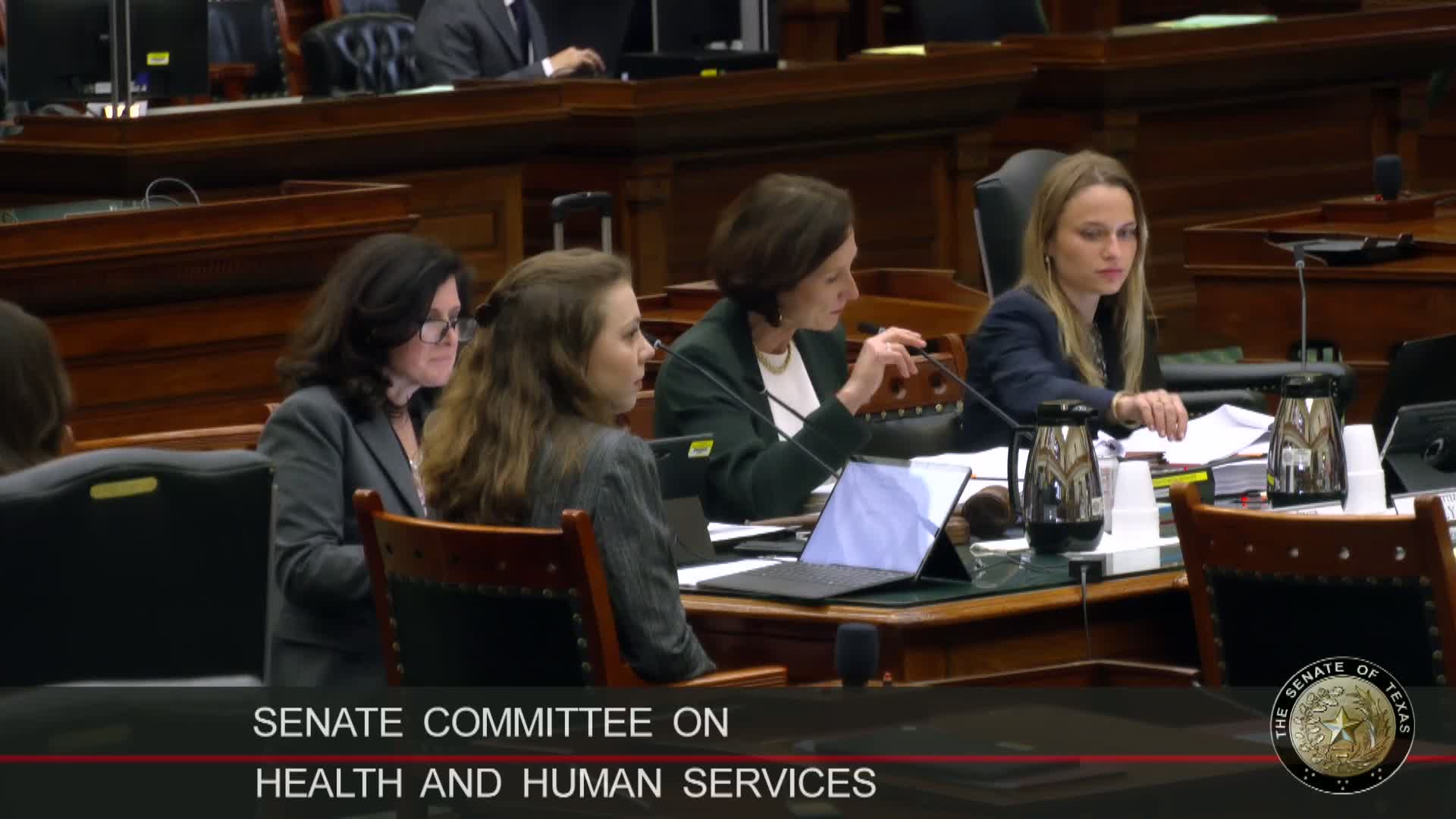
Senate committee hears testimony on bill to create perinatal palliative care information and provider list
Summary
Senate sponsors and witnesses told the Health and Human Services Committee that Senate Bill 12 33 would give families facing life‑limiting prenatal diagnoses clearer information and access to perinatal palliative care resources.
Senate sponsors and dozens of invited witnesses urged the Senate Committee on Health and Human Services to back legislation that would expand information and access to perinatal palliative care for families who receive life‑limiting prenatal diagnoses.
Senator Nathan Hancock, the bill’s author, told the committee that Senate Bill 12 33 would require the Health and Human Services Commission to develop informational materials, post them online, and publish “a geographically indexed list of perinatal palliative care providers in Texas” with an option to include nearby out‑of‑state programs. The bill also would allow HHSC to create a signed certification form indicating a pregnant woman received the information, and it extends care and supports up to one year after birth.
The committee heard invited testimony from parents and providers. Ava Trammell, who described learning at a 21‑week anatomy scan that her child had bilateral renal agenesis, told the committee she was offered only two options at the time: “They gave me 2 options at my appointment with the specialist that I could either go to Colorado and terminate the pregnancy and have an abortion, or I could go full term and act as if it was a regular pregnancy.” She said she lacked information and resources and supports Senate Bill 12 33 because it would give other families choices she did not receive.
Advocates from Texas Right to Life and Texas Alliance for Life said the bill would ensure families learn about palliative options rather than being steered toward abortion or out‑of‑state care. Samantha Furness of Texas Right to Life told the committee that “palliative care is a kindness” and said the bill would create a central resource list. Amy O’Donnell of Texas Alliance for Life said receiving these resources at the time of diagnosis “would have been invaluable” for families who currently must seek them out on their own.
Clinical witnesses urged care in the bill’s drafting. Maxine Tomlinson, director of governmental relations for the Texas and New Mexico Hospice and Palliative Care Organization, said the draft language should align with current statute and terminology—pointing to Texas Health & Safety Code language—and said her organization’s position was neutral. Dr. Natalie Frost, a board‑certified neonatologist who works in level 3 and 4 neonatal ICUs, thanked the sponsor but pressed for medically appropriate language changes (for example, replacing the phrase “preborn child” with “fetus” and “life‑threatening disability” with “life‑limiting diagnosis”) and asked the committee not to require a signed form from parents at a traumatic time.
Committee members and witnesses discussed access in rural border areas; Senator Hancock noted the bill’s geographic index could include out‑of‑state programs near the border. No final committee vote was taken; the chair closed public testimony and left the bill pending.
Ending: Committee members thanked the witnesses and left SB 12 33 pending for additional drafting and stakeholder work.