Get Full Government Meeting Transcripts, Videos, & Alerts Forever!
Get email alerts on the Aggregate Production Permitting topic
No spam. Unsubscribe anytime.
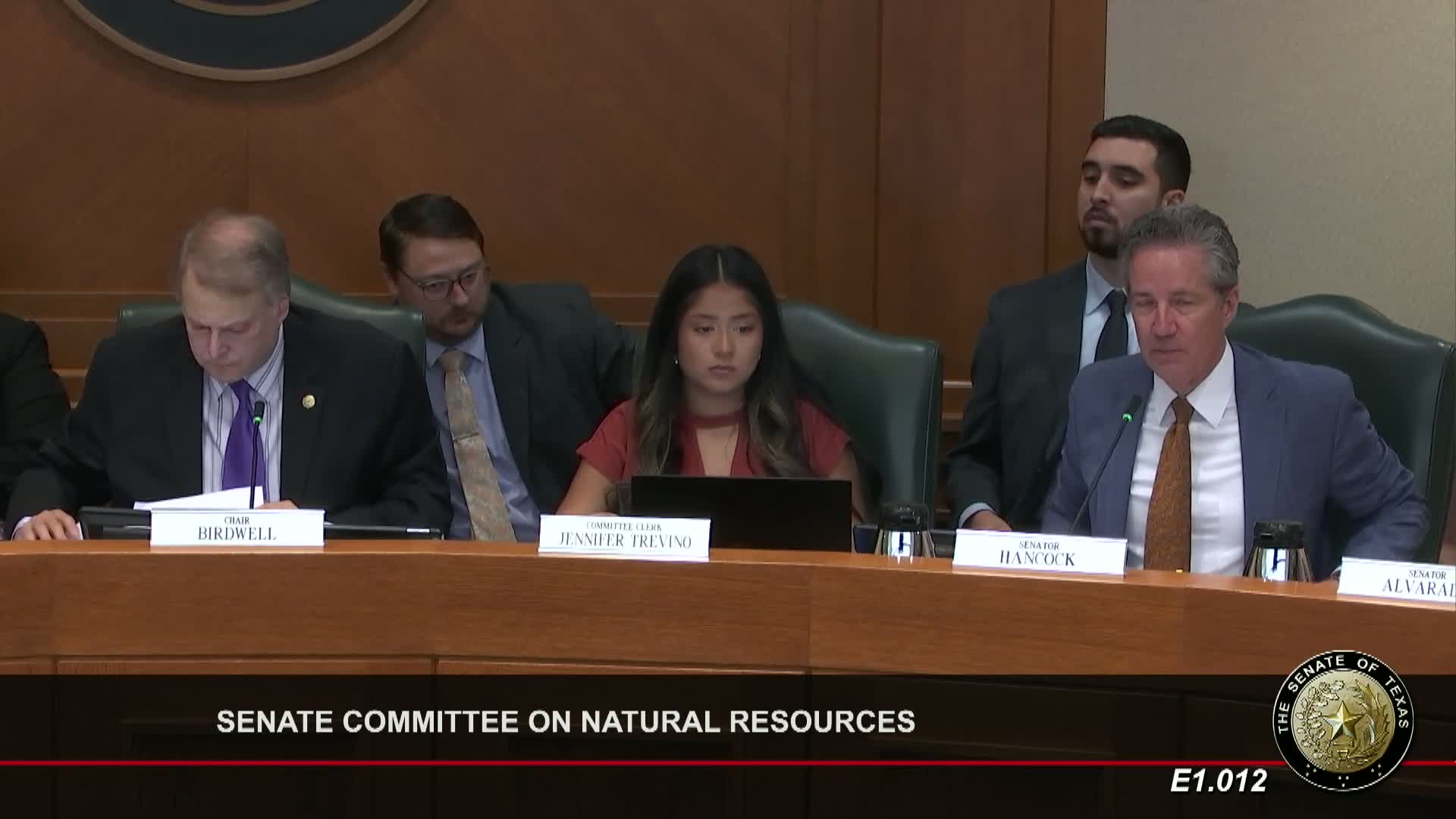
Senate hears proposal for 'enhanced control' permits for aggregate production operations
Summary
The committee considered SB 17 57, an optional ‘enhanced control’ permit for aggregate production operations that would require specific mitigation measures and first‑year monitoring in exchange for streamlined permitting and higher production allowances.
The Senate Natural Resources Committee considered Senate Bill 17 57, which would create an optional enhanced control permit for aggregate production operations (APOs) such as rock crushers and quarries.
Under SB 17 57 as explained by the sponsor, an APO could elect to obtain an enhanced control permit that requires specified best management practices (dust mitigation, water conservation, reclamation planning and notification procedures) and, in return, could operate at higher throughput levels—up to 1,500 tons per hour—without moving to a higher‑tier permit that would trigger a contested‑case hearing. The bill would require a public meeting and at least a 30‑day public comment period before an application is accepted. For the first year under the enhanced permit, facilities must collect monitoring data on emissions, sedimentation pond water contaminants (as regulated by TCEQ’s multi sector general permit), and seismicity associated with extraction activities.
Committee substitute changes: Senator Burwell summarized a committee substitute that removed the citizen advisory committee provision, removed the requirement to monitor water quality across an entire mining pit (retaining monitoring for sedimentation ponds only), removed provisions that could unintentionally require other permit categories, narrowed reclamation requirements and added practical clarifications to avoid unintended burdens on TCEQ and applicants.
The sponsor said the substitute reflects discussions with industry and TCEQ and is intended to balance the need for aggregate production to support construction and housing affordability with community safeguards. The committee left SB 17 57 pending and planned to take it up again after a short recess.