Get Full Government Meeting Transcripts, Videos, & Alerts Forever!
Get email alerts on the Attorney Fees Child Protection topic
No spam. Unsubscribe anytime.
Committee hears bill to standardize fee schedules for court‑appointed attorneys in child‑protection cases
Summary
Senate Bill 1838 would create a clear, family‑protection–specific fee‑schedule framework for counties to pay court‑appointed attorneys and guardians ad litem in DFPS suits.
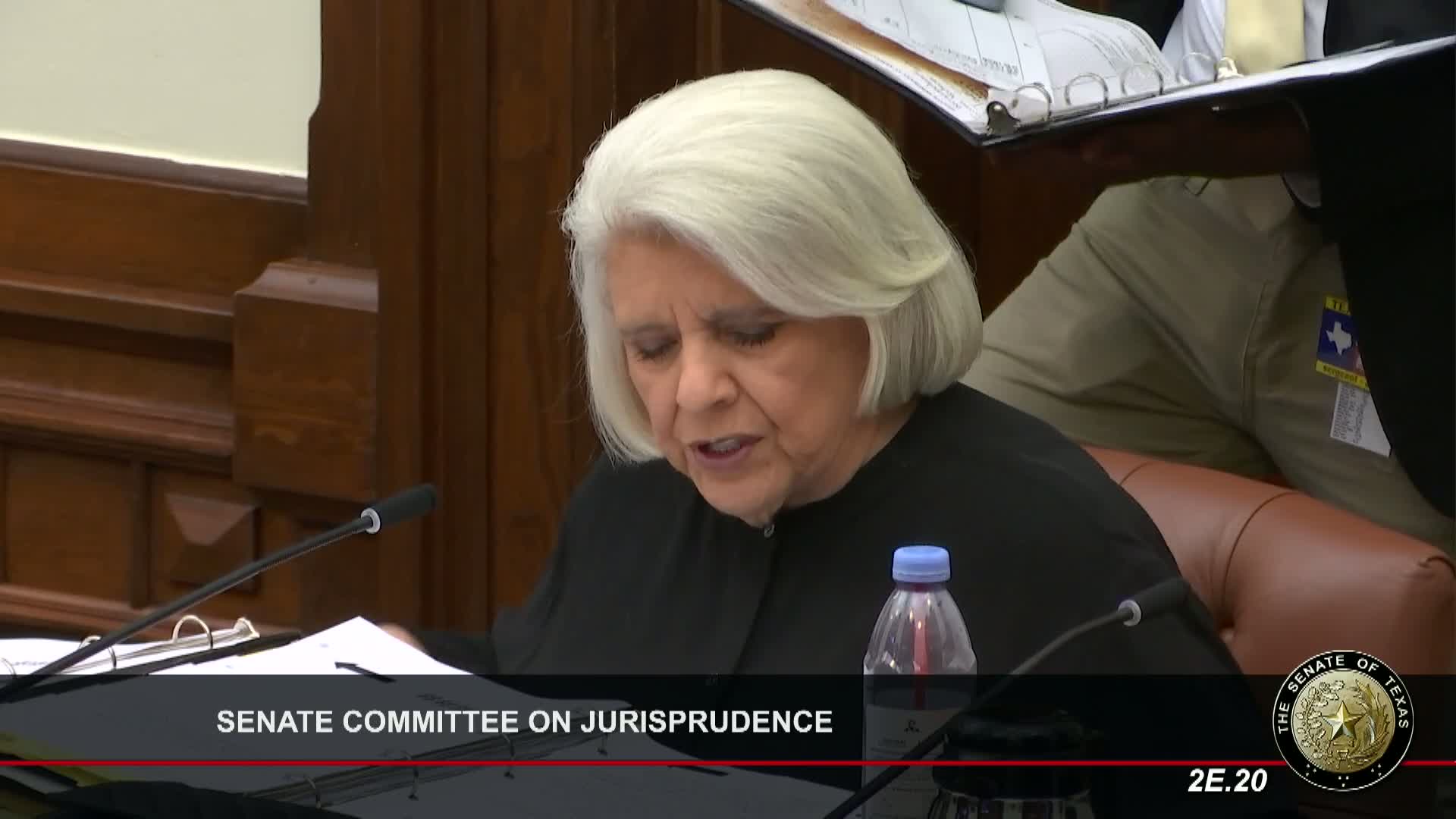
Senate Bill 1838, presented as a legislative council–draft committee substitute, would clarify how counties set fee schedules and pay court‑appointed attorneys and guardians ad litem in suits filed by the Department of Family and Protective Services. The committee heard testimony from the Texas Indigent Defense Commission and family-defense attorneys and left the bill pending for further consideration.
Sen. Jane Nelson (Dean of the Senate) explained that current statutory cross-references to criminal fee-schedule rules have caused confusion and inconsistent application for appointed counsel in child-protection matters. The substitute seeks a uniform framework so counties jointly adopt fee schedules that specify eligible services, rates, itemization requirements and payment sources, and to ensure appointed counsel receive reasonable compensation.
Crystal Lehi Pignon, director of family protection representation at the Texas Indigent Defense Commission, testified the measure provides clarity for fee schedules that reflect the different work required in child-protection cases versus criminal cases. “The current language in the law is not tailored to child protection cases and creates confusion in communities about what is required,” Pignon said, noting some counties lack a family-protection fee schedule or have improperly submitted criminal fee schedules.
Julia Hatcher, who served on the TIDC task force that drafted the substitute, supported the bill and said the change would prevent arbitrary voucher cuts and make payment expectations clear to counties and appointed counsel. Hatcher also noted that language originally requesting explicit coverage for expert witness fees was removed from the substitute and flagged that as a subject of concern for defense counsel.
The committee took no final vote; the bill remains pending.
If enacted as explained, the substitute would not create new counsel appointment rights nor new county obligations beyond existing statutory appointments; rather it would clarify payment and claiming procedures and authorize the courts to ensure compliance with fee schedules.