Get Full Government Meeting Transcripts, Videos, & Alerts Forever!
Get email alerts on the Alcohol Sales Regulation topic
No spam. Unsubscribe anytime.
Senate approves bill requiring electronically readable ID for retail alcohol sales, names it for underage‑drinking victim
Summary
Committee substitute to Senate Bill 6,50 requires retailers to verify purchasers’ ages using electronically readable identification where available, prohibits retention of scanned data, exempts restaurants in certain circumstances, and names the law the Deshaun Desmond Act; the measure passed the Senate unanimously.
The Senate passed committee substitute to Senate Bill 6,50 requiring retailers to use electronically readable identification to verify a purchaser’s age in retail alcoholic‑beverage sales when the technology is available, with exceptions and privacy safeguards.
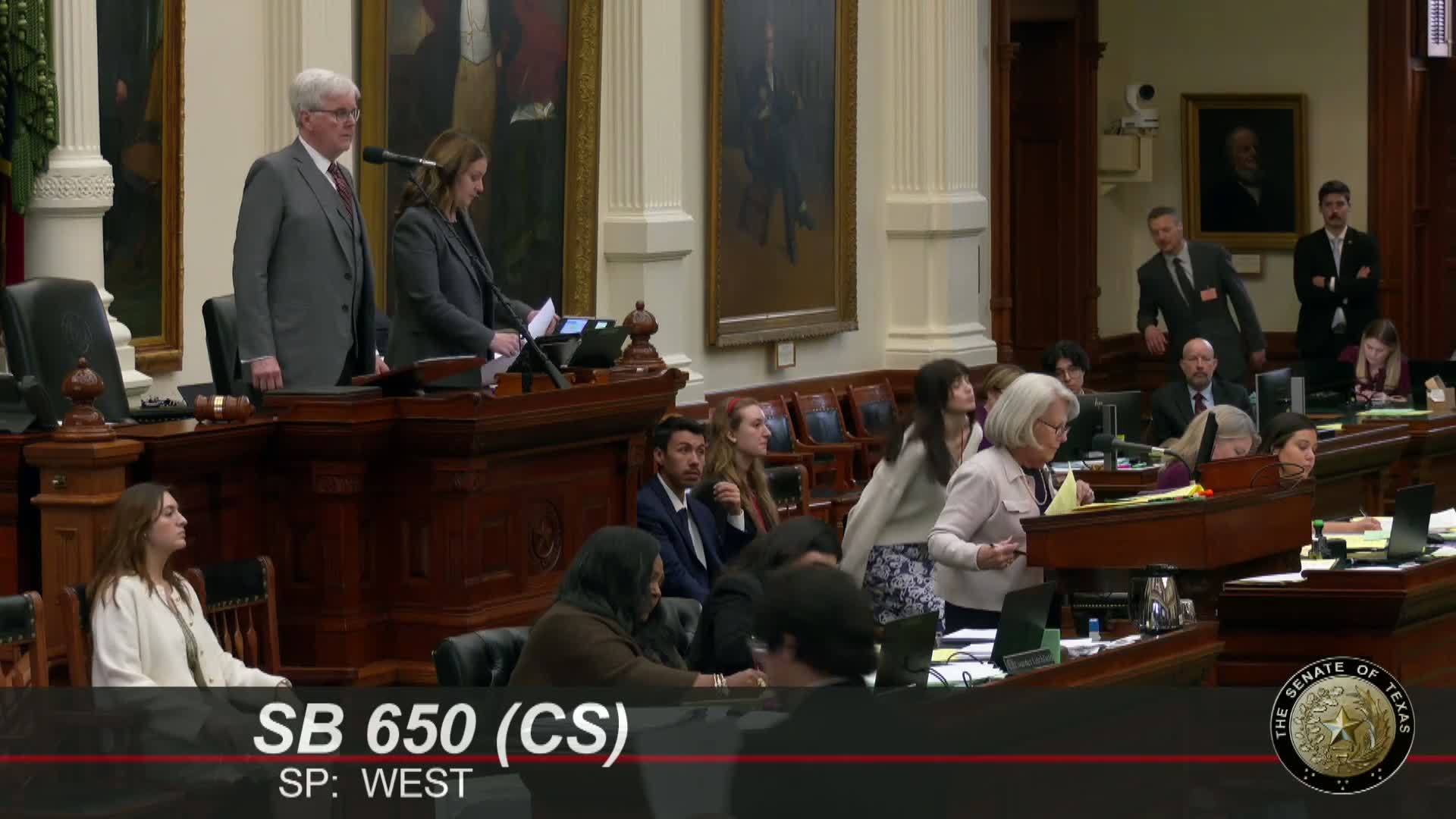
Senator West, sponsor of the amendment and bill on the floor, said the measure requires establishments that hold the relevant licenses to confirm a purchaser’s identification and allows use of an electronically readable device to capture ID information but expressly prohibits retaining scanned data. The amendment removed a previous exemption for package store permit holders and instead exempts holders of food and beverage certificates operating restaurants on the premises. The amendment also includes an exception for businesses lacking Internet access.
Senator West said the act is being named for a victim of underage drinking and urged colleagues to pass what he termed the Deshaun Desmond Act. He acknowledged the bill was brought by constituents and noted the family of the victim was present.
The committee substitute passed the Senate by recorded vote, 31–0, after floor amendments were adopted and the constitutional three‑day rule was suspended.
The bill requires retailers to verify age, allows use of electronic readers where available, forbids retention of scanned ID information, and creates a narrow restaurant exemption.