Get Full Government Meeting Transcripts, Videos, & Alerts Forever!
Get email alerts on the Oil Gas Emergency Response topic
No spam. Unsubscribe anytime.
Senate panel considers liability shield for companies aiding Railroad Commission in oil-and-gas emergencies
Summary
SB 1759 would let the Railroad Commission declare oil-and-gas emergencies and extend a liability shield to companies that assist response efforts unless they acted with gross negligence, recklessness or intentional misconduct; supporters said the protection would speed cleanup and reduce reluctance to lend equipment.
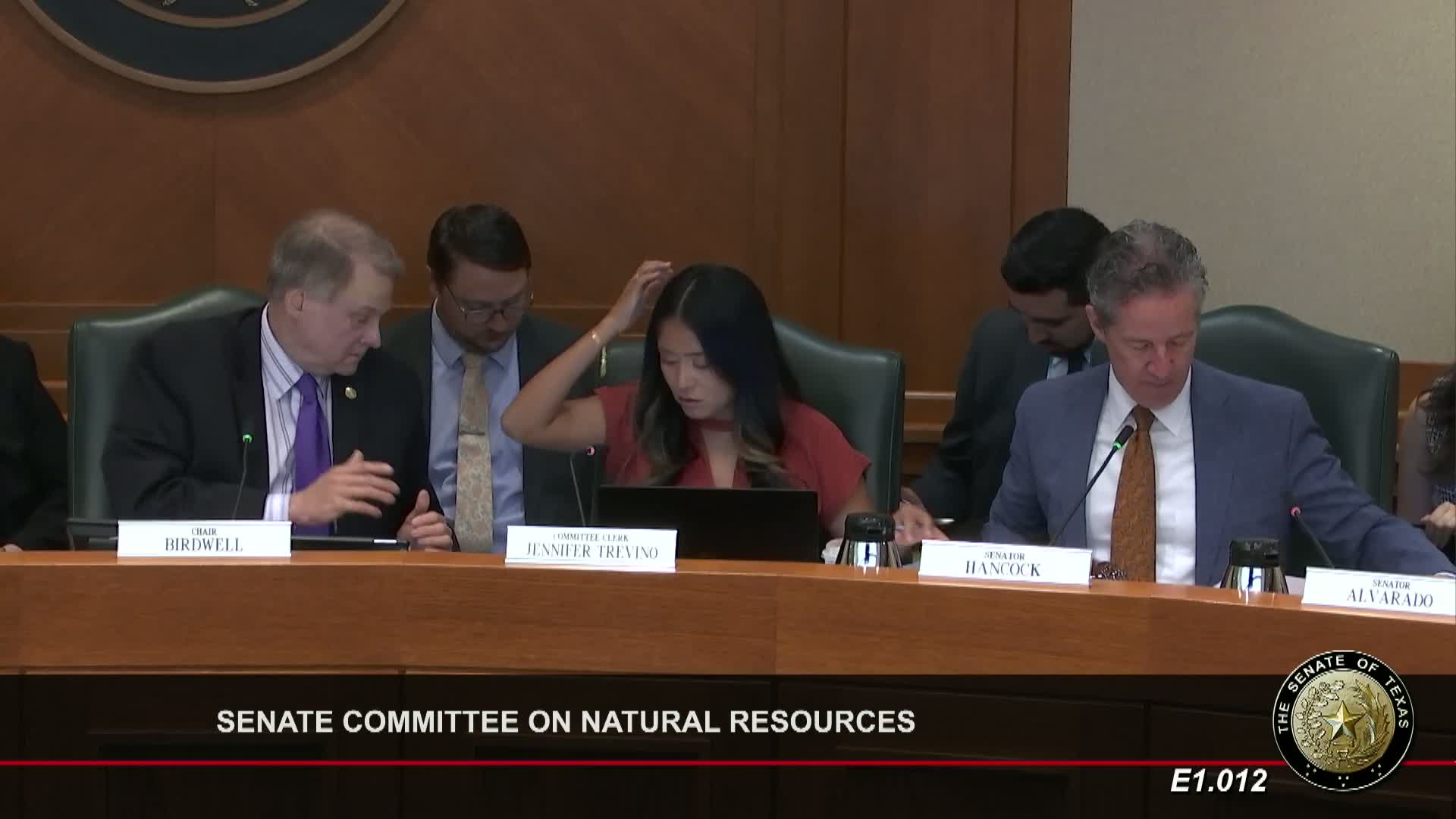
The Senate Natural Resources Committee considered Senate Bill 17 59, a bill to create a “good Samaritan”‑style liability shield for companies that assist the Railroad Commission in responding to oil and gas emergencies.
Senator Birdwell explained the bill would allow the Railroad Commission director to declare an oil or gas emergency for an initial 30‑day period, extendable once by the director and then extendable further by a vote of the full commission in up to 60‑day increments. During a declared emergency, SB 17 59 would provide liability protection for private companies that lend facilities or equipment to the Railroad Commission for response and cleanup, provided those companies do not act with gross negligence, recklessness or intentional misconduct. The committee substitute further clarified that liability protection would apply to responders, not to parties that caused the emergency.
WaterBridge, represented by Caleb Troxclair, testified in support. Troxclair said WaterBridge operates an integrated water network in the state and that the bill would let companies make assets available during an emergency without fear of liability, allowing quicker response and remediation that would benefit landowners and the environment.
Senators asked technical and implementation questions; the committee heard additional resource testimony from the Railroad Commission. Public testimony was closed and the bill was left pending for further consideration; a committee substitute had been offered during the hearing clarifying declaration and extension procedures.