Get Full Government Meeting Transcripts, Videos, & Alerts Forever!
Get email alerts on the Family Law Parental Presumption topic
No spam. Unsubscribe anytime.
Senate committee hears testimony on bill to codify parental-presumption standard in custody disputes
Summary
Senate Bill 2052, filed by Sen. Brian Birdwell, would add a statutory presumption that a parent acts in the best interest of a child and require a nonparent to provide clear and convincing evidence of parental unfitness before conservatorship may be awarded.
Senate Bill 2052, filed by Sen. Brian Birdwell, would add a statutory presumption that a parent acts in the best interest of a child and require a nonparent to provide clear and convincing evidence of parental unfitness before seeking conservatorship. The Senate Committee on Jurisprudence heard invited and public testimony on the measure but left the bill pending.
Supporters told the committee the measure would give trial courts a consistent starting point for “best interest” determinations, a standard they said is currently unevenly applied across counties. Senator Brian Birdwell, the bill’s author, said the bill would “codify the Texas Supreme Court’s unanimous holding in the Relator case” and protect the “fundamental right to make decisions regarding the care, custody, and control of their child.”
Andrew Brown, policy counsel with the Texas Public Policy Foundation, testified in support and urged the committee to adopt the bill to create a statutory floor for courts adjudicating disputes between parents and nonparents. “As current case law stands, best interest decisions in case law are really a patchwork,” Brown said, arguing the measure would reduce geographic inconsistency in rulings.
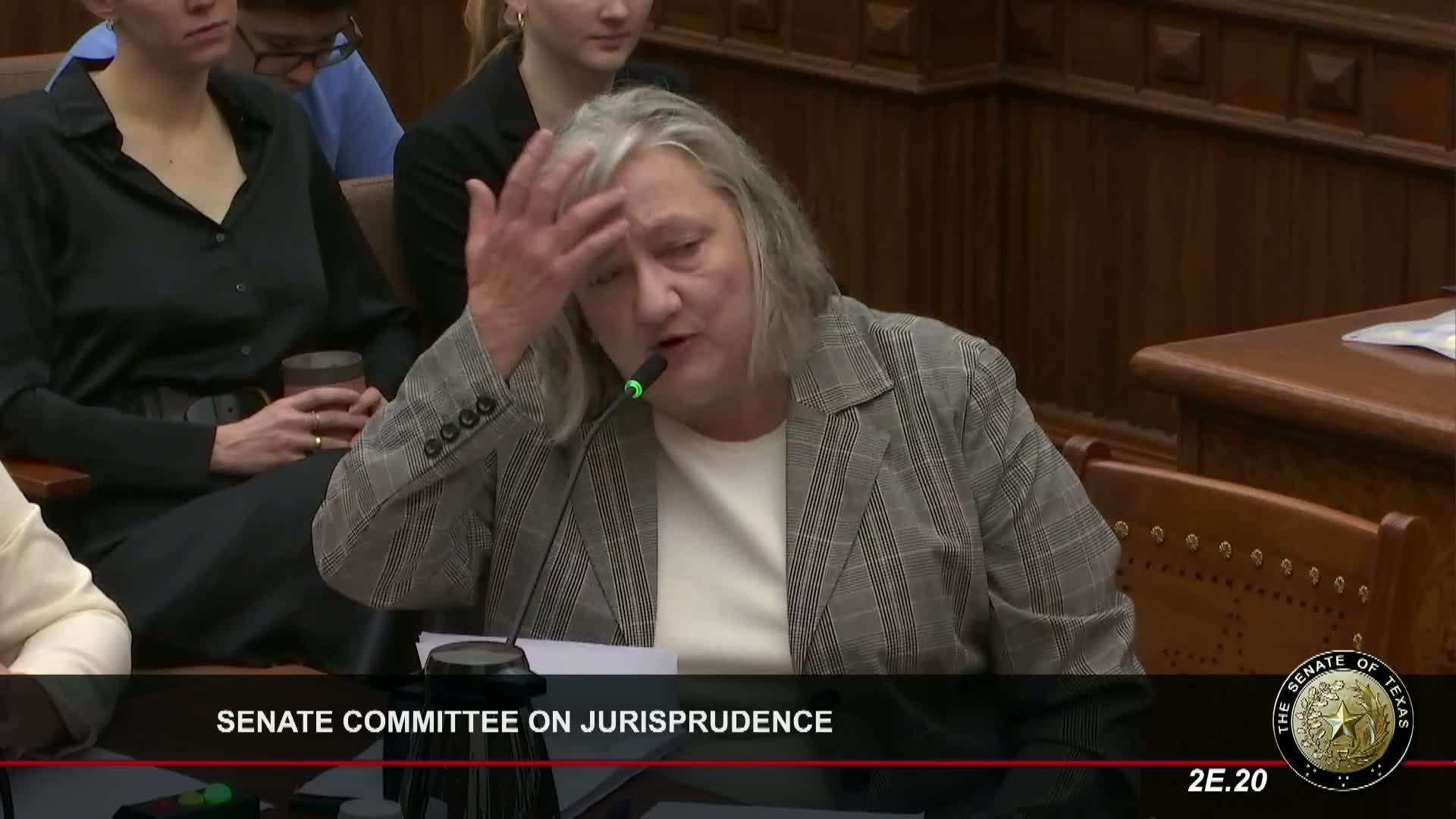
Several family-law practitioners spoke during invited and public testimony. Sharla Bradshaw, board certified in family law and representing the Texas Family Law Foundation, said the foundation was neutral and appreciated the bill’s direction while remaining open to technical amendments. Julia Hatcher, president of the Texas Association of Family Defense Attorneys, testified in support and said a codified definition would help lawyers and judges avoid “fumbling through case law.” Cecilia Wood, a board-certified family-law attorney, also supported codification but asked for care that the modification language reflect controlling precedent.
Witnesses and senators repeatedly emphasized that the bill establishes a rebuttable presumption that parents act in the child’s best interest and that the standard to overcome that presumption would be clear and convincing evidence. Supporters described that burden as a high bar consistent with Texas precedent in parent–child relationship cases.
The chair opened and then closed public testimony after invited and registered witnesses spoke. No committee vote was recorded on SB 2052; the bill was left pending.
Background details and context raised during testimony included references to the existing family-code language that “the best interest of the child shall always be the primary consideration of the court” and to longstanding case law—witnesses cited Holly v. Adams as an often-cited, nonexclusive list of factors courts may consider. Witnesses noted the measure’s goal is to harmonize statutory text with recent Texas Supreme Court holdings and prior joint constitutional actions recognizing parental rights.
The committee will carry the bill forward for additional drafting or amendments as stakeholders continue to confer.