Get Full Government Meeting Transcripts, Videos, & Alerts Forever!
Get email alerts on the Tdi Restructure Rate Filing topic
No spam. Unsubscribe anytime.
TDI commissioner outlines data, consumer protections as committee weighs agency restructure and flex rate filing
Summary
Commissioner Cassie Brown, Texas commissioner of insurance, told the Senate Committee on Business & Commerce that TDI uses extensive data and rate reviews to protect consumers and ensure insurer solvency.
Commissioner Cassie Brown, Texas commissioner of insurance, told the Senate Committee on Business & Commerce that the Texas Department of Insurance (TDI) relies on extensive data collection and review to protect consumers and monitor insurer solvency.
Brown said TDI receives monthly policy‑ and claim‑level data from companies writing residential property insurance, analyzes filings and complaints year‑round, and conducts on‑site financial and market conduct examinations. "Every submitted rate filing gets a careful review," she said, and she told the committee that TDI's rate reviews led to consumer savings the prior fiscal year of about $87,000,000 by identifying and correcting problems in filings before some rates took effect.
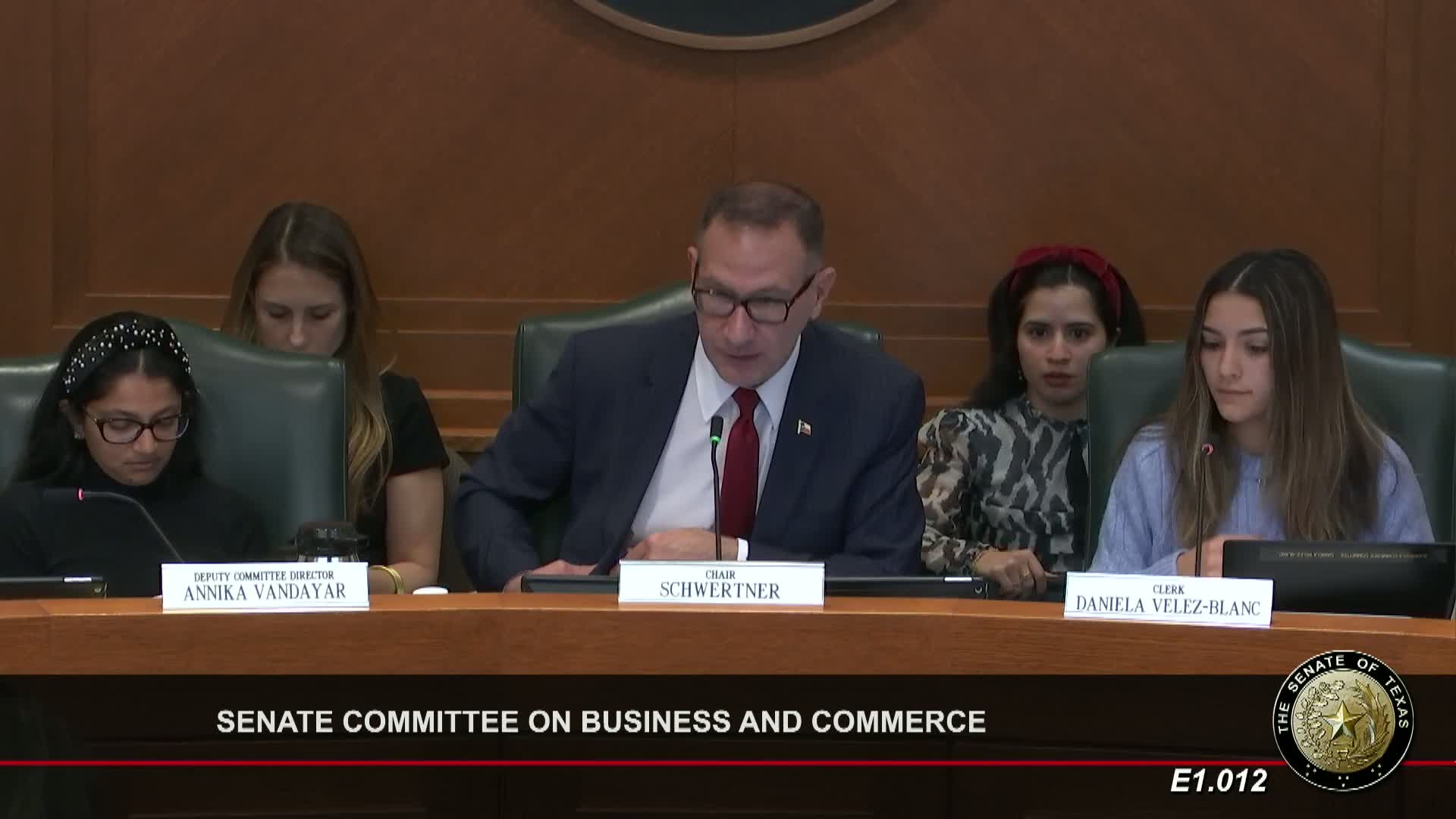
The committee’s discussion then focused on two bills. Senator Swertner explained Senate Bill 16 42, which would replace the current single‑commissioner structure at TDI with a three‑commissioner model intended to add management and oversight capacity and to place a consumer advocate or consumer expert on the decision‑making body. Senator Swertner said the change is aimed at improving responsiveness to consumers and strengthening regulatory oversight as the insurance marketplace grows. Supporters and opponents debated both the structure and the appropriate number of commissioners: proponents and some committee members argued a commission could add specialized expertise and a permanent consumer voice, while trade groups and several witnesses said a single commissioner provides clearer accountability and greater efficiency.
Senate Bill 16 43, described as a "flex" filing proposal, would require insurers to seek TDI approval if proposed rates change more than a specified percentage (the bill as explained to the committee used a 10% threshold). Supporters told the committee they seek guardrails so extreme rate changes are reviewed before taking effect; opponents said Texas’ existing "file and use" system promotes competition and market entry and warned that prior approval or tighter controls could slow the market or suppress competition. Witnesses also suggested smaller thresholds are used in some states and recommended additional guardrails to prevent gaming (for example, repeated filings that cumulatively increase rates beyond the threshold). Commissioner Brown described the trade‑offs between file‑and‑use and prior approval systems: under file‑and‑use TDI must prove a filing violates law if it seeks restitution, while prior approval places the burden on companies to prove compliance before use.
The committee heard testimony from consumer advocates and industry representatives. Beamon Floyd of the Texas Coalition for Affordable Insurance Solutions and Anne Bedour of Texas Appleseed argued for more oversight or a consumer voice on the commission and for careful review of rate changes. Scott Kibbe of the American Property Casualty Insurance Association, Albert Betts of Insurance Counsel of Texas, and Ward Tisdale of industry groups opposed moving away from the single‑commissioner model and cautioned that greater pre‑approval could reduce market entry and flexibility.
No final votes on the two bills were recorded in the hearing; both were left pending for further consideration. The committee also discussed data requests and comparisons for premium trends across lines and asked TDI to provide more granular data (for example, separating personal from commercial lines and trend lines for premiums by product).
TDI told the committee it will review its data collection practices for homeowners coverage in 2025 and is working to make more market data publicly accessible in user‑friendly formats. Brown also noted TDI’s consumer helpline activity for fiscal year 2024 (nearly 141,000 calls) and enforcement figures (millions collected in administrative penalties and restitution) as examples of the agency’s consumer work.
The committee recessed after leaving both bills pending and moving to later agenda items.