Get Full Government Meeting Transcripts, Videos, & Alerts Forever!
Get email alerts on the Legislative topic
No spam. Unsubscribe anytime.
Texas House balks at floor inquiry into appropriations transparency; grants committees permission to meet during session
Summary
A member of the Texas House raised questions on the floor about whether appropriations subcommittees met and allocated funds without required public recordings. The speaker declined to answer the parliamentary inquiry, and the House adopted a motion allowing committees and subcommittees to meet while the chamber is in session.
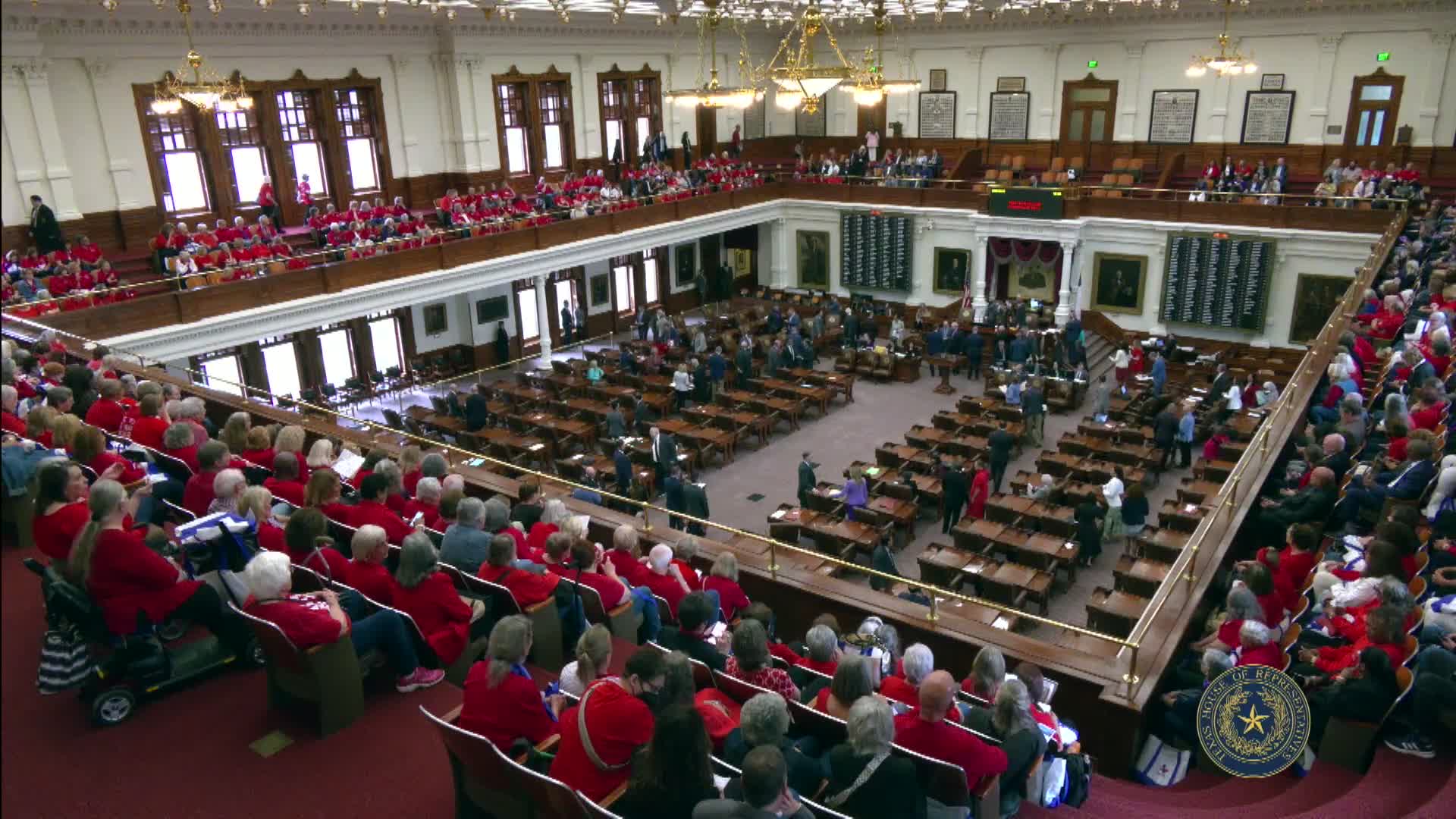
A member of the Texas House pressed the chamber on March 26 over the transparency of appropriations subcommittee meetings, asking whether billions in taxpayer funds were allocated in violation of House rules requiring audio and video recordings. The speaker declined to respond, and later the House approved a separate motion that permits committees and subcommittees to meet while the House is in session.
Representative Money (floor record) asked a parliamentary inquiry on the chamber floor, saying, “Are you aware that your subcommittees on appropriations met, and allocated billions of taxpayer dollars in violation of rule 4 section 19 a, which requires audio and video recordings to be posted on the internet so that the people of Texas can have transparency on how their tax dollars have been spent.”
The speaker, identified on the record as the chair of the House, declined to answer, saying in response, “Pursuant to note on page 10 of the house rules manual, the chair respectfully declines to respond to inquiries seeking the chair's comments or views on” the matter.
The exchange continued with additional parliamentary inquiries from other members about when and how the body could appeal committee chair decisions or otherwise seek enforcement of transparency rules. Each time the speaker ruled the remarks were not proper parliamentary inquiries and declined to respond on the floor.
Separately, Representative Hunter moved that “the house grant permission for all committees and subcommittees to meet while the house is in session pursuant to their committee postings or recess motions,” language that would allow committees to convene during bill referral or upon adjournment. The motion was adopted by the House with no recorded objection.
Representative Garren also moved to defer the remainder of the reading and referral of bills until the end of the day's business; that motion was ordered by the chair after the House voiced no objection.
These procedural decisions occurred the same day the clerk read the caption for SB 1, the general appropriations bill, and referred it to the Committee on Appropriations. The speaker later closed the day's business by announcing the House would stand adjourned until 10 a.m. Thursday, pending reading and referral of bills.
Discussion vs. decision: the floor record shows that the transparency concerns were raised through parliamentary inquiry (floor discussion) but no formal referral, finding, or corrective action was taken on that specific allegation during the session. The formal actions taken by the chamber were procedural: granting committees permission to meet during session and deferring the remainder of bill reading and referral.
The House did not take an evidentiary vote or call witnesses on the transparency allegation; the transcript records the member's questions and the speaker's repeated rulings that the questions were not proper parliamentary inquiries.
Looking ahead, SB 1 remains referred to the Committee on Appropriations for committee consideration; the floor exchanges and the committee-permission motion mean some committee work may occur while the full House remains in session.