Get Full Government Meeting Transcripts, Videos, & Alerts Forever!
Get email alerts on the State Budget topic
No spam. Unsubscribe anytime.
Senate outlines 2025 budget plan, highlights corrections funding and Promise Scholarship expansion
Summary
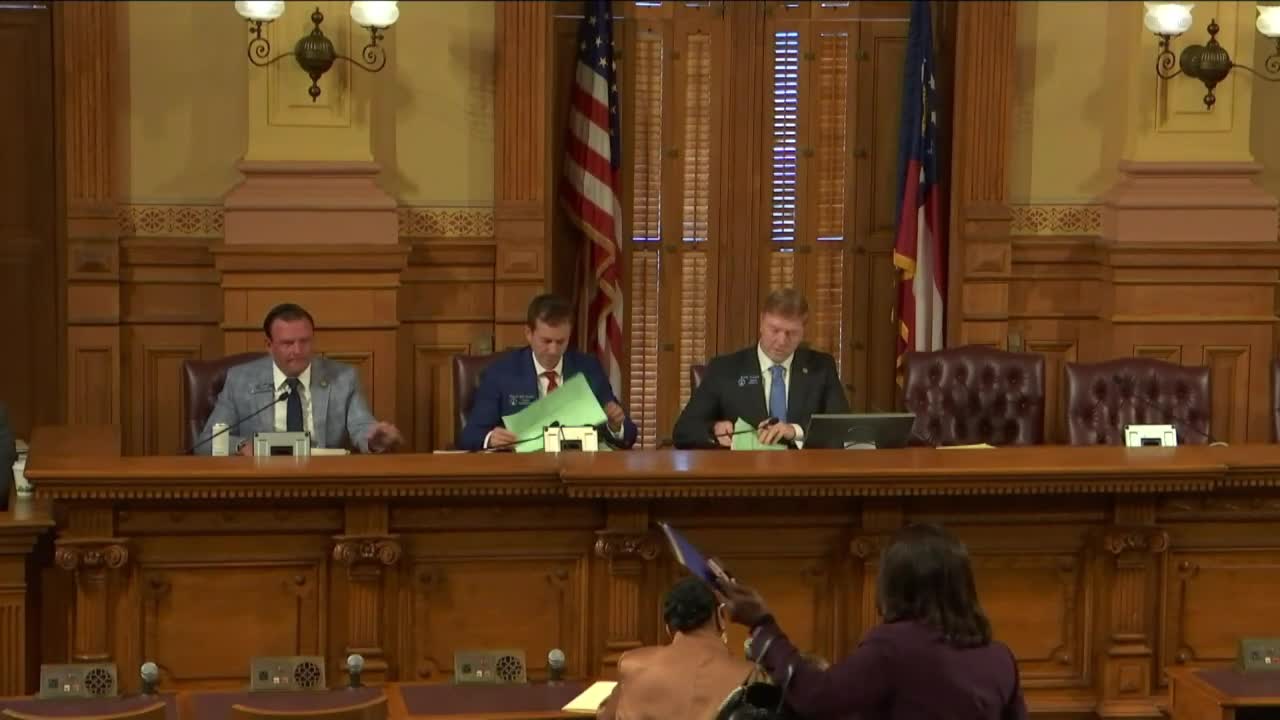
The Georgia Senate Appropriations Committee presented its 2025 budget proposal, signaling modest revenue growth and targeted increases for corrections staffing, Medicaid-related programs, pharmacy reimbursement, and the Promise Scholarship; the meeting included a procedural vote on House Bill 68.
The Senate Appropriations Committee on March 2025 released a budget plan that its chair said would cover roughly $36.37 billion over the next 12 months and prioritizes corrections staffing, health-care reimbursements, and a statewide scholarship expansion.
Chairman Walker opened the presentation by warning, “The budget process is not simple,” and saying the proposal “prudently funds our priorities” while avoiding new debt. He described a shift from the COVID-era federal “sugar high” in revenues to a flatter growth environment, saying revenue increases this year are at about 1 to 1.8% over the prior year.
Why it matters: The Senate plan differs from the House and governor in several places but preserves many of the House increases in education and health care while adding base funding for corrections and a full funding commitment for the Promise Scholarship. Those choices affect state agencies’ operations and local programs across Georgia and set priorities the full Legislature must reconcile.
Most important actions and funding decisions
- Corrections: The Senate budget adds roughly $170 million in additional base funding for the Department of Corrections, intended for retention, staffing, security related to locks and gates, and technology to address contraband, including cell‑phone mitigation efforts. Chairman Walker said the number places the Senate between the governor’s proposal and the House’s larger increase.
- Promise Scholarship: The Senate fully funds the Promise Scholarship at 1% of QBE, which the presentation lists as $141,000,000 and said will allow about 21,000 students to access alternative school options when a school falls in the bottom quartile.
- Health care and Medicaid-related items: The budget funds 150 new residency spots, instructs the Department of Community Health to file a Medicaid state plan amendment to maximize graduate medical education reimbursements, and adds $5,000,000 for pharmacy reimbursement to support independent pharmacies using a NAIDAC-based ceiling. The plan also annualizes funding for behavioral health waivers and funds parts of several crisis stabilization centers.
- Juvenile courts and data: The Senate retained juvenile court grant funding after receiving data from every juvenile court and emphasized continuing the JCATS portal for secure data submission; the chair urged clerks to use the funded portal instead of physical media like jump drives.
- Other agency changes: The budget holds house additions in some economic development accounts, reduces base funding for certain programs across the Board of Regents and other agencies, funds 5 portable mass spectrometers for the Georgia Bureau of Investigation lab capacity, and shifts some costs out of one university system into Department of Community Health for pharmacy reimbursements.
Discussion and questions
Senator Kirkpatrick thanked the chair for supporting the juvenile courts data project and asked about delays from some superior court clerks; Walker said a funded portal exists and some clerks used jump drives but that responses were received from every court. When asked about contraband cell phones in corrections, Walker said the Senate is “working on that with our federal partners” and acknowledged limits on jamming technology.
Several senators praised the budget office staff and subcommittee chairs for detailed review and tough choices. The committee discussed restoration and reductions to capital projects, choices to fund some events and delay others, and the cumulative effect of numerous tax credits and exemptions on state revenue capacity.
Votes at a glance
- Motion to call the previous question on House Bill 68: Chairman Walker moved the previous question on House Bill 68; a second was made. The committee approved the motion by voice vote. (Roll-call tally not recorded in the transcript.)
Ending
Chairman Walker closed by thanking the Senate Budget Office staff and offering to take questions; senators then continued with brief comments of appreciation and procedural business.