Get Full Government Meeting Transcripts, Videos, & Alerts Forever!
Get email alerts on the Corrections Oversight topic
No spam. Unsubscribe anytime.
Committee backs bill to create independent corrections ombudsman office
Summary
A House committee voted 7-0 to send Senate Bill 1507 to the floor after adopting an amendment that would set up an independent oversight office to monitor conditions inside Arizona correctional facilities, accept complaints and report annually.
A House committee voted to advance Senate Bill 1507 as amended, a measure that would establish an independent corrections ombudsman office to monitor confinement conditions, accept complaints and submit annual reports.
Senator Bullock, sponsor of SB 1507, told the Committee on Government that the proposal "came out of the Senate pretty much unanimously" and that it reflects several years of stakeholder work to place an outside oversight office where it can respond to complaints and monitor prison conditions. "Having someone on the outside actually looking in and giving us those answers that we are unable to get in a timely manner," Bullock said, "I believe will be very helpful in the future."
The amendment adopted in committee moves the office into its own statute and renames it the Independent Correction Oversight Office, according to staff. It also adds reporting requirements, information-gathering authorities and specified protections from civil action. Committee members endorsed the change and then approved the bill as amended by voice and roll call; the tally announced by the chair was 7 ayes, 0 nays.
Supporters at the hearing said the office would provide a complement to internal department oversight rather than duplicate it. Lauren Krissai of the Justice Action Network testified that SB 1507 is "a government efficiency measure" that would provide evidence, interviews and analysis to help corrections leadership and the Legislature spot problems earlier. "Effective prison management requires both internal accountability measures and external scrutiny," Krissai said.
John Fabricius, representing Arizona For Transparency and Accountability in Corrections, recounted years of advocacy for independent oversight and said the office would help address long‑running problems inside the Department of Corrections. Kara Jansen, a formerly incarcerated woman who leads the Dream.org Network in Arizona, said delays in medical care and a culture that prioritizes punishment over rehabilitation showed the need for an external oversight office. "Please vote yes on SP 15 o 7," Jansen told the committee.
Committee members asked how the ombudsman would be appointed and whether protections would extend to corrections officers. Bullock said the governor would continue to make the appointment and that the bill includes confidentiality for whistleblowers and provisions intended to protect corrections staff as well as incarcerated people. Several members stressed the intent was to help the department run more efficiently while increasing transparency, not to target any particular director.
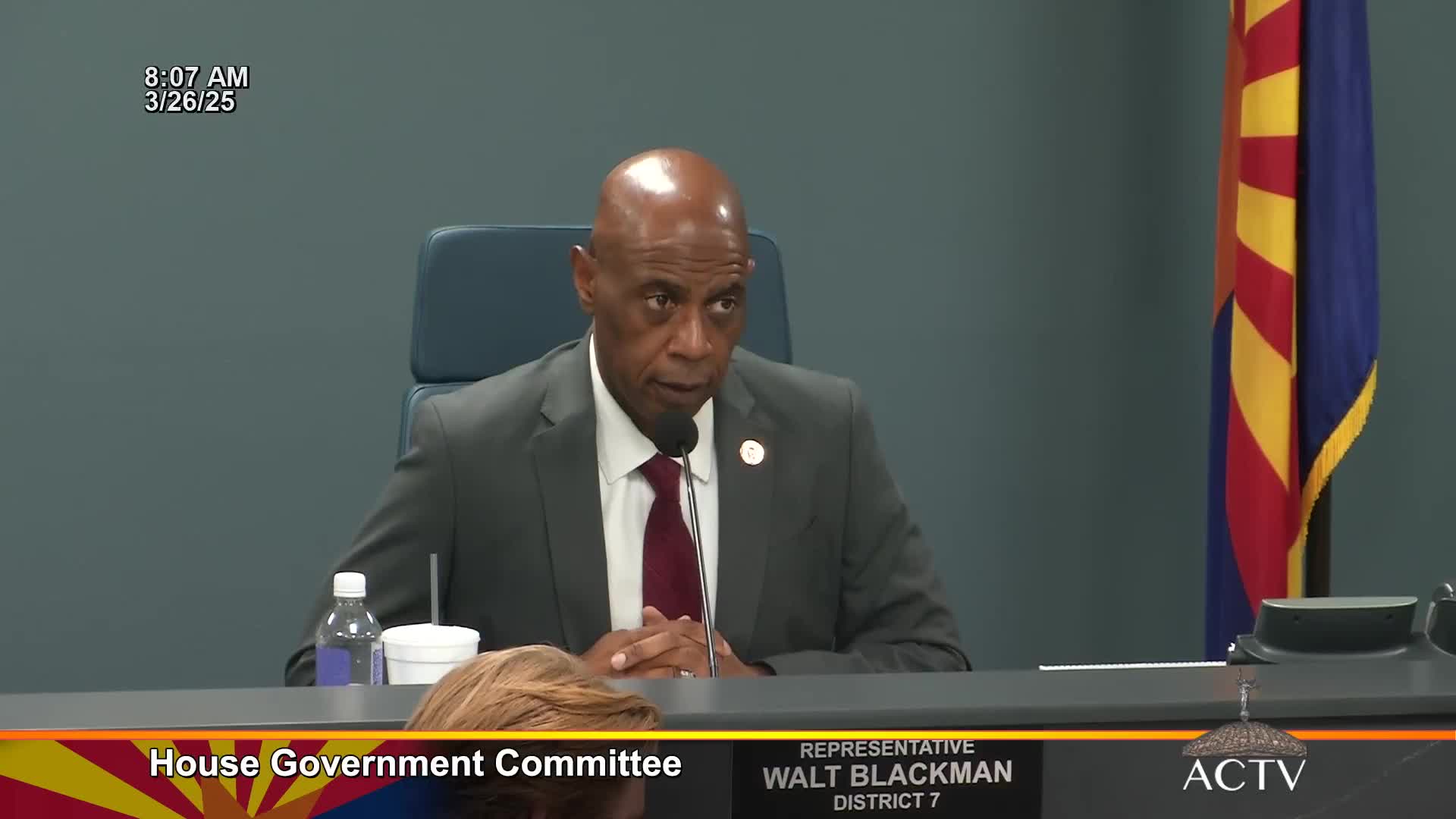
After discussion the committee adopted the Blackman amendment that placed the office in its own chapter and expanded reporting duties, and then voted to return SB 1507 to the floor with a due-pass recommendation. The committee recorded the outcome as 7 ayes and 0 nays.
The bill now goes to the full chamber. If enacted, the measure would create a standalone statutory office with authority to monitor conditions, accept complaints and publish an annual report; funding, staffing and exact start dates would depend on subsequent legislative action and the bill text as amended on the floor.