Get Full Government Meeting Transcripts, Videos, & Alerts Forever!
Get email alerts on the First Aid Good Samaritan Exemption topic
No spam. Unsubscribe anytime.
Committee OKs bill protecting volunteers who provide basic first aid from licensure penalties
Summary
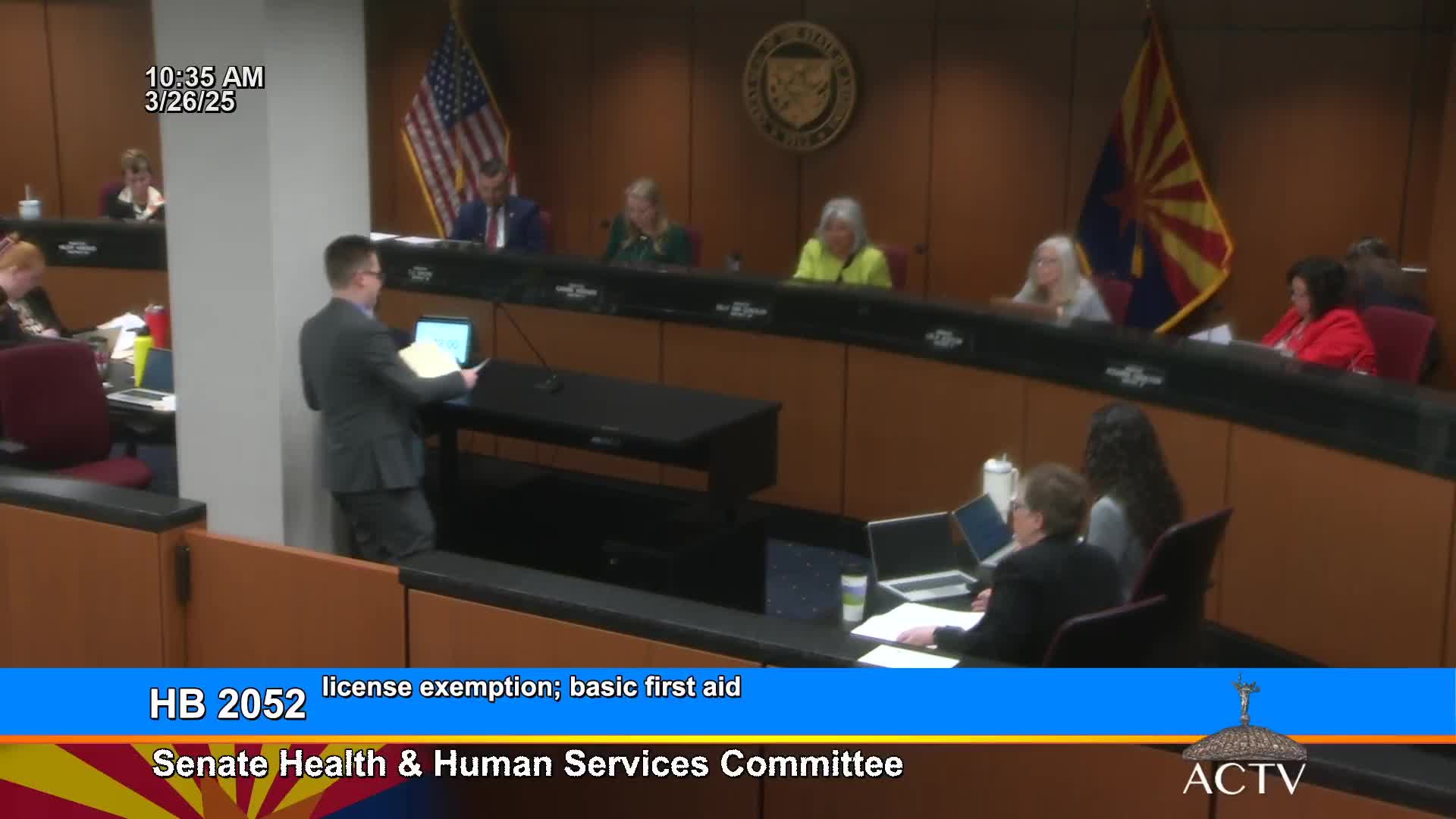
HB 2052 would exempt people providing basic first aid without compensation from Arizona Medical Board licensure requirements. Witnesses described outreach to unsheltered people and the bill’s role in closing a gap not covered by Good Samaritan protections; committee recommended the bill by 6–1.
The Arizona Senate Committee on Health and Human Services recommended HB 2052, which would exempt the provision of basic first aid in good faith and without compensation from licensure requirements under the Arizona Medical Board. The sponsor explained the bill was prompted by an incident where a volunteer offering first‑aid outreach to people experiencing homelessness was threatened with criminal enforcement.
Witnesses described a narrow, field‑level scope of care that the bill would cover: cleaning minor cuts, applying bandages, treating minor burns, removing debris from eyes, providing fluids for heat stress and administering non‑prescription over‑the‑counter medications. Brent Cobb, founder of Triple Care Network, said the charity treats wounds and minor infection in outreach settings and that timely field care prevents costly hospitalizations. Holly Giesel, testifying as a defense lawyer, said the bill fills a gap not covered by current Good Samaritan protections and prevents felony exposure for volunteers helping vulnerable people.
Committee members raised questions about medication administration and pediatric patients. One senator asked whether laypeople should be allowed to administer over‑the‑counter pain relievers given rare but serious reactions; supporters said the bill targets routine assistance (Tylenol, bandages, fluids) and emphasized training and limited scope. The committee approved the measure with a 6–1 vote.
Votes at a glance: HB 2052 — do pass recommendation in committee, 6 ayes, 1 no.