Get Full Government Meeting Transcripts, Videos, & Alerts Forever!
Get email alerts on the Veterans Benefits Regulation topic
No spam. Unsubscribe anytime.
Bill to Regulate For‑Profit Veteran‑Benefit Counselors Fails After Extended Testimony
Summary
After several hours of testimony and a floor amendment, the committee narrowly rejected SB 17-03, a bill that would have limited fee structures and banned certain upfront payments by for‑profit entities that assist veterans with Department of Veterans Affairs benefit claims.
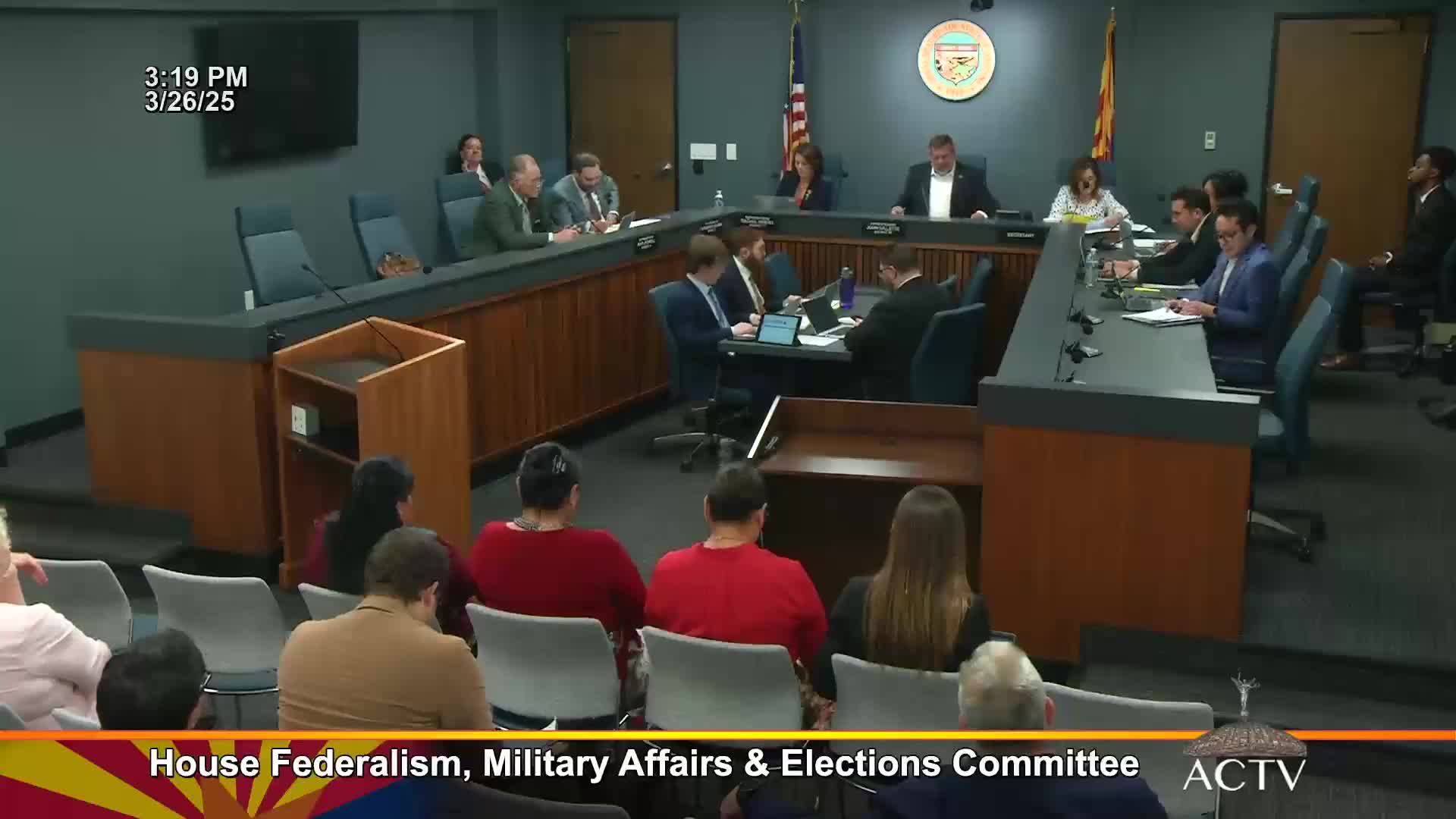
A bill that would have restricted how for‑profit companies and non‑attorneys charge veterans for help with VA benefit claims failed in the House Committee on Federalism, Military Affairs and Elections on a 3‑to‑4 vote after a day of testimony from veterans, attorneys and industry representatives.
Sponsor remarks and amendment
Sen. (sponsor) introduced SB 17‑03, saying the bill was intended to curb “bad actors” who exploit veterans by charging upfront or nonrefundable fees and by using aggressive solicitation. Staff explained the bill would prohibit charging an initial fee for advising a veteran on a VA benefit matter unless the provider is licensed or accredited to do so; it would require a written agreement and set limits and disclosure requirements on contingent fees. The committee adopted a three‑page amendment in the chairman’s name (dated March 20) that clarified some initial‑fee prohibitions, removed language classifying violations as unfair or deceptive practices, and exempted licensed attorneys and certain advertising platforms.
Why supporters backed the bill
Proponents said the bill seeks to protect veterans who can be targeted by unscrupulous actors. Ray Colas of Veterans Benefit Guide told the panel the bill aims to create federally compliant, transparent services for veterans and that supporters had worked with stakeholders to incorporate protections. Senator Gowen, speaking in support, said Arizona has a large veteran population and that parameters are needed so veterans are not taken advantage of when seeking help accessing benefits.
Opposition and practical concerns
Opponents included accredited VA attorneys and some tribal veteran representatives, who raised concerns about consumer protection, enforcement, and access. Derek Debas, an accredited VA attorney, said he opposed the bill as introduced because it lacked accountability, liability and transparency mechanisms comparable to those that bind accredited representatives and attorneys. He described cases where unaccredited third parties submitted medical evidence that later triggered fraud investigations, leaving veterans to defend themselves. Demetria Semmes, Navajo Nation veteran liaison, testified she used free VA services and opposed any cost to file claims, saying many veterans are vulnerable to exploitation.
Industry witnesses and veterans
Representatives of for‑profit firms that assist veterans described their business models and said many clients are aware of free alternatives but choose paid services for convenience or speed. Mark Christiansen, chief of staff of Veterans Guardian, and other industry witnesses said veteran service organizations cannot meet current demand and that private firms fill a gap. Veterans who used paid services described positive experiences and urged the committee to preserve consumer choice.
Committee action and outcome
The committee adopted the sponsor amendment and considered the amended bill. After extended discussion and a roll call, SB 17‑03 failed on a 3 ayes, 4 nays vote.
Nut graf
The debate exposed a policy fault line: veterans’ advocates seeking guardrails against exploitation versus for‑profit providers and some veterans who said paid services fill gaps in an overburdened VA system. Committee members and witnesses repeatedly described the federal accreditation framework as central to the problem because accreditation governs who may legally represent claimants before the VA.
Ending
Members asked stakeholders to continue negotiations. Several committee members said they were open to further amendment language that would add enforceable fiduciary duties, disclosure and liability protections while preserving consumer choice; others said the committee should not move forward without stronger consumer protections.
Votes at a glance
- SB 17‑03 (as amended): Outcome — failed; tally: 3 ayes, 4 nays.
(For clarity: the committee adopted the three‑page amendment dated March 20, 11:59 a.m.; following debate the full bill as amended failed on a 3‑to‑4 vote.)
Sources: committee testimony and on‑record roll call.