Get Full Government Meeting Transcripts, Videos, & Alerts Forever!
Get email alerts on the School District Spending Analysis topic
No spam. Unsubscribe anytime.
Auditor General: Arizona districts spent more overall in FY2024 but a smaller share went to classroom instruction
Summary
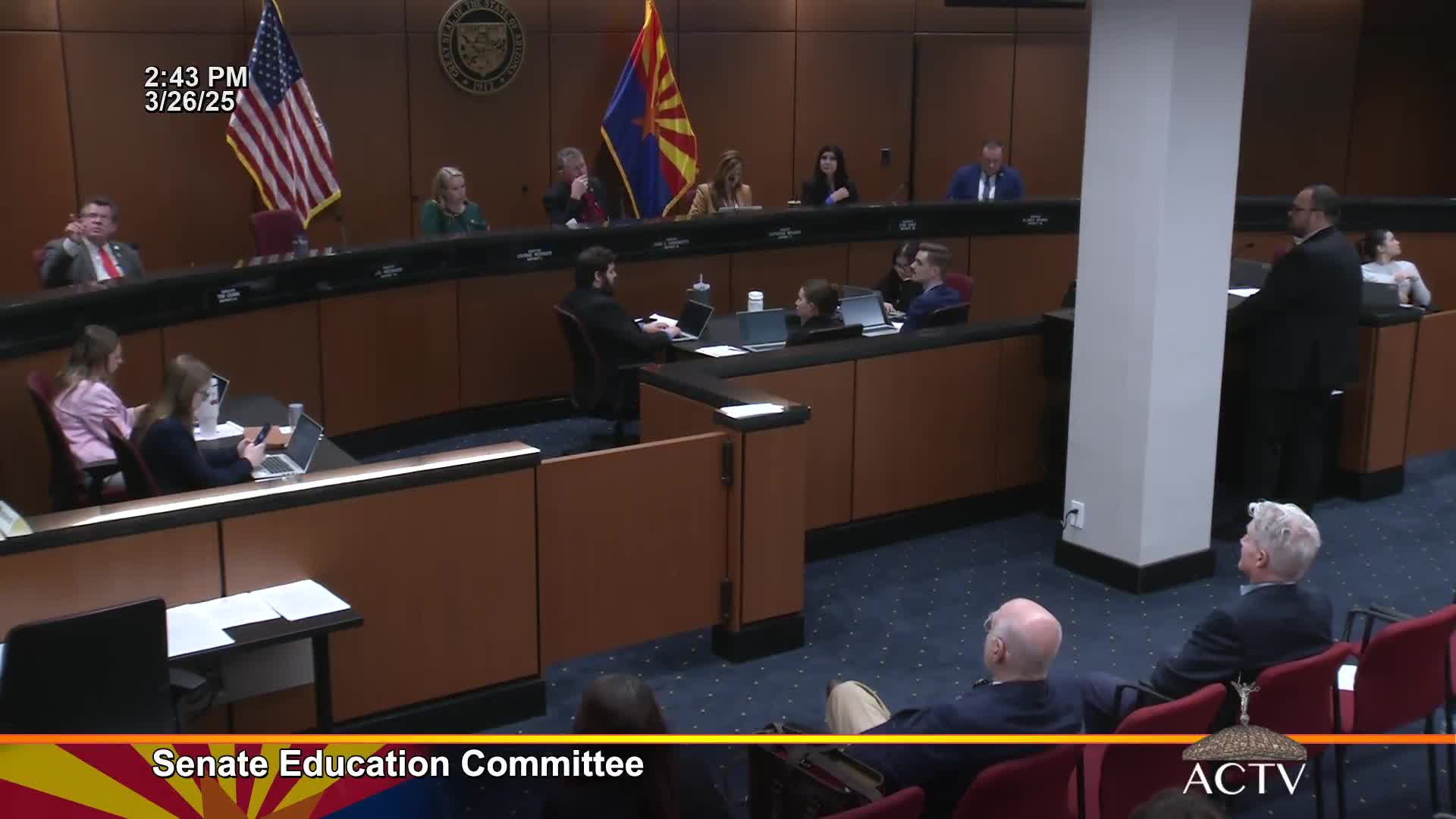
Auditor General Lindsay Perry told the Arizona Senate Education Committee that her office's annual analysis found school districts spent more overall in fiscal year 2024, but a smaller percentage of those dollars went to classroom instruction.
Auditor General Lindsay Perry told the Arizona Senate Education Committee that her office's annual analysis found school districts spent more overall in fiscal year 2024, but a smaller percentage of those dollars went to classroom instruction.
"My office has a statutory responsibility to annually monitor the percentage of every dollar spent in the classroom, by school districts," Perry said as she opened the committee presentation. Audit manager Carl Calderon led the committee through the report's key figures and district examples.
The nut graf: The report shows statewide operational spending reached its highest level since monitoring began, while the instructional spending percentage dropped to its lowest level since 2001. The change matters because federal COVID-19 relief funds that boosted district budgets are phasing out and enrollment is declining, both of which could force districts to change spending patterns.
Statewide totals and COVID relief Carl Calderon said statewide operational spending in FY2024 was $10,540,000,000. Total statewide operational spending per student in FY2024 was $12,371, an increase of $668 (about 5.7%) from the prior year. The Auditor General's office reported school districts have spent nearly $3,500,000,000 in COVID-19 federal relief since those funds started being distributed in FY2020. In FY2024 districts used about $264,000,000 less of those federal relief funds than they did in FY2023.
Instructional spending percentage "The instructional spending percentage in fiscal year 2024 was 52.6%, which was a decrease of 0.8 percentage points from the prior fiscal year," Calderon said. That is the second consecutive year the instructional percentage has fallen and the lowest percentage recorded since the Auditor General began monitoring in FY2001. The office's analysis attributes much of the percentage decline to districts directing a smaller share of operational spending to teacher salaries and benefits while increasing spending for student support services and plant operations.
Enrollment trends and implications Calderon said both the number of school-aged children in Arizona and district enrollment are declining and are projected to continue to fall. Using U.S. Census Bureau data, the report notes the school-aged population declined by about 32,000 between 2020 and 2023, and district enrollment dropped by roughly 45,000 students (about 5%) between FY2020 and FY2024. Charter school enrollment rose about 7% in that period; participation in universal empowerment scholarship accounts rose from about 12,000 in FY2022 to nearly 75,000 in FY2024.
District examples The office used Mesa Unified School District as an illustrative case. Mesa's instructional spending percentage was 53% in FY2024, a 1.3 percentage-point decline from FY2023; Mesa's five-year enrollment decline was reported as 6,485 students (about 10.9%). In contrast, Glendale Union High School District was cited as an example of increasing enrollment.
Teacher pay and COVID funding mix The Auditor General's report found the statewide average teacher salary rose to $65,113 in FY2024, a cumulative increase of $16,741 (34.6%) since FY2017. The FY2024 statewide average base teacher salary (excluding one-time and performance payments) was $59,435. Calderon's presentation noted only about 5.3% of the cumulative salary increase through FY2024 came from COVID-19 federal relief funds (down from 10.4% the prior year), and that FY2025 will be the final year in which districts may use those funds.
Operational efficiency The report also compared districts to peer groups on measures such as plant operations cost per square foot and administrative spending per student. The office summarized nearly $8,000,000 of potential savings identified through performance audits in the past five years and flagged approximately $4.1 million of recurring savings if certain inefficiencies were addressed.
Why it matters Committee members asked about comparisons with other states and whether districts had plans to sustain operations once one-time federal relief is exhausted. Calderon said the state results page offers per-student comparisons to national averages, and the Auditor General's office will continue monitoring how districts adapt as relief funds expire.
The Auditor General's office also posted an interactive website (Arizona Auditor General school district spending analysis) and offered to provide members and staff district-level data files and additional support on request.
Ending: The committee did not take action on the Auditor General's report; members thanked Perry and Calderon for the in-person presentation and were invited to use the office's public tools and data in legislative oversight and local planning.