Get Full Government Meeting Transcripts, Videos, & Alerts Forever!
Get email alerts on the Long Term Care Electronic Monitoring topic
No spam. Unsubscribe anytime.
Committee rejects bill to let assisted‑living residents install cameras in private rooms
Summary
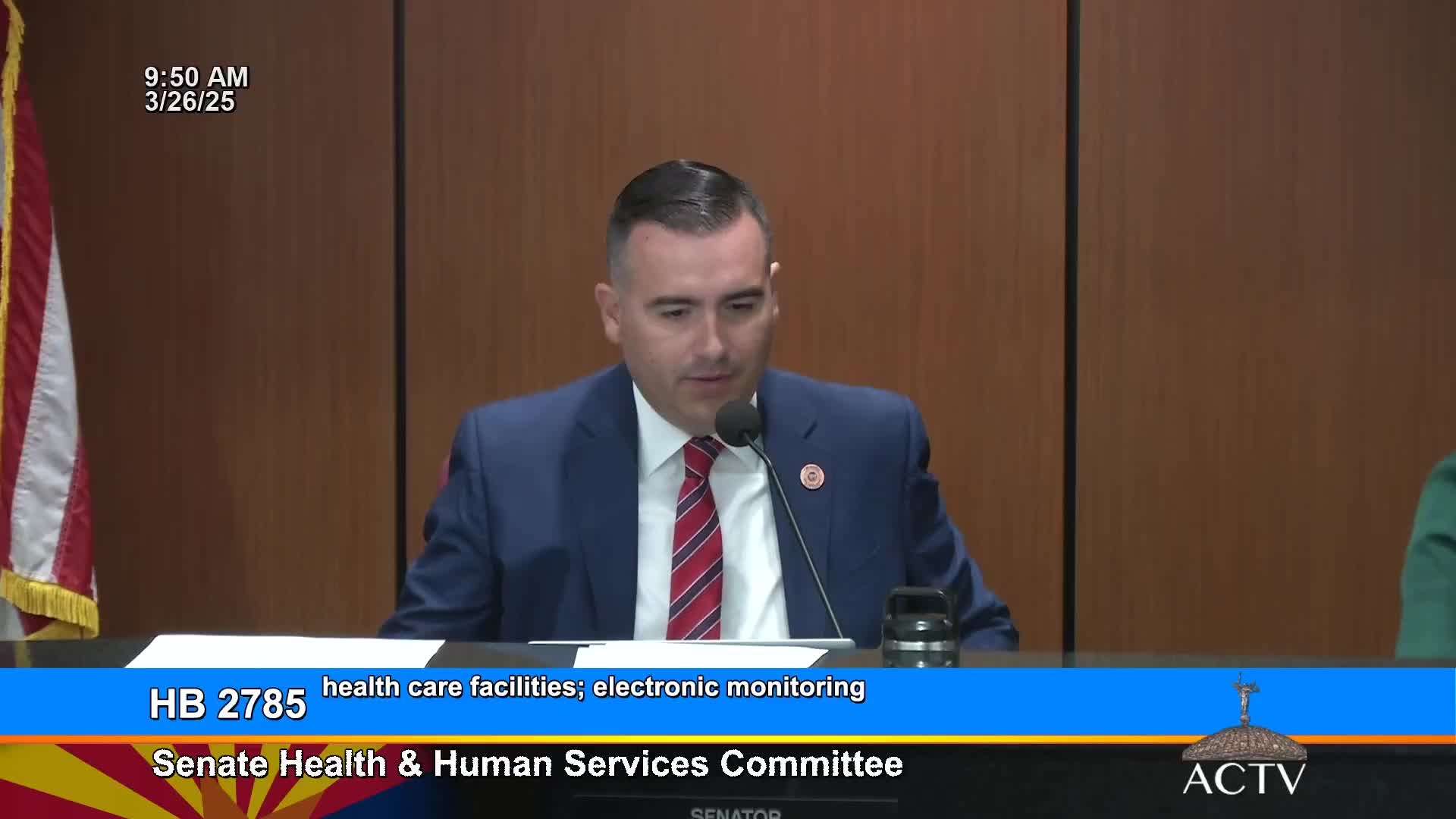
The Arizona Senate Committee on Health and Human Services heard hours of testimony March 24 on HB 2785, a bill to bar facilities that receive public funds from prohibiting residents from installing electronic monitoring in their private rooms. After testimony for and against the proposal, the committee voted 1–5 to defeat the bill.
The Arizona Senate Committee on Health and Human Services on March 24 debated HB 2785, which would have prohibited assisted‑living facilities and nursing care institutions that receive public money from banning residents from installing and using electronic monitoring devices in their private rooms. Representative Wynne sponsored the measure and described personal family experiences that motivated the bill.
Supporters told the committee the bill would give residents another option to protect themselves and to document suspected abuse. Stuart Goodman, testifying for AARP, said the measure is optional for residents and staff and stressed the bill’s goal: “At its heart, this is about giving individuals options for their safety. It's not a requirement. No one will be forced to have a camera, but for those that want to have them, they will.” Brendan Blake, representing AARP’s membership in the state, and several family members who testified said cameras had exposed alleged abuse in other cases and that some facilities currently treat cameras inconsistently.
Opponents — including the Arizona Assisted Living Home Association, Arizona LeadingAge, and small‑home operators — warned the bill would erode resident dignity, invade privacy, add costs and staff burdens, and create risks for roommates and staff. Marie Isaacson, representing Arizona LeadingAge, said staff and residents face intimate care situations and called mandatory access to rooms for monitoring “humiliating” for some residents. Jennifer Rockridge Arena, representing the Arizona Assisted Living Home Association, said small group homes could not absorb installation and maintenance costs and cited privacy and HIPAA concerns for shared rooms.
Committee members asked whether the bill would allow facilities to require consent forms, restrict hidden cameras and set who may view recordings. Proponents said the intent was to leave room for facility policies and for residents to control access to footage. Testimony also cited experience in other states and a Vulnerable Adult Study Committee ongoing work as context for policy changes.
The committee voted 1 aye, 5 noes; HB 2785 failed to receive a do‑pass recommendation. Several senators said they would prefer further study and recommendations from the Vulnerable Adult Study Committee before advancing statutory changes.
Votes at a glance: HB 2785 — failed in committee, 1 aye, 5 noes.