Get Full Government Meeting Transcripts, Videos, & Alerts Forever!
Get email alerts on the Education Savings Tax topic
No spam. Unsubscribe anytime.
House Taxation Committee hears bill to raise state deduction for 529 education savings plans
Summary
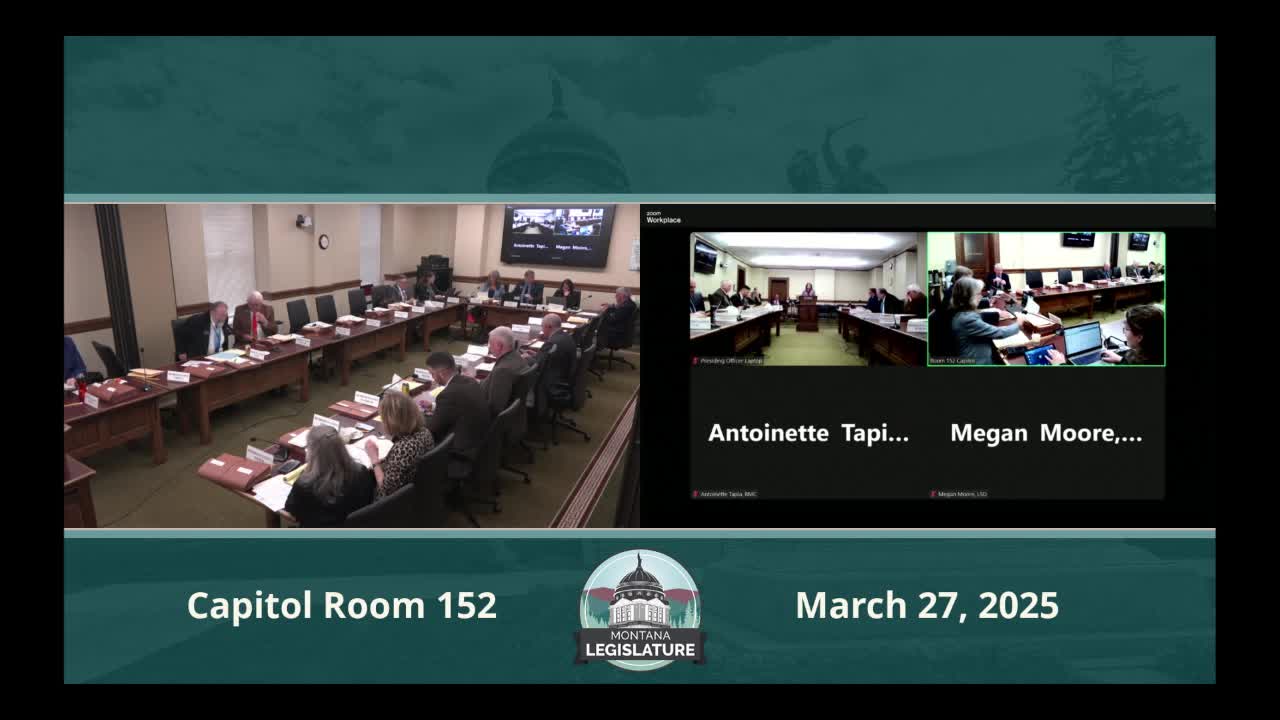
The Montana House Taxation Committee held a hearing on House Bill 845, sponsored by Representative Julie Darling, which would increase the state income tax deduction for contributions to family education savings accounts (commonly known as 529 plans).
The Montana House Taxation Committee held a hearing on House Bill 845, sponsored by Representative Julie Darling, which would increase the state income tax deduction for contributions to family education savings accounts (commonly known as 529 plans).
The bill would raise the dollar cap on the deduction and tie future increases to an inflation factor based on the Consumer Price Index, a change the sponsor said would avoid repeated legislative increases and make the deduction more useful as college and trade-school costs grow.
Representative Julie Darling, the bill sponsor, opened the hearing and described HB 845 as "an act increasing the income tax deduction for contributions to a family education savings account," and said the proposal mirrors a prior change used for Montana medical savings accounts so the deduction can automatically adjust with inflation. She asked the committee for a due-pass vote at the close of the hearing.
Bill Warden, representing the National Association of Insurance and Financial Advisors (NAIFA), testified in support and offered a personal example: because a family member used a 529 plan, his grandson will start a technical program without student debt. A local certified financial planner identified in testimony as Sullivan of SolarWind Financial Group told the committee that in 2002 the average "all-in" yearly cost for in-state college was about $10,500 and said current estimates are roughly $25,500 a year; he argued the deduction has not kept up with those increases.
Department of Revenue tax specialist Rachel Milne appeared as an informational witness to answer questions about eligibility and administration. Milne said the deduction is taken by the contributor who owns the account and that a contributor who owns an account for a Montana beneficiary (including a grandchild) may take the deduction, provided other residency conditions in state law are met. Milne also provided a Montana citation referenced in the hearing: MCA 15-30-2120 (as cited in the record).
Committee members asked questions about several practical points: what happens to unused funds if a beneficiary does not pursue higher education; whether leftover balances may be rolled into a Roth IRA for the beneficiary; and which k-12 expenses qualify. Witnesses explained that nonqualified withdrawals are taxable on earnings in addition to state penalties, that recent federal changes allow transfers from 529 plans into a beneficiary's Roth IRA subject to annual and lifetime limits (witnesses cited a $7,000-per-year transfer allowance up to a $35,000 lifetime cap), and that k-12 uses can include private or public school costs but are less flexible than higher-education uses.
Committee members also noted the present state deduction level discussed during the hearing (testimony referenced a current $3,000 deduction and an approximate $177 tax savings at the highest marginal rate for a single filer) and asked whether the bill's increase had been reviewed by higher-education institutions; the sponsor said she had not sought formal comment from higher-education representatives and framed the change as mirroring the medical savings account template.
Representative Darling closed by asking for a due-pass. The committee closed the hearing on HB 845 with no formal vote recorded during the session.
The hearing record contains technical clarifications from witnesses about ownership, contributor status, and residency rules that determine whether a contribution is deductible under state law.