Get Full Government Meeting Transcripts, Videos, & Alerts Forever!
Get email alerts on the Planning topic
No spam. Unsubscribe anytime.
Comprehensive plan steering committee reports public‑engagement push and early findings
Summary
Sarah Dixon said the Comprehensive Plan’s phase 1 (existing conditions) is complete and phase 2 public engagement is underway; the steering committee seeks wider participation to shape vision and priorities for the next 10 years.
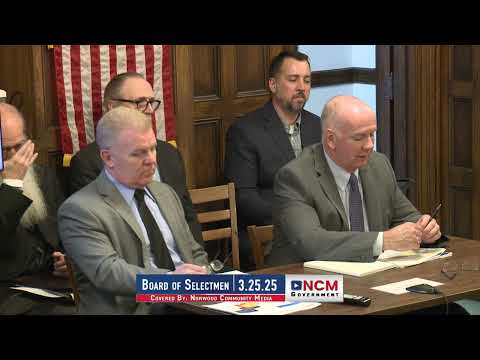
Sarah Dixon, representing the Comprehensive Plan effort, updated the Board of Selectmen on March 25 about the town’s multi‑year comprehensive plan process and asked for help expanding public participation.
Dixon said the consultant team (JM Goldson) completed phase 1, the existing‑conditions summary, and the project has moved into phase 2, the vision‑setting and public‑engagement phase. The steering committee’s goal is a 10‑year vision document intended to guide local decisions on housing, land use, transportation, open space, facilities, and other core plan elements. Dixon summarized six trends the existing‑conditions report identified: a slowly increasing and aging population with smaller household sizes; rising housing costs and affordability pressures across income groups; a strong and diversifying commercial base that brings a daytime population to Norwood; generally good access to transit and green space with gaps on the east side of town; increasing climate‑related weather and storm risks; and a historical pattern of walkable, mixed‑use, transit‑oriented development the committee considers an asset.
Public engagement and tools: Dixon described an outreach suite for phase 2: an online and paper survey, a crowd‑map where residents can tag parcels and comment on places to preserve or improve, and a “meeting‑in‑a‑box” kit the steering committee asks residents and neighborhood groups to host. She said the project has distributed lawn signs, flyers and social‑media posts and has held a December open house and interviews with department heads. Dixon noted that participation is measured in “participation points” (not unique individuals); the steering committee set a 10% participation‑points target and had recorded 558 participation points to date (under 2% of the target) and asked the Selectmen to help amplify outreach.
Why it matters: a comprehensive plan forms a policy framework for the town’s zoning, capital projects and program priorities for the next decade. Dixon said the plan’s expected completion is February 2026 and urged board members and local boards to help spread the work‑in‑progress materials and the web links (tinyurl.com/norwoodcp) to reach residents who do not normally attend in‑person meetings.
Next steps: the steering committee will continue neighborhood outreach, collect meeting‑in‑a‑box results and survey responses, and present draft vision and strategies during phase 3. Dixon invited the board to help host neighborhood meetings and to direct boards and committees to participate.